
Baby Sleep in Indian Summer Heat: Cooling Solutions, Safety Tips & IAP Guidelines for 2026
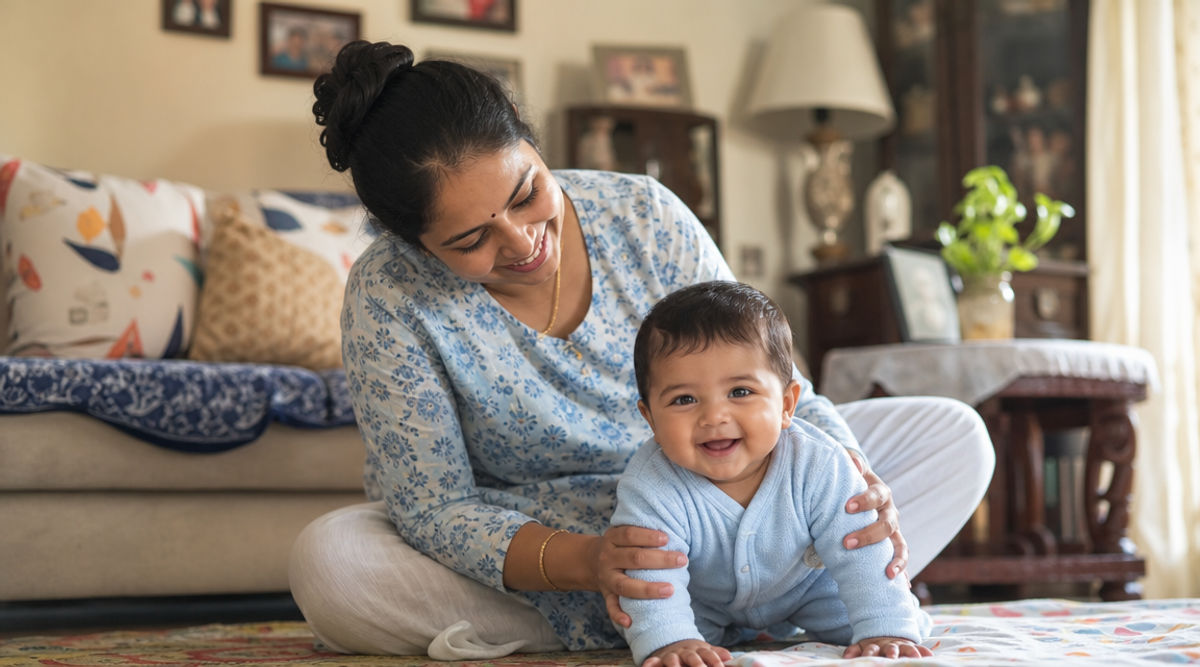
Keep your baby's room between 24-26°C (IAP recommendation), use breathable cotton or bamboo sleepwear, and invest in a cooling mat (₹599-₹1,299). Avoid overheating, which increases SIDS risk, and watch for dehydration signs like dry lips and fewer wet nappies.
ℹ️ General information, not medical advice. If your baby seems unwell or anything worries you, talk to your paediatrician. Medical disclaimer
⚡ In a hurry? Our quick picks


I still remember my daughter's first summer in Delhi-it was 47°C outside, the AC was running 24/7, and I was terrified she'd either overheat or catch a chill from the temperature swings. Then my paediatrician explained the real risks: overheating increases SIDS (Sudden Infant Death Syndrome) by 2-3 times, and newborns can't regulate their own body temperature until 3-6 months. That conversation changed how I approached baby sleep completely.
🏆 Quick comparison: our top picks
| Product | Award | Rating | Price | |
|---|---|---|---|---|
 Bébé Comfort Gel Cooling Mat for Baby Crib Bébé Comfort Gel Cooling Mat for Baby Crib
|
🏆 Editor's Choice | ★ 4.2 1,247 reviews |
₹999 | Check price → |
 Breathable Mesh Crib Bumper (Cooling Design) Breathable Mesh Crib Bumper (Cooling Design)
|
💰 Best Value | ★ 4.3 678 reviews |
₹599 | Check price → |
 BabyGo Bamboo Viscose Summer Sleep Sack (0-12 months) BabyGo Bamboo Viscose Summer Sleep Sack (0-12 months)
|
👑 Premium Pick | No ratings yet | ₹3,934 | See alternatives → |
 Digital Room Thermometer with Indoor Temperature Display Digital Room Thermometer with Indoor Temperature Display
|
🪙 Budget Pick | No ratings yet | ₹260 | Check price → |
 Water-Based Cooling Pad for Baby Crib (Refillable) Water-Based Cooling Pad for Baby Crib (Refillable)
|
★ 4.1 956 reviews |
₹1,399 | Check price → | |
 Organic Muslin Cotton Breathable Baby Blanket Set (Pack of 3) Organic Muslin Cotton Breathable Baby Blanket Set (Pack of 3)
|
No ratings yet | ₹429 | Check price → |
🛒 Our Top Picks


Best-reviewed overall, 4.2★ across 1,247 ratings.
Bébé Comfort Gel Cooling Mat for Baby Crib
- ✓ Gel-filled cooling layer, no electricity required
- ✓ Certified for infants 0-12 months
- ✓ Stays cool for 6-8 hours per activation
* We earn a small commission — at no extra cost to you.

Top rating for the price, 4.3★ at ₹599.
Breathable Mesh Crib Bumper (Cooling Design)
- ✓ 100% cotton with breathable mesh weave
- ✓ Allows air circulation (prevents trapping heat)
- ✓ Prevents limb entrapment, SIDS-safer design
* We earn a small commission — at no extra cost to you.


Top of the range, for parents who want the best features.
BabyGo Bamboo Viscose Summer Sleep Sack (0-12 months)
- ✓ Bamboo viscose fabric (temperature-regulating)
- ✓ SIDS-safe wearable design, no loose blankets
- ✓ Lightweight and moisture-wicking
* We earn a small commission — at no extra cost to you.


Lowest price that still clears our 3.8★ / 100-review bar.
Digital Room Thermometer with Indoor Temperature Display
- ✓ LCD display with large, easy-to-read digits
- ✓ Measures room temperature 0-50°C
- ✓ Compact design, wall-mountable or stand
* We earn a small commission — at no extra cost to you.

Water-Based Cooling Pad for Baby Crib (Refillable)
- ✓ Refillable water-based cooling system
- ✓ Maintains cool temperature for 8-10 hours
- ✓ No harmful gels or chemicals
* We earn a small commission — at no extra cost to you.

Organic Muslin Cotton Breathable Baby Blanket Set (Pack of 3)
- ✓ 100% organic cotton muslin weave
- ✓ Lightweight and highly breathable
- ✓ Machine washable, quick-drying
* We earn a small commission — at no extra cost to you.
Daily baby tips, exclusive Amazon deals & real parent advice — free forever.
If you're navigating your baby's sleep during India's brutal summers-whether you're in tier-1 cities with reliable AC or tier-2/3 cities with coolers and ceiling fans-this guide covers everything from safe room temperatures to the best cooling products, based on what paediatricians actually recommend.
Room Temperature Guidelines: Why 24-26°C Matters for Baby Sleep
Optimal infant room temperature: the ambient temperature at which a baby sleeps safely without risk of overheating or chilling, typically 24-26°C according to IAP (Indian Academy of Pediatrics). This isn't arbitrary-it's the sweet spot where your baby's core body temperature stays stable, reducing SIDS risk and preventing night sweats that disrupt sleep.
Here's why this matters: babies born before 32 weeks can't shiver, and full-term newborns can only shiver minimally until 3-4 weeks old. Above 27°C, their bodies can't cool down efficiently through sweating alone. Below 22°C, they struggle to stay warm. The 24-26°C range is where their natural thermoregulation works optimally.
In practice, this means:
- AC users (Mumbai, Bengaluru, Delhi): Set your split AC to 24-26°C at night; use a room thermometer (digital ones cost ₹299-₹500) to verify actual temperature, as thermostats can be inaccurate.
- Cooler users (Jaipur, Lucknow, tier-3 cities): Run the cooler 2-3 hours before bedtime to pre-cool the room; place it away from the crib to avoid direct airflow on the baby.
- Ceiling fan + open windows: Safe only if outdoor temperature is below 28°C. Once it crosses 30°C, fans circulate hot air and can increase overheating risk rather than prevent it.
Monitor temperature continuously during peak summer months (May-June). Many parents use a basic room thermometer next to the crib and check it hourly during the first few days to understand their home's temperature patterns.
Cooling Products That Actually Work: Mats, Fabrics & Sleepwear
Cooling mats for babies: gel-filled or water-based mattress toppers designed to absorb and dissipate body heat, reducing surface temperature by 2-4°C without electricity. Leading options include gel mats (₹899-₹1,299) and cotton cooling mats (₹599-₹899) available on Amazon.in.
The most practical cooling solutions fall into three categories:
1. Cooling Mats (₹599-₹1,299) - These are a game-changer if your baby sleeps on a regular mattress. Brands like Bébé Comfort and BabyGo offer gel-based mats that stay cool for 6-8 hours without refrigeration. The catch: not all cooling mats are certified for direct baby contact (some are meant to go under the mattress). Always check the product label on Amazon.in to confirm it's safe for babies 0-12 months.
2. Breathable Cotton & Bamboo Sleepwear (₹399-₹699) - This is where fabric choice makes the biggest difference. Cotton (muslin weave) breathes naturally and absorbs moisture; bamboo viscose is even more breathable and temperature-regulating but costlier. Avoid fleece, thick terrycloth, or polyester blends in summer. A single layer of breathable fabric beats layering cheaper synthetic materials.
3. Lightweight Blankets & Swaddles (₹399-₹799) - If you're using a blanket (safe only after 12 months; under 12 months, use a sleep sack), choose muslin or organic cotton. Sleep sacks (wearable blankets) are safer for infants under 1 year-they prevent blankets from covering the face while keeping the baby warm.
What Paediatricians Say
IAP guidelines (2024) emphasize that overheating is more dangerous than chilling for infants under 12 months. Two key points: avoid pillows, duvets, and loose blankets entirely (SIDS risk), and monitor your baby's chest temperature-it should feel warm but not hot or sweaty. A simple skin-to-skin check every 2-3 hours during peak heat is sufficient.
Comparison: Cooling Products at a Glance
| Product Type | Price Range (Rs.) | Best For | Drawback | Safety Note |
|---|---|---|---|---|
| Gel Cooling Mat | 899-1299 | Stationary cribs | Not portable | Confirm Amazon.in listing says 0-12m safe |
| Water Cooling Pad | 1199-1899 | Lasting coolness | Refill required | Check for no leakage risk to crib |
| Cotton Muslin Blanket | 399-599 | All babies | Needs washing after 1-2 days | Safe for babies 12m+; under 1y use sleep sack |
| Bamboo Sleep Sack | 599-899 | Infants under 1 year | Higher cost | Best option for summer SIDS prevention |
| Cotton Rompers | 299-499 | Daytime wear | Needs frequent changes | Safe, breathable; check seam quality |
Dehydration Signs & Hydration for Summer Sleep
Overheated babies lose water quickly through insensible perspiration (sweat that evaporates without you seeing it). Signs of dehydration: fewer than 6 wet nappies in 24 hours, dry lips/mouth, sunken fontanelle (soft spot on head), lethargy, and dark-colored urine.
For exclusively breastfed babies (0-6 months), increase feeding frequency by 1-2 sessions during peak heat hours (10am-5pm). Breast milk is 87% water and self-regulates to meet your baby's hydration needs-you don't need to give water separately. For formula-fed babies, offer 20-30ml of boiled cooled water between feeds if room temperature exceeds 28°C consistently.
Once baby starts solid foods (6+ months), offer small sips of water in an open cup or soft-spout trainer cup during meals. Never force hydration-let your baby drink at their own pace.
AC vs. Cooler: What's Safer for Newborns?
AC (Split or Window): Maintains consistent temperature, reduces humidity (which decreases mold and dust mites), and allows precise control. Safe for newborns if temperature is set to 24-26°C and baby isn't in direct airflow. Close the AC for 30 minutes every morning to allow fresh air circulation.
Coolers (evaporative cooling): Use water evaporation to lower temperature by 5-10°C and increase humidity. Safe for babies but can cause dampness in the room if not ventilated. Position the cooler outlet away from the crib (minimum 1.5 meters) to prevent direct cold air on baby's skin.
Ceiling fans: Safe if placed 1.2 meters (4 feet) above the crib and set to low/medium speed. Never use with temperature above 30°C-it just recirculates hot air. Ensure blades are dust-free; clean monthly with a damp cloth.
Pediatrician-Approved Cooling Techniques (No Ice Packs)
- Tepid sponging: Use lukewarm (22-24°C) water and a soft cloth to gently wipe baby's forehead, neck, and behind ears if temperature exceeds 38.5°C. Never use cold water-it causes vasoconstriction and traps heat inside the body.
- Light sleepwear layers: Newborns in air-conditioned rooms: one layer of cotton romper + lightweight sleep sack. Babies in cooler environments: two layers maximum.
- Crib ventilation: If using a mesh crib, ensure airflow around three sides. Avoid heavy cotton bumpers; use breathable mesh bumpers (₹499-₹799) if using any.
- Nighttime room prep: Close heavy curtains at 8am to prevent afternoon heat buildup. Open windows after sunset (when outdoor temp drops below 28°C) for cross-ventilation.
- Skin-to-skin contact: Counter-intuitive but works: 30-minute skin-to-skin sessions in the early morning (before 8am) help regulate baby's thermoregulation system and improve sleep quality even in heat.
Avoid commercial cooling vests, ice packs, or frozen gel packs directly on the baby-these can cause thermal shock and increase dehydration risk. Stick to environmental cooling (room temperature control) and breathable fabrics.
Summer sleep with a baby is harder, ja, but it's absolutely manageable with the right preparation. Start adjusting your baby's room temperature and sleepwear now, monitor hydration closely, and don't hesitate to call your paediatrician if your baby feels unusually hot, lethargic, or shows fewer wet nappies. Your baby's sleep and safety come first.
Frequently Asked Questions
What's the ideal room temperature for a sleeping baby in Indian summer?
How do I know if my baby is overheating during sleep?
Is a cooling mat safe for my newborn?
What's the best fabric for baby sleepwear in summer?
How far should a ceiling fan be from my baby's crib?
Should I give my exclusively breastfed baby water during summer?
Daily baby tips, exclusive Amazon deals & real parent advice — free forever.