
Baby Sleep Regression 4 Months vs 8 Months: Week-by-Week Timeline & What Actually Helps
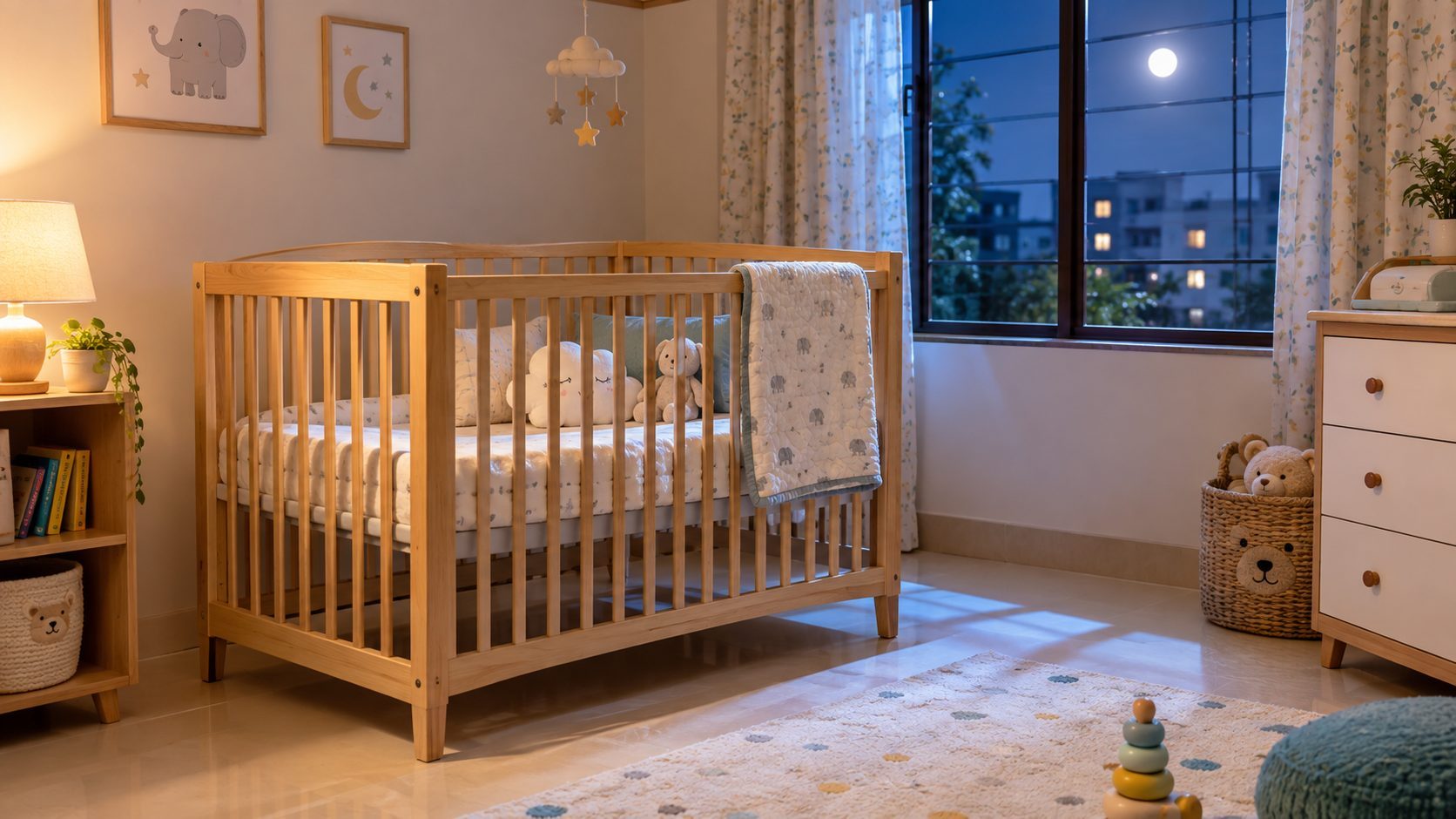
The 4-month sleep regression happens when your baby's sleep cycles mature from two stages to four, lasting 2-6 weeks. The 8-month regression coincides with crawling and separation anxiety, also lasting 2-4 weeks. Both require patience, consistent routines, and avoiding new sleep crutches—not a new product or a change in approach.
ℹ️ General information, not medical advice. If your baby seems unwell or anything worries you, talk to your paediatrician. Medical disclaimer
⚡ In a hurry? Our quick picks
Sleep regression is real, it's temporary, and it hits almost every baby. If your 4-month-old or 8-month-old has suddenly stopped sleeping through the night or fights naps, you're not alone—and you haven't done anything wrong. The problem isn't your baby or your routine. It's their brain and body developing faster than their sleep habits can keep up.
🏆 Quick comparison: our top picks
| Product | Award | Price | |
|---|---|---|---|
 Philips Avent DECT Baby Monitor SCD580/26 |
👑 Premium Pick | ₹4,824 | See alternatives → |
 Amazon Basics Blackout Window Curtain Pair (48x63 inches) |
🪙 Budget Pick | ₹698 | Check price → |
 Babyhug 100% Cotton Muslin Sleep Sack |
₹799 | Check price → | |
 Mee Mee Baby Sleep Nest with Pillow |
₹699 | See alternatives → |
🛒 Our Top Picks

The highest-priced option in this guide.
Philips Avent DECT Baby Monitor SCD580/26
- ✓ DECT digital connection (no WiFi needed)
- ✓ Night vision
- ✓ Temperature monitoring
* We earn a small commission — at no extra cost to you.
The lowest-priced option in this guide.
Amazon Basics Blackout Window Curtain Pair (48x63 inches)
- ✓ 100% polyester blackout fabric
- ✓ Blocks 85-90% of light
- ✓ Thermal insulation properties
* We earn a small commission — at no extra cost to you.

Babyhug 100% Cotton Muslin Sleep Sack
- ✓ 100% cotton muslin fabric
- ✓ Lightweight and breathable
- ✓ Available in sizes for 0-3 months, 3-6 months, 6-12 months
* We earn a small commission — at no extra cost to you.

Mee Mee Baby Sleep Nest with Pillow
- ✓ 100% organic cotton nest
- ✓ Detachable memory foam pillow
- ✓ Portable co-sleeper design
* We earn a small commission — at no extra cost to you.
Daily baby tips, exclusive Amazon deals & real parent advice — free forever.
Let me walk you through what happens at each stage, why it happens, how long to expect it, and the routines that actually help. This is the timeline guide I wish someone had given me when my first hit the 4-month wall.
What Is Sleep Regression and Why Do Babies Have It?
Sleep regression: a temporary period (usually 2-6 weeks) when a baby who was sleeping well suddenly wakes frequently, resists naps, or fights bedtime, triggered by developmental leaps in brain maturation or physical milestones. These regressions are developmental checkpoints, not setbacks—they signal progress. At 4 months and 8 months, your baby's nervous system is reorganizing, and that chaos shows up in sleep first.
According to IAP guidelines, sleep regressions are expected developmental phases, not signs of hunger, illness, or parenting failure. Your baby isn't regressing; they're progressing.
The 4-Month Sleep Regression: Week-by-Week Timeline
The 4-month regression is the biggest one because it's the first. Your baby's sleep architecture changes fundamentally. Before 4 months, babies have just two sleep stages (similar to adults' deep and REM sleep). At 4 months, this reorganizes into four stages—the same architecture adults have. That rewiring takes 2-6 weeks, and during that time, sleep feels broken.
Week 1 (The Shock): Night waking increases suddenly—every 2-3 hours instead of stretches of 4-6. Your baby might wake crying but not hungry. Naps shorten or become harder to initiate. You'll notice more frequent night feeds even though your milk supply hasn't changed.
Week 2-3 (The Peak): This is the hardest part. Your baby may wake 4-6 times per night. Nap resistance is extreme—what used to be a 90-minute nap becomes 30-40 minutes. Bedtime routines that worked suddenly don't. Your baby may want to be held for every sleep or cry the moment you put them down. This is not hunger; this is their brain struggling to consolidate new sleep patterns.
Week 4-6 (The Emergence): Slowly, stretches of better sleep return. Not all at once, but you'll notice one night of 4-5 hours, then it drops back to 2-3, then inches forward again. Naps stabilize slightly. By week 5-6, most babies are sleeping nearly as well as before, though not perfectly.
During this window, the instinct to introduce a sleep prop—a dummy, co-sleeping, or white noise machine—is overwhelming. Resist it. These feel like they help because they soothe the baby during the regression, but they create dependency exactly when your baby needs to learn independent sleep.
The 8-Month Sleep Regression: Week-by-Week Timeline
The 8-month regression is different. It's not neurological; it's developmental. Your baby is crawling (or about to), sitting up, and—most importantly—understanding object permanence. They now know that when you leave the room, you still exist and might not come back. Separation anxiety peaks. Physical mobility also means your baby wakes more often simply because they're practicing rolling, sitting, or crawling in their sleep.
Week 1 (The Shift): Night waking increases, but it looks different—your baby may wake and immediately start practicing crawling or rolling in the cot. They're not crying from fear yet, just testing their new skills. Naps become shorter, and your baby seems restless.
Week 2-3 (Separation Anxiety Peaks): This is the hardest week. Your baby cries when you leave the room and only settles if you're visible or holding them. They may sleep only when they can see you or hear you nearby. Night waking is frequent, and your baby wants your presence to fall back asleep. Nap transitions are difficult because even a 30-minute separation feels impossible.
Week 4+ (Gradual Relief): By week 4, the anxiety eases slightly. Your baby understands that you leaving is temporary. Sleep stretches lengthen. Naps become more predictable. By 8-9 months, most babies have moved through this regression, though occasional night waking may persist if teeth are coming or a new motor skill is being practiced.
The 8-month regression typically lasts 2-4 weeks but can stretch to 6 weeks if other factors (teething, illness, travel) overlap.
Why Each Regression Happens at That Age
The 4-month regression isn't arbitrary—it aligns with when the brain switches from infant sleep patterns to adult-like sleep architecture. Before this age, babies can sleep through noise and light changes. After 4 months, they can't. A room that didn't matter at 3 months feels too bright at 5 months. This is why blackout helps suddenly start working after week 2-3 of regression, when your baby's new sleep sensitivity has emerged.
The 8-month regression coincides with crawling, object permanence, and the first real stranger anxiety. Your baby's prefrontal cortex is developing faster. They can now imagine scenarios—you leaving, you not coming back. They can also move independently in their cot, which causes frequent partial waking.
What Actually Helps During Sleep Regression
Consistency, not new products: The biggest mistake parents make is buying a new sleep sack, blackout curtain, or white noise machine during regression and expecting it to fix sleep. These aren't fixes; they're supports. If you're already using them, keep using them. If you're not, introduce them after the regression passes, not during.
Stick to your routine: Your bedtime routine—bath, massage, feed, story, song—is more important during regression than ever. It's not magical, but it's predictable, and predictability is calming when your baby's sleep is chaotic. Don't shorten it. Don't skip it.
Optimize the sleep environment: Once your baby hits week 2-3 and you notice they're sensitive to light, that's when a blackout curtain (around Rs. 600-800 on Amazon.in) becomes genuinely useful. Not before, not as a regression cure, but as a practical response to their changing needs. Similarly, a sleep sack (Rs. 700-1200) provides security and prevents temperature-related waking if your baby is now moving around more. These are quality-of-life upgrades, not regression fixes.
Avoid new sleep crutches: If your baby only fell asleep with rocking before regression, don't now introduce a dummy or co-sleeping as a regression solution. When regression ends—and it will—you'll have a new dependency to untangle. The regression is uncomfortable, but it's temporary. A new sleep crutch is not.
Night feeds during regression: At 4 months, if your baby was sleeping through at 3 months and suddenly wakes hungry again, that's real hunger—growth spurts often align with 4-month development. Offer feeds. At 8 months, frequent waking is rarely hunger alone. Your baby learned to comfort-nurse, and regression triggered the need for that comfort. Offer feeds if you're comfortable, but recognize the difference between genuine hunger and regression-driven waking.
When to See a Doctor
Sleep regression is developmental, not medical. But see a doctor if: your baby has fever, persistent diarrhea, or vomiting alongside sleep disruption; your baby is not gaining weight or feeding normally; your baby has a new rash or signs of infection; the sleep disruption is paired with unusual crying, inconsolability, or lack of responsiveness. Regression alone, even severe regression, does not require medical intervention. This is general information, not medical advice.
What IAP and WHO Guidance Says
- IAP: Sleep regressions are normal developmental phases and do not indicate a problem with feeding, sleep training, or parenting. Consistent routines and environmental consistency are the foundation of infant sleep health.
- WHO: Infant sleep patterns change significantly in the first year as the brain matures. Night waking and frequent feeding during developmental leaps are expected, not failures.
The Bottom Line: Regressions End
The 4-month regression lasts 2-6 weeks on average. The 8-month regression lasts 2-4 weeks. Both feel like forever when you're in the middle of them. You will wake up one morning—maybe week 5, maybe week 7—and realize your baby slept through. Then they'll regress again (yes, there's a 12-month one, and sometimes an 18-month one, but they get shorter). Regressions are proof your baby's brain is developing at exactly the pace it should. That's worth a few rough weeks of sleep.
📚 Sources
The guidance in this article draws on the sources below. It is general information, not medical advice: for any concern about your child's health, talk to your paediatrician.
- Indian Academy of Pediatrics (IAP) Infant Sleep Guidelines — Guidance on sleep regressions as developmental phases and role of consistent routines
- WHO Child Development Milestones: Sleep Architecture Changes — Sleep cycle maturation and developmental milestones at 4 months and 8 months
Last updated 16 Nov 2026
Frequently Asked Questions
How long does sleep regression usually last?
Is my 4-month-old fussy because of sleep regression or hunger?
What is the hardest month for a baby's sleep?
Can I sleep-train during sleep regression?
Do blackout curtains and sleep sacks help with sleep regression?
Why does my 8-month-old only sleep when I'm in the room?
Daily baby tips, exclusive Amazon deals & real parent advice — free forever.