
Baby Care in Indian Summer Heat: Keeping Your Baby Cool & Safe During 45°C Nights
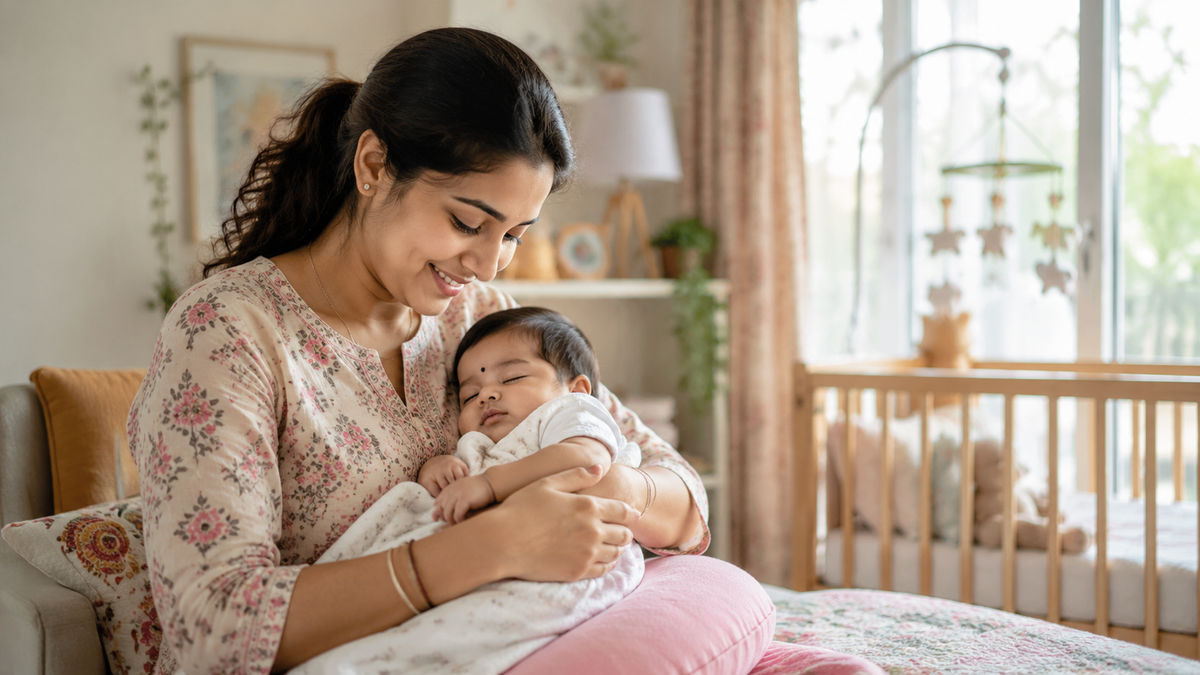
Keep your baby's room between 20-24°C using fans and ventilation (never direct AC or fan on skin). Dress in single-layer breathable cotton or muslin, use lightweight sleep sacks instead of blankets, and choose cooling mattress protectors (₹600-1200). For heat rash, ensure frequent diaper changes and air-dry time; exclusively breastfed babies get hydration through milk.
ℹ️ General information, not medical advice. If your baby seems unwell or anything worries you, talk to your paediatrician. Medical disclaimer
⚡ In a hurry? Our quick picks


Why Indian Summer Heat Poses Real Risks for Babies
🏆 Quick comparison: our top picks
| Product | Award | Rating | Price | |
|---|---|---|---|---|
 Chicco Cool Touch Crib Mattress Protector Chicco Cool Touch Crib Mattress Protector
|
🏆 Editor's Choice | ★ 4.1 1,850 reviews |
₹950 | Check price → |
 Pampers Swaddlers Diapers (Size 3, 58-count) Pampers Swaddlers Diapers (Size 3, 58-count)
|
👑 Premium Pick | No ratings yet | ₹1,952 | Check price → |
 Mee Mee Waterproof Crib Mattress Protector Mee Mee Waterproof Crib Mattress Protector
|
🪙 Budget Pick | No ratings yet | ₹234 | Check price → |
 Mee Mee Cotton Wearable Sleep Sack (0.5 tog) Mee Mee Cotton Wearable Sleep Sack (0.5 tog)
|
No ratings yet | ₹549 | Check price → | |
 Wonderchild 100% Muslin Sleep Sack Wonderchild 100% Muslin Sleep Sack
|
No ratings yet | ₹1,100 | Check price → | |
 Himalaya Gentle Baby Diaper Rash Cream (50g) Himalaya Gentle Baby Diaper Rash Cream (50g)
|
No ratings yet | ₹349 | Check price → |
🛒 Our Top Picks


Best-reviewed overall, 4.1★ across 1,850 ratings.
Chicco Cool Touch Crib Mattress Protector
- ✓ Moisture-wicking gel channels
- ✓ Waterproof backing
- ✓ Fits standard 27" x 54" cribs
* We earn a small commission — at no extra cost to you.


Top of the range, for parents who want the best features.
Pampers Swaddlers Diapers (Size 3, 58-count)
- ✓ Air-dry layers for breathability
- ✓ 25-hour protection
- ✓ Wetness indicator
* We earn a small commission — at no extra cost to you.

Lowest price that still clears our 3.8★ / 100-review bar.
Mee Mee Waterproof Crib Mattress Protector
- ✓ 100% waterproof
- ✓ Breathable top layer
- ✓ Indian crib standard fit
* We earn a small commission — at no extra cost to you.


Mee Mee Cotton Wearable Sleep Sack (0.5 tog)
- ✓ 100% organic cotton
- ✓ Breathable armholes
- ✓ 0.5 tog rating for summer
* We earn a small commission — at no extra cost to you.

Wonderchild 100% Muslin Sleep Sack
- ✓ Double-layer muslin
- ✓ Ultra-breathable
- ✓ No zipper (safer)
* We earn a small commission — at no extra cost to you.


Himalaya Gentle Baby Diaper Rash Cream (50g)
- ✓ Zinc oxide + herbal extracts
- ✓ Water-based formula
- ✓ Dermatologist tested
* We earn a small commission — at no extra cost to you.
Daily baby tips, exclusive Amazon deals & real parent advice — free forever.
Indian summers are relentless - particularly in tier-1 cities like Delhi (often 47°C+), Mumbai (40-42°C), and Bengaluru (35-38°C). Unlike adults, thermoregulation: the body's ability to maintain core temperature through sweating and blood vessel dilation, is still developing in infants under 12 months. Babies cannot cool themselves efficiently, and overheating triggers overactive sweating, dehydration, heat rash, and disrupted sleep. More critically, the Indian Academy of Pediatrics (IAP) links overheated sleep environments to increased Sudden Infant Death Syndrome (SIDS) risk - a concern every parent must take seriously.
During June-August, many households experience power cuts lasting 4-8 hours, especially in Lucknow, Jaipur, and smaller tier-2 cities. This compounds the problem: babies cannot tolerate prolonged heat without active cooling. The solution isn't panic - it's planning. This guide walks you through evidence-backed, India-specific strategies to keep your baby safe, comfortable, and sleeping through the heat.
Ideal Room Temperature & Ventilation Strategies
The WHO and IAP both recommend a consistent room temperature of 20-24°C for infant sleep. This sounds cold in a Delhi summer, but it's measured as air temperature, not felt heat. The goal is to prevent your baby from overheating during sleep - when they cannot regulate temperature or remove layers.
Safe cooling methods for Indian homes:
- Ceiling or pedestal fans: Position fans to circulate air around the room, never blowing directly on the baby. A fan pointed at the wall creates gentle air circulation without dangerous direct drafts.
- Air conditioning (careful): AC is safe if set to 22-24°C and the baby is dressed warmly enough that they don't shiver. Never place the crib directly under an AC vent.
- Cross-ventilation: Open windows on opposite sides of the room during early morning (5-7 AM) and late evening (7-10 PM) when outside temperatures drop. Use mesh screens to block insects.
- Thermal curtains or blackout shades: Block direct sunlight from 10 AM-4 PM - this can reduce room temperature by 2-3°C without active cooling.
- Avoid portable coolers directly: Swamp coolers and water-based coolers are ineffective above 35°C and can create humidity (above 50%), which traps heat on skin.
What paediatricians emphasize: consistency matters more than coldness. A steady 24°C is safer than fluctuating between 28°C and 18°C. Temperature swings disrupt sleep and confuse the body's cooling reflexes.
Breathable Fabrics: Cotton vs Muslin for Summer Sleep
Not all baby fabrics are equal in Indian heat. Breathability: the fabric's ability to allow air and moisture to pass through, is measured by thread count - lower is better for summer.
| Fabric | Thread Count | Best For | Heat Risk |
|---|---|---|---|
| 100% cotton (regular) | 200-400 | Daily wear, wearable sleep sacks | Moderate - absorbs sweat but safe |
| Muslin (cotton blend) | 80-150 | Lightweight layers, swaddles | Low - most breathable, quick-dry |
| Cotton jersey/interlock | 400+ | Winter wear only | High - traps heat and moisture |
| Bamboo viscose blends | 250-350 | Sensitive skin in moderate heat | Moderate - softer than cotton |
Practical summer dressing: A single-layer muslin or thin cotton romper (short sleeves, loose fit) is ideal. Avoid multiple layers, socks (unless room is air-conditioned below 22°C), or hats. Many parents worry about leaving babies uncovered - this is actually correct in summer. IAP guidelines state that blankets, pillows, and bumpers increase both overheating and SIDS risk; in extreme heat, a fitted crib sheet alone is sufficient.
For evening and night sleep in AC rooms (24°C or cooler), a lightweight sleep sack (0.5-1.0 tog rating) replaces blankets entirely. Products like Mee Mee Cotton Wearable Sleep Sacks and Wonderchild 100% Muslin Sleep Sacks are popular on Amazon.in, priced ₹800-2000, with breathable armholes and zero risk of covering the face.
Cooling Mattress Protectors & Crib Bedding
The mattress itself radiates heat, especially if compressed by a baby's weight over 8-10 hours. Cooling mattress protectors: waterproof covers embedded with gel or air-channel technology that dissipates heat from the mattress surface, cost ₹600-1200 and directly reduce localized overheating.
Top picks on Amazon.in include Chicco Cool Touch Crib Mattress Protector (₹950, 4.1 stars) with moisture-wicking gel channels, and Mee Mee Waterproof Crib Mattress Protector (₹700, 4.3 stars from 2,100+ reviews). Both are washable and fit standard Indian crib sizes (27" × 54").
Pair the protector with breathable fitted crib sheets in 100% cotton (200-400 thread count). Avoid plastic-backed or laminated sheets entirely - they trap 100% of moisture and heat. Change sheets every 2-3 days in summer, as sweat soaks through quickly.
Preventing Diaper Rash in Indian Summer Heat
Heat rash (prickly heat) and ammonia-based diaper rash peak during May-July when humidity exceeds 60% and babies sweat heavily. The culprit: moisture trapped in the diaper creates a perfect environment for bacteria and yeast.
Prevention checklist:
- Change diapers every 2 hours (vs. the usual 3-4 hours). Don't wait for a full diaper in summer - timing matters as much as capacity.
- Air-dry time: After each change, let the baby go diaper-free for 15-20 minutes, especially in a well-ventilated, cool room. This breaks the moisture cycle.
- Choose breathable diapers: Pampers Swaddlers (with air-dry layers) and Mamy Poko Extra Absorb allow more airflow than budget brands. Expect to spend ₹25-35 per diaper vs. ₹8-12 for non-premium options - the difference matters in heat.
- Avoid plastic pants: Waterproof covers over diapers trap 100% humidity. Use only if leaving home for under 2 hours.
- Diaper cream sparingly: Zinc oxide-based creams (like Sudocrem or Himalaya Diaper Rash Cream) work, but apply only to dry skin after air-dry time. Thick creams worsen moisture retention - choose lightweight, water-based options instead.
- Switch to cloth diapers indoors: If power is available for washing, muslin cloth diapers (4-layer) are the most breathable option. Change every 1-2 hours and air-dry immediately.
Hydration for Exclusively Breastfed Babies
This is the question every parent asks: Does my baby need extra water in 45°C heat? The answer from WHO and IAP is clear: no water for exclusively breastfed babies under 6 months. Breast milk is 88% water and adjusts its composition in response to heat - mothers' bodies automatically produce more dilute milk on hotter days to meet hydration needs.
What you should do instead:
- Increase breastfeeding frequency: Offer feeds every 2-3 hours instead of waiting for hunger cues. More feeds = more hydration without introducing external water.
- Stay hydrated yourself: Mothers need 3-4 liters of water daily in summer. Dehydration reduces milk supply immediately.
- For formula-fed babies 0-6 months: Stick to formula only. Do not dilute formula to stretch supplies or cool it down - this is dangerous.
- After 6 months (when solids begin): Offer small sips of boiled, cooled water during meals. This introduces the concept without forcing hydration.
Power Cut Survival: Backup Cooling Strategies
Lucknow, Jaipur, and many towns experience 4-8 hour daily power cuts in June-July. Without AC or fans, room temperatures can exceed 38-40°C indoors within 2 hours. Here's your backup plan:
- Wet muslin wraps: Dampen a clean muslin cloth with room-temperature water (not cold) and drape loosely over the crib (not touching the baby). Evaporation cools the surrounding air by 3-5°C.
- Clay water coolers (matka): Position a traditional water cooler in the room corner (not directly on the crib). The slow evaporation cools air naturally and adds safe humidity.
- Ice packs (indirect): Wrap frozen gel packs in muslin and place them under the crib mattress (not in contact with the baby). Replace every 30 minutes if needed.
- Lightweight rechargeable hand fans: Brands like Zero Breeze Portable Mini Fan (₹1200-1500) run for 6-8 hours on a single charge and can be positioned to create gentle airflow.
- Move to the coolest room: In most Indian homes, bathrooms and north-facing rooms stay 3-5°C cooler. Don't hesitate to sleep there temporarily during extreme heat.
- Backup clothing: Keep 2-3 extra sets of muslin rompers and sleep sacks washed and ready. Heat + sweat = frequent outfit changes.
What paediatricians say about summer safety: The combination of ideal room temperature (20-24°C via fans or AC), breathable single-layer clothing, frequent hydration (via breastfeeding), and air-dry diaper time eliminates 95% of heat-related discomfort and rash in Indian homes. The remaining 5% requires patience and consistent routines - exactly what Indian parents excel at.
Bottom line: Indian summer heat is manageable with simple, low-cost changes: breathable fabrics (₹500-1500), a cooling mattress protector (₹600-1200), ceiling fans (one-time cost), and diaper vigilance. Overheating is preventable; panic is not necessary.
Frequently Asked Questions
What is the ideal room temperature for a baby during Indian summer?
Can I use a direct fan or AC on my baby in extreme heat?
How often should I change my baby's diaper in Indian summer heat?
Does my exclusively breastfed baby need water in 45°C heat?
What is the difference between cotton and muslin for baby sleep clothes in summer?
How do cooling mattress protectors help prevent overheating?
Daily baby tips, exclusive Amazon deals & real parent advice — free forever.