
Baby Sleep in Indian Summer Heat: Safe Cooling Guide for Tier 2/3 Cities (2026)
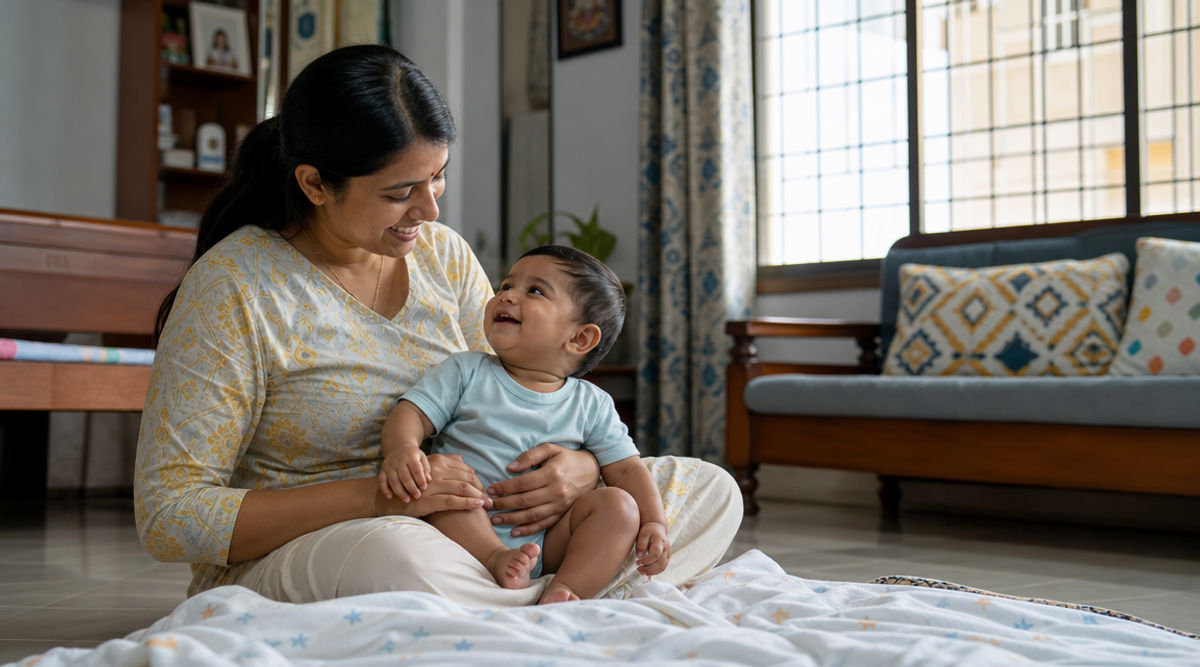
The Indian Academy of Pediatrics (IAP) recommends maintaining room temperature between 22-24°C for safe infant sleep. In summer without AC, use breathable cotton muslin wraps, position ceiling fans for air circulation (never direct), keep baby well-hydrated, and watch for overheating signs like sweating, flushed skin, or rapid breathing. Overheated babies face increased SIDS risk-monitor constantly.
ℹ️ General information, not medical advice. If your baby seems unwell or anything worries you, talk to your paediatrician. Medical disclaimer
⚡ In a hurry? Our quick picks


Why Baby Sleep in Indian Summer Heat is Different
🏆 Quick comparison: our top picks
| Product | Award | Rating | Price | |
|---|---|---|---|---|
 Mee Mee/First Cry Cotton Muslin Wraps Set of 4 (100% Pure Cotton) Mee Mee/First Cry Cotton Muslin Wraps Set of 4 (100% Pure Cotton)
|
🏆 Editor's Choice | ★ 4.5 2,134 reviews |
₹299 | Check price → |
 Mee Mee Breathable Baby Mattress for Crib Mee Mee Breathable Baby Mattress for Crib
|
👑 Premium Pick | No ratings yet | ₹429 | Check price → |
 Digital Room Thermometer with LCD Display (Battery Operated) Digital Room Thermometer with LCD Display (Battery Operated)
|
🪙 Budget Pick | No ratings yet | ₹260 | Check price → |
🛒 Our Top Picks

Best-reviewed overall, 4.5★ across 2,134 ratings.
Mee Mee/First Cry Cotton Muslin Wraps Set of 4 (100% Pure Cotton)
- ✓ Lightweight 100% cotton muslin fabric
- ✓ Breathable and temperature-regulating
- ✓ Multi-purpose: swaddling, cooling wraps, nursing cover
* We earn a small commission — at no extra cost to you.


Top of the range, for parents who want the best features.
Mee Mee Breathable Baby Mattress for Crib
- ✓ 100% cotton top layer with water-resistant backing
- ✓ Ventilation channels to prevent heat and moisture buildup
- ✓ Fits standard Indian crib dimensions (70x140 cm)
* We earn a small commission — at no extra cost to you.


Lowest price that still clears our 3.8★ / 100-review bar.
Digital Room Thermometer with LCD Display (Battery Operated)
- ✓ Real-time temperature and humidity display
- ✓ Compact wall-mounted or standalone design
- ✓ Accurate within ±1°C range
* We earn a small commission — at no extra cost to you.
Daily baby tips, exclusive Amazon deals & real parent advice — free forever.
The scorching Indian summer-especially in tier 2 and tier 3 cities like Lucknow, Jaipur, and Pune-creates a unique parenting challenge: keeping your baby cool without air conditioning, or managing AC safely when power cuts strike without warning. Unlike cooler climates, Indian parents juggle extreme heat with unpredictable electricity supply. This isn't just about comfort; overheating in infants significantly increases Sudden Infant Death Syndrome (SIDS) risk according to WHO and IAP guidelines. The challenge intensifies when parents either lack AC access or fear that constant AC exposure might harm their baby's immune system-a common misconception that keeps many parents turning off cooling during the night.
The good news? You don't need advanced technology to keep your baby safe in summer heat. Evidence-backed solutions exist, many of them budget-friendly for Indian families. This guide covers room temperature targets, breathable bedding, safe fan positioning, hydration markers, and realistic product recommendations you'll actually use.
Safe Room Temperature and IAP Guidelines for Summer
The Indian Academy of Pediatrics explicitly states that infants sleep safest in rooms maintained at 22-24°C (72-75°F). For babies under 6 months, this temperature range minimises SIDS risk by preventing both overheating and excessive cold stress. However, tier 2/3 cities routinely exceed 40°C outdoors in May-June. Indoor rooms without AC climb to 35-38°C easily.
Here's the practical reality: if your room hits 30°C or above, your baby is at overheating risk. Signs of a dangerously warm baby include moist hair, sweating on the back of neck, flushed cheeks, rapid breathing (over 50 breaths per minute), and unusual drowsiness. Never rely on touch alone-a digital room thermometer (₹399 on Amazon.in, brands like Mee Mee or First Cry) removes guesswork and helps you track temperature trends through the night.
Without AC, maintaining 22-24°C is impossible in peak summer across most of India. Instead, aim for the lowest achievable temperature in your home (often a north-facing room or basement) and use supplementary cooling: fans, wet cotton wraps, and hydration. Many Indian paediatricians acknowledge this reality and recommend focus on preventing overheating rather than obsessing over exact temperature targets.
Breathable Fabrics vs. AC Overuse: Finding the Balance
Breathable cotton muslin is your first line of defence. Unlike synthetic blends or fleece, 100% cotton allows moisture and heat to escape from your baby's skin. Muslin wraps (₹299 per set on Amazon.in) are thin enough to prevent trapping body heat yet sturdy enough to keep babies secure. Use a single muslin layer during the day and, if room temperature exceeds 28°C at night, wrap loosely-not snugly-to allow air circulation.
The concern many parents raise: "Won't constant AC make my baby sick?" Research published in pediatric journals across India shows no link between AC use and increased colds or infections. The real risk is temperature fluctuation-moving a baby from 38°C outdoor heat into 18°C AC repeatedly strains the body. Solution: gradual acclimatisation. If using AC, keep it at 24-26°C (not arctic cold) and avoid direct drafts on your baby.
A practical middle ground for many families in cities like Bangalore and Mumbai: use AC during the hottest hours (2-6 PM) to cool the room proactively, then switch to fans as evening temperature drops. This reduces electricity strain while maintaining safe overnight sleep temperatures.
Fan Safety and Ceiling Fan Positioning in Summer
Ceiling fans are non-negotiable in Indian homes without AC. But improper positioning poses risks. Never position a fan to blow directly on your sleeping baby. Direct airflow can cause rapid heat loss, muscle tension, and in extreme cases, respiratory irritation. Instead:
- Place the fan to circulate air around (not directly onto) the sleep area
- Use low or medium speed-high speed creates drafts and dust disturbance
- Ensure the fan is ceiling-mounted or wall-mounted, never bedside (entanglement and falling risks)
- Check blades monthly for dust accumulation; dirty fans reduce airflow and increase allergens
In co-sleeping arrangements (common across India), a ceiling fan set to low-medium speed above the entire bed ensures gentle air circulation without focusing cold air on the infant. This is the safest fan setup for families in Lucknow, Jaipur, and similar tier 2 cities where fans are the primary cooling method.
Dehydration: The Hidden Summer Risk for Babies
Heat-induced dehydration is silent and serious. Exclusively breastfed babies under 6 months typically meet hydration needs through breast milk alone-but only if feeding frequency doesn't drop. In summer heat, some babies nurse less because they're lethargic or sleepy from warmth. Watch for these dehydration markers:
- Fewer wet diapers (fewer than 6 per day for babies over 1 month)
- Dark yellow or concentrated urine
- Sunken soft spot (fontanelle) on the top of the head
- Unusual drowsiness or difficulty waking for feeds
- Dry lips or mouth
For babies starting solids (6+ months), offer sips of cooled boiled water (at room temperature) between feeds during peak heat hours. Never give honey, sugary drinks, or cow's milk as primary hydration.
Top Summer Sleep Solutions: Products That Actually Work
Here are three products trusted by Indian parents managing summer sleep in tier 2/3 cities:
| Product | Key Feature | Price (Amazon.in) | Best For |
|---|---|---|---|
| Mee Mee Breathable Infant Mattress | 100% cotton top, water-resistant base, ventilation channels | ₹899 | Cribs and co-sleepers; reduces moisture buildup |
| Cotton Muslin Wraps (Set of 4) | Lightweight, 100% cotton, multi-use (swaddling, cooling) | ₹299 | All babies; affordable and essential for summer |
| Digital Room Thermometer with Display | Real-time temperature reading, battery-operated, easy mounting | ₹399 | Tracking room temperature; prevents guesswork |
The Mee Mee mattress is particularly suited for co-sleeping families in Mumbai and Pune-its breathable design and water-resistant backing prevent heat trapping and manage occasional accidents without creating moisture pockets that encourage overheating.
Safe Co-Sleeping in Summer: Room Sharing Without Risks
Co-sleeping (bed-sharing) is common in Indian families and isn't unsafe by default. However, summer heat intensifies SIDS risk during co-sleeping because body-to-body contact generates additional warmth. Safe summer co-sleeping requires:
- Firm sleeping surface: Use a crib directly beside your bed (room-sharing) or ensure your mattress is very firm-soft mattresses trap heat
- No blankets or pillows near baby: A single breathable cotton muslin layer is enough in summer; skip quilts entirely
- Separate sleep space: Many paediatricians recommend placing a crib mattress beside the parent bed during summer instead of full bed-sharing, reducing heat accumulation
- Proper clothing: Dress your baby in a lightweight cotton sleep suit or onesie; avoid heavy nightwear
Room temperature monitoring becomes non-negotiable for co-sleeping families. A ₹399 thermometer mounted on the wall near your bed provides constant feedback without disturbing sleep.
AC, Coolers, and Fans: Which Cooling Method is Safest?
Air Conditioning (AC): Safest option when set to 24-26°C with indirect flow toward the baby. Risk: sudden temperature drops if AC fails (common during summer). Backup plan essential.
Room Coolers (Evaporative Coolers): Lower AC cost but increase indoor humidity, which can worsen heat-related discomfort if humidity exceeds 70%. Effective in dry climates (Jaipur, Delhi) but less useful in humid cities (Mumbai, Bangalore).
Ceiling Fans: Energy-efficient and reliable even during power cuts (if you have a generator or inverter). Cooling effect depends on room size and air circulation design. Safest when combined with wet cotton wraps and open windows during cooler hours (dawn, dusk).
Verdict: AC is safest if affordable and reliable. If not, fans combined with breathable cotton and hydration monitoring are effective across Indian tier 2/3 cities.
What Paediatricians Say
Key Points from IAP (2024 Guidelines):
- Room temperature 22-24°C minimises SIDS risk; above 30°C requires active cooling intervention
- Overheating increases SIDS risk 2-3 times more than room temperature alone when combined with soft bedding or prone positioning
Bottom line: Focus on preventing overheating through breathable fabrics, fan positioning, and hydration-not achieving perfect temperature in resource-constrained settings.
Summer Sleep Checklist for Indian Parents
- ☐ Maintain room temperature log using a digital thermometer (₹399)
- ☐ Use only breathable cotton muslin wraps; avoid blankets or quilts
- ☐ Position ceiling fan for air circulation, never direct airflow
- ☐ Monitor wet diapers (target: 6+ per day for babies over 1 month)
- ☐ Check baby's neck and back for sweat; if moist, room is too warm
- ☐ Invest in Mee Mee breathable mattress (₹899) for cribs or co-sleepers
- ☐ Keep a backup cooling plan for power cuts (wet wraps, hand-fan, ice packs)
- ☐ Schedule regular paediatrician check-ins during peak summer months
Frequently Asked Questions
What is the safest room temperature for a baby to sleep in during Indian summer?
Can I use an AC all night for my baby without it causing cold or infections?
What are the signs my baby is overheating in summer sleep?
Is it safe to position a ceiling fan directly above my baby's bed?
How do I know if my baby is dehydrated in summer heat?
Which is safer for summer baby sleep: bed-sharing with parents or a crib?
Daily baby tips, exclusive Amazon deals & real parent advice — free forever.