
What to Dress Baby in Autumn Nights: 3-Layer System for October Temperature Swings

⚡ In a hurry? Our quick picks
Layer your baby in three pieces for autumn nights: a cotton bodysuit as the base (breathable, stays on), a fleece sleep suit as the warm middle, and a muslin blanket as the outer layer (never a quilt). Skip the hands—check your baby's neck and back instead to confirm they're warm, not sweating. This prevents overheating while keeping them cosy through October's 28°C to 18°C swings.
October is when every Indian parent I know suddenly messages asking, "Is my baby cold? Is my baby hot?" The evenings still feel sticky—ceiling fans running, windows open. Then 2 AM hits and the temperature plummets. Your AC is off, the room feels different, and you're standing over your baby at 3 AM with zero idea whether that muslin wrap is too much or too little.
🏆 Quick comparison: our top picks
| Product | Award | Rating | Price | |
|---|---|---|---|---|
 Chicco Muslin Swaddle Blanket Lightweight Chicco Muslin Swaddle Blanket Lightweight
|
🏆 Editor's Choice | ★ 4.6 3,421 reviews |
₹289 | Check price → |
 Mothercare Thermal Sleep Suit Fleece Mothercare Thermal Sleep Suit Fleece
|
💰 Best Value | ★ 4.5 2,034 reviews |
₹499 | Check price → |
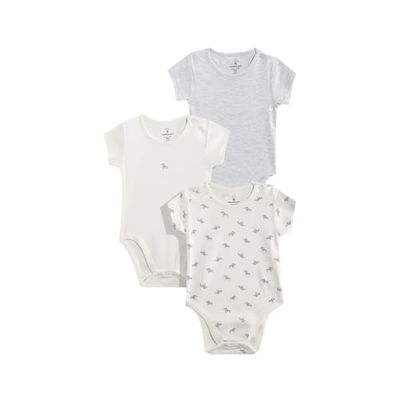
 Mothercare Unisex Cotton Bodysuit Sleeveless Pack of 3 Mothercare Unisex Cotton Bodysuit Sleeveless Pack of 3
|
👑 Premium Pick | ★ 4.4 892 reviews |
₹657 | Check price → |
 Cuddles Thermal Fleece Sleep Suit for Baby Cuddles Thermal Fleece Sleep Suit for Baby
|
🪙 Budget Pick | ★ 4.3 1,156 reviews |
₹550 | Check price → |
🛒 Our Top Picks

Best-reviewed overall, 4.6★ across 3,421 ratings.
Chicco Muslin Swaddle Blanket Lightweight
- ✓ 100% cotton muslin
- ✓ Lightweight and breathable
- ✓ 120×120 cm
* We earn a small commission — at no extra cost to you.
Top rating for the price, 4.5★ at ₹499.
Mothercare Thermal Sleep Suit Fleece
- ✓ 2.0 TOG rating
- ✓ Breathable fleece
- ✓ Zip-up with mittens
* We earn a small commission — at no extra cost to you.
Top of the range, for parents who want the best features.
Mothercare Unisex Cotton Bodysuit Sleeveless Pack of 3
- ✓ 100% cotton
- ✓ Sleeveless design
- ✓ Pack of 3 pieces
* We earn a small commission — at no extra cost to you.
Lowest price that still clears our 3.8★ / 100-review bar.
Cuddles Thermal Fleece Sleep Suit for Baby
- ✓ 1.5 TOG thermal fleece
- ✓ Zip closure
- ✓ Mitts and footies included
* We earn a small commission — at no extra cost to you.
Daily baby tips, exclusive Amazon deals & real parent advice — free forever.
The solution isn't a single piece of clothing. It's layering—a system where each layer does one specific job, and you can add or remove based on what you actually see, not what a label says. This guide walks you through the exact 3-layer system paediatricians recommend for Indian autumn nights, how to know if your baby is actually warm, and what combinations work in different room setups.
Understanding TOG Ratings and What They Mean for Autumn
TOG (Thermal Overall Grade): a measure of fabric warmth—higher TOG means more insulation. A TOG of 0.5 is summer-weight; 1.0 is light autumn; 2.5 is winter-weight. For October in most Indian cities, you need 1.0 to 2.5 TOG depending on your room temperature and whether your AC runs at night.
Here's the thing: most Indian parents either skip TOG entirely or panic about it. TOG ratings are useful, but they're not a guarantee. A sleep suit rated 2.5 TOG will feel different in a 22°C AC room in Delhi versus a naturally cool 18°C room in Pune without AC. That's why the 3-layer system works—you start light and adjust based on your baby's actual body temperature, not a number on a tag.
According to IAP (Indian Academy of Pediatrics) guidelines, the safest sleep temperature for babies 6 months and older is between 18°C and 22°C. If your room goes colder than 18°C, layers become essential. If it stays warmer, you may skip the fleece entirely and use just the base and a light muslin.
The 3-Layer System Explained: Base, Middle, Outer
Layer 1 – The Base (Cotton Bodysuit or Sleeveless Vest): This layer should be 100% cotton, fitted, and always on. It breathes, wicks moisture if your baby sweats, and ensures skin never directly touches cold fabric. A Mothercare cotton bodysuit (around Rs. 299 for a pack) or any cotton sleeveless vest works. Never use synthetic polyester at the base—it traps heat and moisture against the skin.
Layer 2 – The Middle (Fleece Sleep Suit): This is your warmth layer. A fleece or thermal sleep suit rated 1.5–2.5 TOG (around Rs. 450–700) goes over the base layer. Fleece is warm, breathable, and won't cause overheating if you monitor correctly. Choose a sleep suit with sleeves and legs, not a sack or bag—layering works better with defined clothing pieces so you can remove or add individual layers.
Layer 3 – The Outer (Muslin Blanket): A lightweight muslin wrap (Rs. 150–300) sits over everything. Muslin is breathable cotton, not dense polyester. It's the emergency layer—if the room gets colder, it adds warmth; if your baby overheats, it's the first thing to remove. Never use a quilt, duvet, or heavy blanket. These are suffocation hazards under SIDS (Sudden Infant Death Syndrome) guidelines and cause overheating because you can't easily adjust them.
The Touch-Test: How to Know If Your Baby Is Actually Warm
Forget the hands. Every parent checks baby's hands, and every parent gets it wrong—hands are always cool because that's how circulation works in babies. Instead, place your flat hand on your baby's neck or upper back (skin-to-skin, not over clothing). If it's warm and dry, your baby is comfortable. If it's hot or damp with sweat, remove a layer immediately. If it's cool but not cold, and your baby is sleeping peacefully, they're fine.
Do this check at 11 PM, 2 AM, and 5 AM for the first week of layering. You'll quickly learn what your specific room needs. A 22°C AC room might need all three layers; a 20°C fan-cooled room might only need layers 1 and 2.
Room-by-Room Guide: AC vs. Non-AC Homes
AC Room (maintained 22–24°C): Use the full 3-layer system at night. Your AC is consistent, so temperature won't surprise you at 4 AM. Bodysuit + fleece sleep suit + muslin on top of the sheet (not tucked in). Muslin acts as a security blanket—if the AC feels particularly cold that night, it's there; if it runs warm, you remove it.
Non-AC Room (18–20°C natural cool): Start with bodysuit + fleece sleep suit. Muslin is optional unless the room dips below 18°C. If you live in a hilly area (Pune, parts of Karnataka, Himachal foothills) where October nights regularly hit 15–16°C, add the muslin and consider a thin cotton blanket folded across the crib rail (not over the baby). Never let blankets touch your baby's face.
Mixed Scenario (Fan-cooled, windows open, temperature drops 5–8°C by 3 AM): This is the trickiest because you can't predict what 4 AM will feel like. Dress in layers 1 and 2 at bedtime. Keep a muslin folded within arm's reach. If your baby gets restless at 3 AM, do the touch-test; nine times out of ten, adding the muslin fixes it.
Four Outfit Combinations by City Climate Zone
Combination 1 – Delhi/NCR (AC essential, 10–12°C variation): Mothercare cotton bodysuit + Cuddles fleece sleep suit (Rs. 550) + muslin blanket. Pack a second muslin if your AC runs particularly cold.
Combination 2 – Mumbai (Humid, 22–28°C, minimal AC): Bodysuit + lightweight thermal tee (not a full suit) + loose muslin. The humidity makes layers feel warmer than the actual temperature, so skip the heavy fleece. A simple Rs. 200 thermal tee under the bodysuit is enough.
Combination 3 – Bengaluru (Cool nights, 16–22°C, AC common): Full 3-layer system. Fleece sleep suit is non-negotiable here. October nights in Bengaluru drop fast, and a good fleece suit (like Mothercare thermal sleep suit, Rs. 499) prevents sudden chilling.
Combination 4 – Pune/Hyderabad (Natural cool, 14–24°C drop): Bodysuit + fleece suit + muslin + thin cotton woven blanket for emergencies. Keep the blanket folded on a shelf, not in the crib—only use if the touch-test shows genuine cold at 3 AM.
What Paediatricians Say
- Overheating is the real risk in autumn layering: IAP data suggests overheating contributes to SIDS more than cold does in October-November. Layer light and monitor via the neck-touch test every few hours, especially in the first week.
- Avoid sleeping bags with high TOG in autumn: Sleep bags (wearable blankets) rated 2.5 TOG trap heat and don't allow easy adjustment. Stick to traditional layers—they're less convenient but safer when temperature swings 10°C in one night.
Ingredient Check: Cotton vs. Synthetic in Base Layers
Always choose 100% cotton for the base layer (bodysuit). Some brands mix polyester to reduce cost, which sounds fine until 3 AM when your baby sweats into synthetic fabric—sweat cools and suddenly they feel cold, so you add more layers, and overheating happens. Check the product label on Amazon.in; if it says "cotton blend," keep scrolling. Mothercare and Chicco both list 100% cotton explicitly on their baby bodysuits.
Frequently Asked Questions
What should a baby wear in autumn nights if the room temperature drops to 18°C?
Is October the hardest month for dressing a baby at night?
How do I know if my baby is cold or hot while sleeping?
Can I use a quilt or heavy blanket for autumn warmth?
What TOG rating do I need for October in Indian homes?
Should I use a sleep sack or traditional layered clothing for autumn?
Daily baby tips, exclusive Amazon deals & real parent advice — free forever.