
9 Month Baby Toys by Milestone: Crawling to Cause-Effect Under ₹1,500

At 9 months, babies need toys that match their motor skills: push balls for crawling (₹199), stacking rings for pincer grasp (₹299), peek-a-boo boxes for object permanence (₹350), and pop-up toys for cause-effect play (₹450). All four fit under ₹1,500 and should carry BIS safety certification.
⚡ In a hurry? Our quick picks

By 9 months, your baby isn't just sitting anymore—they're crawling, grabbing with precision, and starting to understand that things still exist even when hidden. This is the sweet spot where toy choice starts to matter more than ever. The right toy at this stage doesn't just entertain; it builds the neural pathways your baby needs for the next 12 months of development. Most parents I know grab whatever looks colorful and hope for the best. But 9-month toys are specific. Each one teaches something different, and picking the right order saves money and keeps your baby engaged without overwhelm.
🏆 Quick comparison: our top picks
| Product | Award | Price | |
|---|---|---|---|
 Sassy Developmental Ball |
👑 Premium Pick | ₹3,200 | See alternatives → |
 Playskool Pipeworks Stacking Ring Toy |
🪙 Budget Pick | ₹292 | Check price → |
 Toy Kraft Peek-a-Boo Box |
₹549 | Check price → | |
 Funskool Pop-Up Friends Toy |
See on Amazon | See alternatives → |
🛒 Our Top Picks
The highest-priced option in this guide.
Sassy Developmental Ball
- ✓ BIS certified
- ✓ Soft, textured grip
- ✓ Lightweight for crawling babies
* We earn a small commission — at no extra cost to you.


The lowest-priced option in this guide.
Playskool Pipeworks Stacking Ring Toy
- ✓ BIS safety mark
- ✓ 4 removable rings
- ✓ Develops pincer grasp
* We earn a small commission — at no extra cost to you.
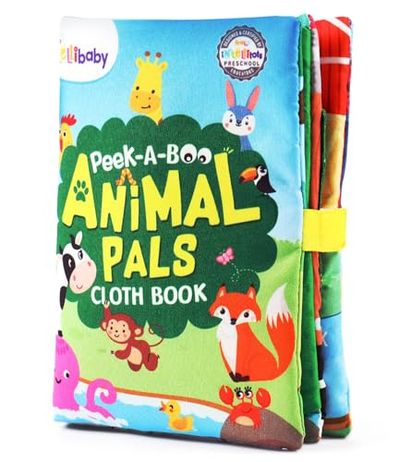
Toy Kraft Peek-a-Boo Box
- ✓ BIS certified
- ✓ 4 hidden compartments
- ✓ Teaches object permanence
* We earn a small commission — at no extra cost to you.
Funskool Pop-Up Friends Toy
- ✓ BIS safety certified
- ✓ 5 pop-up characters
- ✓ Button and lever press mechanics
* We earn a small commission — at no extra cost to you.
Daily baby tips, exclusive Amazon deals & real parent advice — free forever.
The toys that work best at this age align with what developmental psychologists call milestone-based play: toys that meet your baby exactly where their skills are right now. A push ball works because your crawling baby can chase it. Stacking rings work because your baby's pincer grasp (thumb and finger) is finally strong enough to grip small objects. A peek-a-boo box teaches object permanence—the idea that Mummy still exists even when she's behind her hands. And pop-up toys teach cause-and-effect: press the button, something happens. These aren't luxury ideas; they're how babies learn to think.
Over the next 800 words, I'm breaking down exactly which toy to buy first, when to add the second one, and how to check every toy for safety before it goes near your baby's mouth. I've also built a buying order that respects both your budget and your baby's actual developmental needs.
The 4-Toy Milestone Checklist: Which Toy, When, and Why
A 9-month-old's brain is racing through four big leaps at the same time. The right toy for each leap keeps your baby engaged and builds confidence. Here's the exact order that works:
- Push Ball (₹199) — For crawling and gross motor control. Your baby is mobile now; a soft, lightweight ball they can chase, bat with their hands, or push with their feet teaches them that movement has immediate results. Brands like Sassy and Infantino make BIS-certified options on Amazon.in in the ₹180–250 range. Why it matters: Crawling babies learn spatial awareness and cause-effect by following something that moves. A rolling ball is pure physics play.
- Stacking Rings (₹299) — For pincer grasp and hand-eye coordination. At 9 months, babies can finally use their thumb and fingers together to pick up small objects. Stacking rings (a cone with removable rings) give them the satisfaction of taking something off and putting it back on. Brands like Playskool and Little Learner offer BIS-marked versions for ₹280–350 on Amazon.in. Why it matters: This toy teaches spatial reasoning—how objects fit together—and fine motor control. Your baby learns that their hands can make things happen in a specific way.
- Peek-a-Boo Box (₹350) — For object permanence. Peek-a-boo boxes have doors or flaps that hide small objects inside. Your baby opens the door and finds a surprise. Brands like Toy Kraft and Fisher-Price sell BIS-certified boxes for ₹330–400 on Amazon.in. Why it matters: Object permanence is a huge cognitive leap. Before this, when something left your baby's sight, it ceased to exist (in their mind). This toy teaches that objects still exist even when hidden. It's foundational for trust and patience.
- Pop-Up Toy (₹450) — For cause-and-effect learning. Press a button, twist a knob, or pull a lever, and a figure pops up or a sound plays. Brands like Hasbro and Funskool make BIS-certified pop-up toys for ₹400–550 on Amazon.in. Why it matters: Pop-up toys are the first time babies truly learn that their action causes a specific result. This is the beginning of problem-solving and intentional play.
Safety First: Choking Size, BIS Marks, and What to Check Before Buying
Every toy your 9-month-old touches must pass two checks: the choke-tube test and the BIS safety mark. The choke-tube test is simple—any object smaller than a toilet paper roll (about 4.5 cm diameter) can lodge in a baby's windpipe. On Amazon.in, look for the product image or specification section that lists dimensions. If a ring or piece is smaller than a toilet-paper-roll width, it's not safe for this age. The BIS mark (Bureau of Indian Standards) is a small certification logo on the product packaging. Every reputable toy sold on Amazon.in for babies under 3 years must carry this. If a listing doesn't mention it, ask the seller in the Q&A section before buying.
When you receive your toy, inspect it for loose seams, chipped paint, or small parts that might come off. Soft toys should have their stitching intact. Plastic toys should have no cracks. If anything feels flimsy, return it. Amazon.in's return window is 30 days for toys, so use it if you're unsure.
Budget-Smart Buying Order: Build Your Toy Collection Under ₹1,500
If you have ₹1,500 to spend on toys for your 9-month-old, this is how I'd allocate it:
| Toy | Skill It Teaches | Price on Amazon.in | Brand Example |
|---|---|---|---|
| Push Ball | Crawling, gross motor, cause-effect | ₹199 | Sassy Developmental Ball |
| Stacking Rings | Pincer grasp, spatial reasoning | ₹299 | Playskool Pipeworks |
| Peek-a-Boo Box | Object permanence, memory | ₹350 | Toy Kraft Peek-a-Boo Box |
| Pop-Up Toy | Cause-effect, problem-solving | ₹450 | Funskool Pop-Up Friends |
| Total for all 4 | All major milestones | ₹1,298 | Leave ₹200 for replacements |
This order matters. Buy the push ball first—it's the cheapest and works for any baby who's mobile. If your baby isn't crawling yet, wait two weeks and then introduce it. Then add stacking rings. Then the peek-a-boo box. Save the pop-up toy for last; it's the most complex cognitively and works best once your baby understands the first three toys. Spacing purchases also gives your baby time to master each toy before introducing novelty.
What IAP and WHO Guidance Says
Child Development and Toy Safety
Object Permanence Development: The Indian Academy of Pediatrics notes that object permanence develops between 6 and 12 months. Toys like peek-a-boo boxes directly support this cognitive milestone.
Toy Safety Standards: The Bureau of Indian Standards (BIS) sets toy safety requirements under IS 9873 for children under 3 years. All toys on Amazon.in should carry the BIS mark on packaging.
Avoid Toys That Don't Fit This Stage
It's tempting to buy toy sets or character toys that look fun, but at 9 months, complexity doesn't mean better. Avoid toys with batteries if your baby still mouths everything (they do). Skip toys with small detachable parts, even if they're labeled "3+" on the package—your 9-month-old can't follow age guidelines yet. Don't buy multiple push balls or multiple stacking-ring sets in one go; your baby learns through mastery, not quantity. One good toy mastered teaches more than five toys barely explored.
When to See a Doctor
If your baby seems uninterested in all toys by 10 months, or if they're not reaching for objects with either hand, mention it at your next pediatric checkup. This is general information, not medical advice. Every baby develops at their own pace, but a pediatrician can rule out any developmental concerns.
By 12 months, your baby will have outgrown these four toys and will be ready for stacking blocks, shape sorters, and push-along toys. But for the next three months, these four—under ₹1,500, all BIS-certified, all matched to real milestones—are the foundation.
📚 Sources
The guidance in this article draws on the sources below. It is general information, not medical advice: for any concern about your child's health, talk to your paediatrician.
- Indian Academy of Pediatrics - Developmental Milestones in Infancy — Supports object permanence development timeline and motor milestone expectations for 9-month-olds
- Bureau of Indian Standards - IS 9873:2017 Safety of Toys — Defines BIS safety certification requirements for toys for children under 3 years, including choking hazard standards
- WHO Child Development Guidelines — Provides developmental framework for cognitive and motor milestones at 9 months
Last updated 14 Nov 2026
Frequently Asked Questions
What's a good gift for a 9-month-old baby?
How many toys does a 9-month-old need?
What are some good toys for a 4-month-old baby?
What toys teach cause-and-effect to babies?
How do I know if a toy is safe for my 9-month-old?
When should a baby understand object permanence?
Daily baby tips, exclusive Amazon deals & real parent advice — free forever.