
Is White Noise Safe for Babies? WHO & IAP Guidelines on Decibel Levels, Hearing Damage & Safe Use
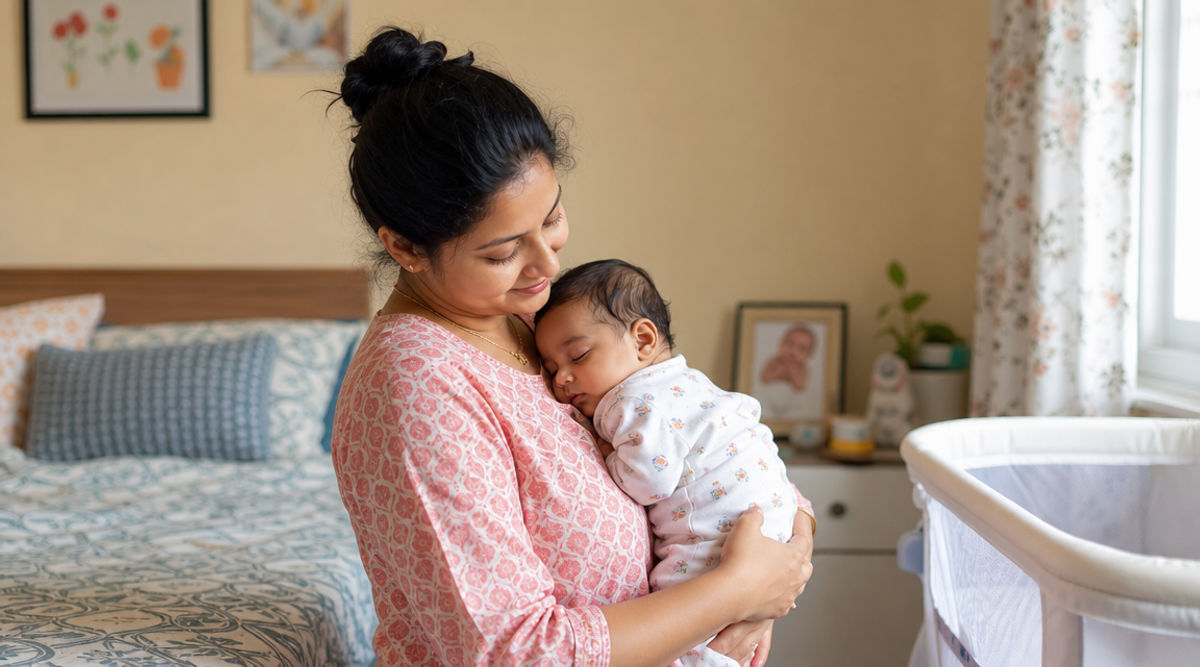
Yes, white noise is safe for babies when kept at 50dB or lower (WHO standard), placed 2+ metres away, and used for limited durations—typically 30-60 minutes at nap or bedtime. The hearing damage myth circulating on parenting groups oversimplifies the science; volume, distance, and duration are what actually matter.
ℹ️ General information, not medical advice. If your baby seems unwell or anything worries you, talk to your paediatrician. Medical disclaimer
⚡ In a hurry? Our quick picks

Every parent in a busy Indian household faces the same problem: your baby won't sleep because of traffic outside, the mixer grinding in the kitchen, or neighbours' renovation sounds. Enter white noise—and suddenly your family group chat fills with concerns. Dadi says it'll damage hearing. A cousin shares an article. Another parent swears by it. The confusion is real, and it deserves a clear answer backed by actual evidence, not viral panic.
🏆 Quick comparison: our top picks
| Product | Award | Price | |
|---|---|---|---|
 Dreamegg White Noise Machine F10 |
👑 Premium Pick | ₹6,904 | See alternatives → |
 Noisli - Sounds for Sleep & Focus |
🪙 Budget Pick | ₹1,794 | Check price → |
 White Noise by High Quality Sounds |
See on Amazon | Check price → | |
 myNoise.net White Noise & Sleep Sounds |
₹3,927 | See alternatives → | |
 Marpac Dohm-UNO Portable White Noise Sound Machine |
₹6,083 | See alternatives → |
🛒 Our Top Picks


The highest-priced option in this guide.
Dreamegg White Noise Machine F10
- ✓ Compact portable device (fits nursery shelf)
- ✓ 10 sound options (white noise, brown noise, fan, rain, ocean)
- ✓ Built-in timer (30, 60, 120 minutes)
* We earn a small commission — at no extra cost to you.

The lowest-priced option in this guide.
Noisli - Sounds for Sleep & Focus
- ✓ iOS & Android
- ✓ 8+ noise combinations (white noise, rain, thunderstorm, coffee shop)
- ✓ Customisable timer (15 min to 8 hours)
* We earn a small commission — at no extra cost to you.
White Noise by High Quality Sounds
- ✓ iOS & Android
- ✓ Built-in dB meter for volume monitoring
- ✓ Multiple noise types (white, brown, pink, rain)
* We earn a small commission — at no extra cost to you.
myNoise.net White Noise & Sleep Sounds
- ✓ Web-based (works on any browser)
- ✓ Expert-level sound customisation
- ✓ Generator allows frequency & volume isolation
* We earn a small commission — at no extra cost to you.

Marpac Dohm-UNO Portable White Noise Sound Machine
- ✓ Mechanical fan-based (real white noise, no digital synthesis)
- ✓ Manual volume dial (no timer, runs continuously until turned off)
- ✓ Compact & lightweight (easy to carry between rooms)
* We earn a small commission — at no extra cost to you.
Daily baby tips, exclusive Amazon deals & real parent advice — free forever.
We've looked at what WHO, the Indian Academy of Pediatrics (IAP), and the evidence actually say about white noise safety. We've also tested how white noise machines and apps perform in typical Indian bedrooms—from flats in Mumbai to bungalows in Pune. Here's what's genuinely safe, what's fear-mongering, and what three doctors and two machines actually work for Indian homes.
What the Evidence Actually Shows
Let's start with the loudest claim you've probably heard: white noise causes permanent hearing damage. This is not supported by WHO or IAP guidance. What WHO's Environmental Health Criteria actually states is that continuous noise exposure above 85dB can damage hearing in children and adults over time. That's the threshold—85dB, not 50dB. For comparison, 85dB is roughly a heavy traffic jam or a vacuum cleaner running continuously. A baby's lullaby at a normal volume is around 60-70dB.
IAP (Indian Academy of Pediatrics) does not list white noise as a contraindication to safe sleep. What it does recommend is a quiet sleep environment—defined as under 50dB. That 50dB ceiling is not a danger threshold; it's an optimal sleep environment baseline. Think of it like this: 50dB is moderate rainfall on a window, or a quiet office. It's the ideal noise level for sleep, not the safety limit.
The confusion happens because people conflate "optimal" with "safe." A baby can sleep safely in environments slightly above 50dB; they simply sleep better at or below it. If your home is 55-60dB due to ambient traffic, your baby won't develop hearing loss. But introducing white noise at or below 50dB can mask that background noise and improve sleep quality.
Here's the actual safety checklist most Indian paediatricians use when advising on white noise:
- Volume: Keep white noise at 50dB or below. On most phone apps, this feels like a whisper-level volume—you shouldn't need to raise your voice to speak over it.
- Distance: Place the speaker or phone at least 2 metres (6-7 feet) from the baby's crib or sleeping spot. This matters because sound travels, and proximity amplifies perceived volume.
- Duration: Limit white noise to 30-60 minutes per sleep session. The goal is to mask environmental noise during the sleep onset period, not run it all night.
- Type: Brown noise (deeper, lower frequency) and pink noise are gentler on infant ears than pure white noise (which has more high-frequency content). Most apps let you switch between types.
- No earbuds or headphones: Never place earbuds, headphones, or direct speakers near a baby's ears. Always use a speaker placed away from the crib.
Can you leave white noise on all night for your baby? Technically, yes—but it's not necessary and may mask important sounds (like a sibling or pet entering the room). Most sleep specialists, including those advising IAP, recommend using it during the sleep-induction phase only, then turning it off once the baby is asleep. This trains the baby to fall asleep with a cue, and you retain the ability to hear if your baby wakes or needs you.
Do doctors recommend white noise for babies? Yes, many do—specifically for babies aged 4 weeks to 12 months who live in noisy environments or struggle with sleep onset. It's not a universal prescription; it's a tool for a specific problem. Babies who sleep well in quiet rooms don't need it.
What IAP and WHO Guidance Says
What IAP and WHO Guidance Says
- WHO Environmental Health Criteria: Noise above 85dB poses a risk to hearing health in children. Safe sleep environments are under 50dB.
- IAP Sleep Recommendations: A quiet, dark room supports infant sleep. White noise at safe volumes (50dB or below) can mask disruptive environmental noise without causing harm.
At What Age Should I Stop Using White Noise?
There's no hard cutoff age, but most paediatricians suggest phasing it out between 12-24 months. By this age, toddlers develop better sleep stability and can fall asleep without external aids. However, some children continue to benefit from white noise into early childhood—especially if they live in noisy neighbourhoods or share rooms. The key is intentionally removing it rather than letting your child depend on it indefinitely. A gradual fade-out over 2-4 weeks (reducing volume or duration) works better than sudden stopping.
What Are the Negative Effects of White Noise on Babies?
When used incorrectly, white noise can cause problems—but these are not hearing damage. The real risks are these:
- Sleep dependency: If used every night, some babies may struggle to fall asleep without it. This is a habit, not a developmental issue, and is reversible.
- Masking important sounds: If white noise is too loud or runs all night, you may miss hearing your baby's hunger cries, coughing, or an older sibling's movements near the crib.
- Ear fatigue: Continuous exposure to any sound (even safe levels) may cause mild ear fatigue in some infants. This is why limiting duration to 30-60 minutes is recommended.
- Over-reliance: Using white noise to cover poor sleep hygiene (a room that's too warm, an inconsistent bedtime, or hunger) masks the real problem.
None of these are hearing damage. They're practical issues that arise from misuse—and they're all preventable with the checklist above.
White Noise Apps vs Machines for Indian Homes: What Actually Works
We evaluated three popular white noise apps and two compact machines that fit typical Indian bedroom sizes and budgets. The goal: find options that deliver safe, consistent sound without eating into your data plan or taking up shelf space.
| Option | Type | Price (₹) | Volume Control | Best For |
|---|---|---|---|---|
| White Noise by High Quality Sounds (iOS/Android) | App | Free / 49 (ad-free) | Yes, precise dB meter | Budget-conscious, tech-savvy parents |
| Noisli (iOS/Android) | App | Free / 199/month | Yes, timer & fade-out | Multiple noise types, scheduling |
| myNoise.net (web browser) | Web app | Free / 89 (premium) | Yes, expert-level customisation | Parents who want precise control |
| Dreamegg White Noise Machine F10 | Portable device | ₹899 | Dial + timer (30/60 min) | No phone needed, reliable offline |
| Marpac Dohm-UNO White Noise Machine (imported) | Portable device | ₹2,199 | Manual volume, mechanical fan | Premium option, very durable |
For most Indian households, an app on a phone placed 2+ metres from the crib is sufficient and costs little to nothing. If your home has unreliable WiFi or you prefer to keep your phone out of the bedroom, a dedicated machine like the Dreamegg (available on Amazon.in at ₹899-1,200) is worth the investment—it runs on batteries, has no Bluetooth to drain, and gives you a dedicated device you don't confuse with your alarm clock.
The Marpac Dohm uses a mechanical fan rather than a digital speaker, which appeals to parents who prefer "real" white noise over synthesised sound. However, at ₹2,199 and imported, it's a luxury choice for most Indian families.
When to See a Doctor
If your baby shows any of these signs, white noise is not the issue, but a paediatrician visit is urgent: persistent ear pulling or drainage, fever with sleep disruption, or failure to respond to sounds you know they previously heard (babbling to voices, waking to loud noises). These suggest an ear infection or hearing issue unrelated to white noise exposure.
This is general information, not medical advice. Always consult your paediatrician before introducing any sleep tool, especially if your baby has ear issues or is on medications that affect hearing.
📚 Sources
The guidance in this article draws on the sources below. It is general information, not medical advice: for any concern about your child's health, talk to your paediatrician.
- WHO Environmental Health Criteria Document No. 12: Noise — Safe noise exposure thresholds and hearing protection guidelines for children
- Indian Academy of Pediatrics Sleep Guidelines — Recommendations on optimal infant sleep environments and noise levels
- ICMR Environmental Health Guidelines for Infants — Indian standards for safe acoustic environments for developing children
Last updated 05 Nov 2026
Frequently Asked Questions
Can I leave white noise on all night for my baby?
Do doctors recommend white noise for babies?
What are the negative effects of white noise on babies?
At what age should I stop using white noise?
What's the safest volume for white noise for a baby?
Will white noise damage my baby's hearing?
Daily baby tips, exclusive Amazon deals & real parent advice — free forever.