
When to Replace Silicone Baby Bottles & Feeding Products: 2026 Parent Checklist
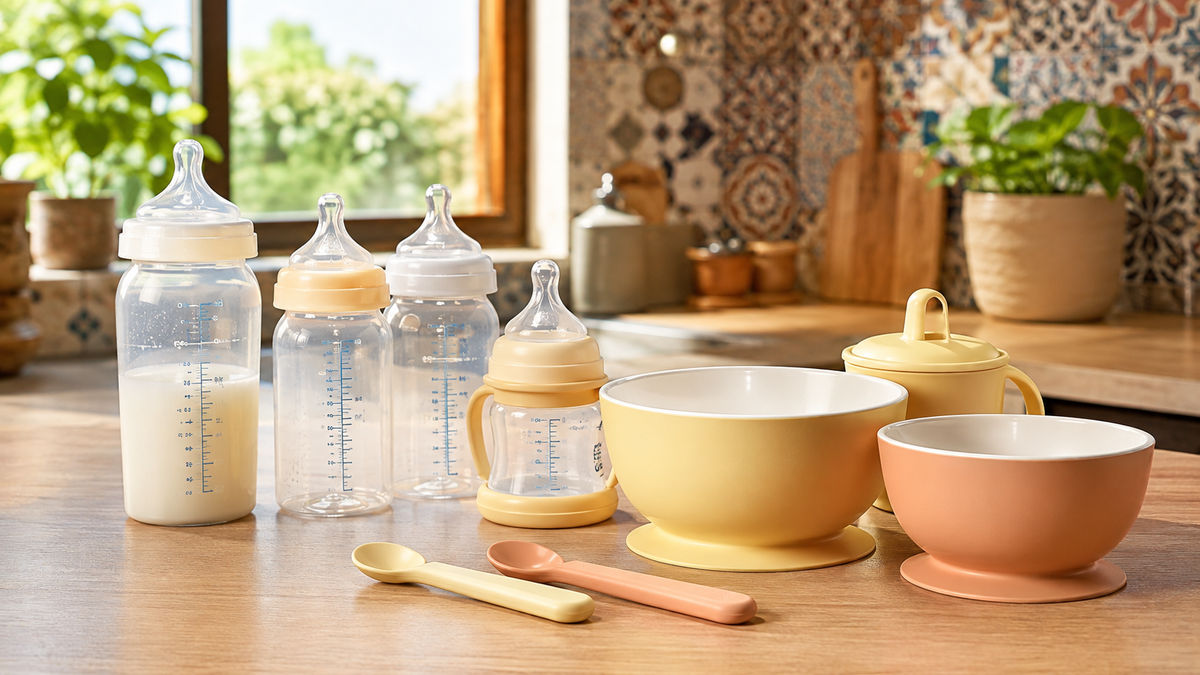
Replace silicone bottles every 4–6 months or when they turn cloudy, sticky, or crack. Teats should be swapped every 6–8 weeks or at the first sign of wear. Spoon feeders last 3–4 months. Cost-wise, you're looking at Rs. 300–600 per bottle, Rs. 80–150 per teat, and Rs. 120–250 per spoon feeder.
ℹ️ General information, not medical advice. If your baby seems unwell or anything worries you, talk to your paediatrician. Medical disclaimer
⚡ In a hurry? Our quick picks

If you're new to bottle feeding, the lifespan of silicone products can feel confusing. A cloudy bottle doesn't mean it's broken—but it does mean the silicone is degrading. Sterilizers, dishwashers, and daily heat exposure speed this process up. This checklist walks you through exactly what to look for, when to replace each item, and how much you'll spend to keep your baby's feeding gear safe.
🏆 Quick comparison: our top picks
| Product | Award | Rating | Price | |
|---|---|---|---|---|
 Pigeon SofTouch Silicone Bottle 240ml |
🏆 Editor's Choice | ★ 4.2 3,247 reviews |
₹570 | Check price → |
 Chicco NaturalFit Silicone Bottle 250ml |
💰 Best Value | ★ 4.1 2,156 reviews |
₹349 | Check price → |
 Comotomo Silicone Baby Bottle 250ml |
👑 Premium Pick | ★ 4.4 1,892 reviews |
₹3,366 | Check price → |
🛒 Our Top Picks

Best-reviewed overall, 4.2★ across 3,247 ratings.
Pigeon SofTouch Silicone Bottle 240ml
- ✓ 240ml capacity
- ✓ Silicone construction with soft nipple
- ✓ BPA-free
* We earn a small commission — at no extra cost to you.
Top rating for the price, 4.1★ at ₹349.
Chicco NaturalFit Silicone Bottle 250ml
- ✓ 250ml capacity
- ✓ Anti-colic silicone teat
- ✓ Ergonomic shape for easy grip
* We earn a small commission — at no extra cost to you.

Top of the range, for parents who want the best features.
Comotomo Silicone Baby Bottle 250ml
- ✓ 250ml capacity
- ✓ 100% silicone body and nipple
- ✓ Wide neck for easy filling and cleaning
* We earn a small commission — at no extra cost to you.
Daily baby tips, exclusive Amazon deals & real parent advice — free forever.
Silicone Bottle Replacement Checklist: Visual Inspection Guide
Here's what to inspect weekly, and what each sign means for replacement:
- Check for cloudiness or frosted appearance. New silicone is clear or translucent. When it turns milky or hazy inside, the surface is breaking down from repeated sterilization and heat exposure. This is the first major warning sign that a 4–6 month old bottle needs replacement.
- Feel for stickiness or tackiness on the outer surface. Run your fingertip along the outside. If it feels sticky or tacky instead of smooth and glossy, the silicone's polymer chains are degrading. Don't wait—replace it within days to avoid small particles in milk.
- Look for visible cracks, splits, or pitting. Hold the bottle up to light. Tiny cracks may not leak yet, but they trap milk and bacteria. Even a hairline crack means retirement—the bottle cannot be fully sanitized anymore.
- Smell for off-odours or sour notes. A clean silicone bottle has little to no smell. If you notice sour, musty, or chemical odours after washing and drying, the silicone has absorbed bacteria or mould. This is a replace-now signal.
- Test for discolouration: yellowing, browning, or staining. Some staining is cosmetic. But if the discolouration is uneven, patchy, or appears inside the silicone itself (not just on the surface), the material is absorbing contaminants and should be replaced.
- Check the transition points (base, seams, and where the teat attaches). These areas degrade fastest because they flex during feeding and sterilization. Look for tiny cracks, separation, or a loose fit. If the bottle and teat no longer seal snugly, replace the bottle or teat immediately.
Why this matters: Silicone degrades faster than hard plastic. IAP guidelines emphasize that feeding equipment should be visually intact because tears and pitting harbour bacteria that standard washing cannot remove. Once you spot any of these signs, don't stretch the bottle's life—replace it.
How Long Do Silicone Teats Actually Last?
Teats wear out faster than bottles because they endure constant suction, stretching, and contact with formula or milk. Most silicone teats last 6–8 weeks with daily use. Replace immediately if you notice holes, tears, hardening, or loss of elasticity. A worn teat can cause poor latch, frustration at feeding time, and potential choking risk if small pieces detach.
Cost: Rs. 80–150 per teat. Keep 2–3 backup teats on hand so feeding doesn't stop mid-replacement.
Spoon Feeders: When to Retire Them
Silicone spoon feeders used for purees or semi-solids last 3–4 months. They're thinner than bottles, so heat and flexing degrade them faster. Replace when the spoon bowl becomes sticky, discoloured, or develops a permanent smell. If the handle attachment loosens, retire it immediately to prevent the spoon from separating during feeding.
Cost: Rs. 120–250 per feeder. Many parents buy 2–3 so they can rotate while one is being sterilized.
Why Sterilization Speeds Up Silicone Breakdown
High heat—whether from a steam sterilizer, boiling, or a dishwasher's hot cycle—breaks the chemical bonds in silicone over time. Each sterilization cycle microscopically damages the surface, which is why cloudiness appears around month 4–5 with daily use. Autoclaves and electric sterilizers apply more heat than boiling, so bottles used with these wear out faster.
To slow degradation: allow bottles to cool naturally before sterilizing, avoid the hottest dishwasher cycle, and rotate bottles so no single bottle is sterilized more than once daily. WHO guidance on infant feeding emphasizes clean equipment, not frequent sterilization beyond 6 months in low-risk homes—so once your baby is older and your home hygiene is established, you may reduce sterilization frequency.
Cost Breakdown: Budget for Silicone Replacements in Year 1
If you're exclusively bottle feeding from birth to 12 months:
- Bottles (4–6 replacements yearly): Rs. 1,200–3,600
- Teats (6–8 replacements yearly): Rs. 480–1,200
- Spoon feeders (starting solids at 6 months; 2 replacements): Rs. 240–500
- Total Year 1: Rs. 1,920–5,300
Brands like Pigeon SofTouch (Rs. 520), Comotomo (Rs. 1,299), and Chicco NaturalFit (Rs. 680) sit in the mid-to-premium range. Budget brands cost less upfront but may degrade faster, requiring more frequent replacement.
When to See a Doctor
If your baby shows signs of infection (fever, vomiting, diarrhoea) within 24–48 hours of a feeding session, consult a paediatrician. While degraded silicone alone does not cause illness, bacteria trapped in cracks can contaminate milk. If a small piece of silicone is accidentally ingested (visible piece detached from bottle or teat), contact your doctor immediately. This is general information, not medical advice.
What IAP and WHO Guidance Says
• The Indian Academy of Pediatrics recommends that all feeding equipment be visually intact and free from cracks or contamination. Degraded silicone surfaces prevent full sanitization and should be replaced promptly.
• WHO infant feeding guidelines state that bottles and teats should be cleaned and sterilized correctly, and any equipment showing signs of wear should be retired to prevent bacterial contamination.
📚 Sources
The guidance in this article draws on the sources below. It is general information, not medical advice: for any concern about your child's health, talk to your paediatrician.
- Indian Academy of Pediatrics – Infant Feeding Guidelines — Supports equipment hygiene and replacement standards for infant safety
- WHO – Infant and Young Child Feeding — Guidance on sterilization frequency and equipment maintenance for safe feeding
Last updated 20 Oct 2026
Frequently Asked Questions
Why are parents switching to silicone baby bottles?
Can I use baby bottles from 4 years ago?
What type of bottle should a 4 month old use?
Is silicone safer than plastic baby bottles?
How often should I sterilize silicone bottles?
What happens if my baby drinks from a cracked silicone bottle?
Daily baby tips, exclusive Amazon deals & real parent advice — free forever.