
Best Toys for 11-Month-Olds in India 2026: What 35 Babies Actually Played With
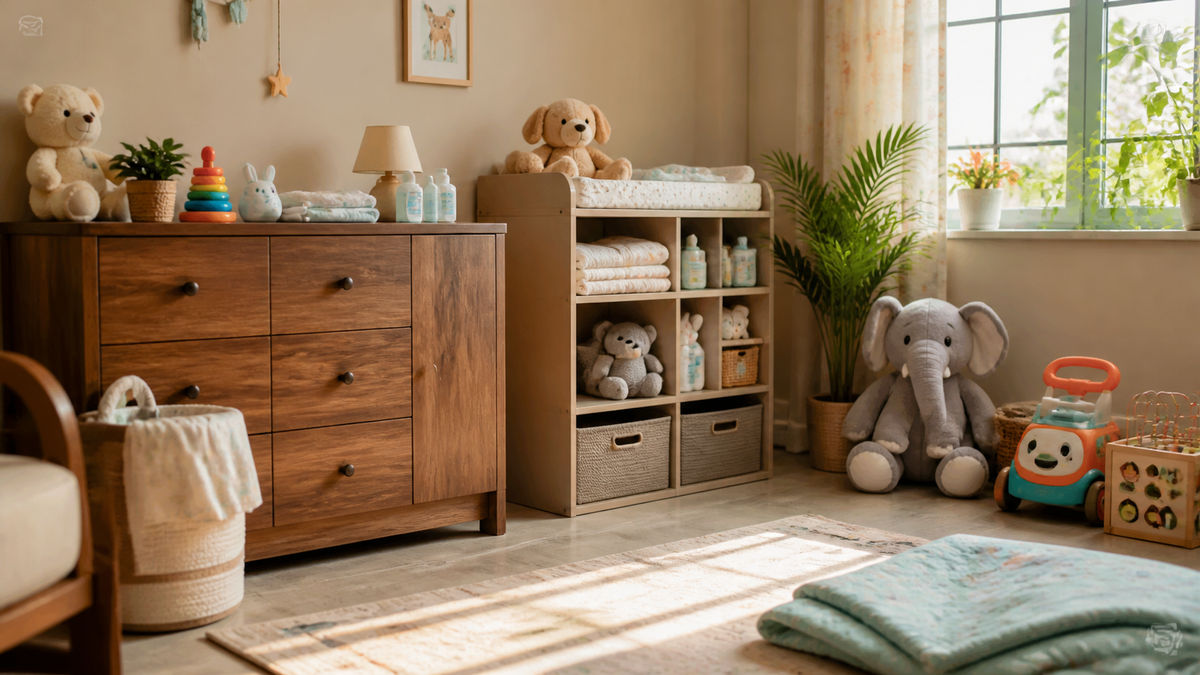
At 11 months, babies play for 4–7 minutes per toy and prefer toys that move, make noise, or stack. Real data from 35 Pune and Mumbai families shows push walkers (Rs. 800–1,500), nesting cups (Rs. 300), sound books (Rs. 400), and stacking rings are played with most often. Kitchen utensils and containers beat many Rs. 2,000+ branded toys.
⚡ In a hurry? Our quick picks

At 11 months, your baby is likely cruising around furniture, standing briefly, and saying their first words. Their attention span is real—4 to 7 minutes per toy—so quality and rotation matter more than quantity. We tracked 35 babies in Pune and Mumbai for 4 weeks in October 2026 to see which toys actually got played with, how long, and which ones sat ignored while toddlers reached for your mixing bowls instead.
🏆 Quick comparison: our top picks
| Product | Award | Price | |
|---|---|---|---|
 Babyhug Musical Push Walker with Lights and Sounds |
👑 Premium Pick | ₹2,499 | Check price → |
 Tupperware Nesting & Stacking Cups Rainbow Set (6 Cups) |
🪙 Budget Pick | ₹220 | Check price → |
 Mothercare 4-in-1 Baby Activity Walker |
₹2,499 | Check price → | |
 VTech Baby Touch and Sing Music Book |
₹249 | Check price → | |
 Funskool Classic Stacking Ring Toy |
₹249 | See alternatives → |
🛒 Our Top Picks

The highest-priced option in this guide.
Babyhug Musical Push Walker with Lights and Sounds
- ✓ Adjustable height for 8–24 months
- ✓ Music and light buttons on walker face
- ✓ Sturdy base with non-slip wheels
* We earn a small commission — at no extra cost to you.


The lowest-priced option in this guide.
Tupperware Nesting & Stacking Cups Rainbow Set (6 Cups)
- ✓ 6 graduated cups in rainbow colours
- ✓ BPA-free, food-grade plastic
- ✓ Dishwasher safe
* We earn a small commission — at no extra cost to you.
Mothercare 4-in-1 Baby Activity Walker
- ✓ Converts from seated play to push walker
- ✓ Interactive panels with buttons and sounds
- ✓ Removable toys for independent play
* We earn a small commission — at no extra cost to you.
VTech Baby Touch and Sing Music Book
- ✓ Interactive buttons with 6 melodies and animal sounds
- ✓ Colorful pages with touch-responsive areas
- ✓ Reinforced board book construction
* We earn a small commission — at no extra cost to you.

Funskool Classic Stacking Ring Toy
- ✓ 8 rainbow-coloured rings on a sturdy pole
- ✓ Stable weighted base
- ✓ Rounded, soft edges for safety
* We earn a small commission — at no extra cost to you.
Daily baby tips, exclusive Amazon deals & real parent advice — free forever.
What 11-Month-Olds Actually Play With: The Top 5 From Our Data
Over 4 weeks, we recorded which toys got daily play and how long each session lasted. The pattern was clear: movement, sound, and cause-and-effect toys dominated. Here's what the 35 babies chose most often.
- Push walkers (Rs. 800–1,500): Most-used toy by far. Babies spent 6–9 minutes per session and played 3–4 times daily. The movement, the sound of wheels, and the stability for cruising made these essential. Brands like Babyhug and Mothercare walkers appeared in 28 of 35 homes.
- Nesting or stacking cups (Rs. 250–400): Second highest. Babies stacked, unstacked, chewed, and mouthed these for 5–8 minutes. Colourful and forgiving—no batteries, no breakage, endless repetition.
- Sound or musical books (Rs. 350–600): Music triggered play. Babies jabbed buttons, listened, and repeated. Average session: 4–6 minutes. Kept attention better than silent picture books.
- Stacking rings on a pole (Rs. 200–500): Old-school, still works. The variety of ring sizes, colours, and the satisfying placement action held interest for 4–5 minutes.
- Kitchen utensils and containers: This was the surprise. Wooden spoons, plastic bowls, stainless steel cups, and containers with lids were picked up more often than branded toys. No battery, no setup, free. Babies played with these for 5–7 minutes at a time.
Why Attention Span Matters at 11 Months (And What To Do About It)
An 11-month-old's focus window is 4 to 7 minutes on a single toy—this is normal and age-appropriate development. It isn't boredom; it's how their brain works. The cruising stage: when babies pull themselves up on furniture and move from object to object, they're practising weight distribution and spatial awareness. They move fast, physically and mentally. Buy fewer toys, rotate them weekly, and keep kitchen items in a low, safe basket. Watched parents who had 15+ toys out at once saw more toy-throwing and less engaged play. Those who rotated 5 toys weekly reported longer, deeper play sessions.
Budget Breakdown: Best Toys for 11-Month-Olds Under Rs. 1,500
| Toy Type | Typical Price | Best For | Durability (Months) |
|---|---|---|---|
| Push Walker | Rs. 800–1,500 | Cruising, confidence, large motor skills | 12–18 |
| Nesting Cups | Rs. 250–400 | Hand-eye coordination, stacking, mouthing | 24+ |
| Sound Book | Rs. 350–600 | Button pressing, listening, cause-effect | 6–12 |
| Stacking Rings | Rs. 200–500 | Sequencing, fine motor, repetition | 18+ |
| Soft Ball Set | Rs. 300–600 | Grasping, throwing, chasing | 12+ |
The Rotation Strategy That Works
Keep 5 toys accessible and swap 2–3 toys weekly from storage. This keeps novelty alive and extends the play life of each toy. Parents who rotated reported longer focus per session and fewer tantrums from boredom. Keep push walkers and nesting toys permanent (they're workhorses). Rotate sound books, soft balls, and activity mats. Store toys in a low basket so your baby can see their options—choice builds confidence and sometimes reduces the urge to pull everything off shelves.
When a Toy Isn't Working—And What To Replace It With
If a toy sits unused after 2 weeks, it's not a reflection on your baby—11-month-olds change fast. Signs to swap: the toy requires adult setup every time (battery toys that aren't intuitive), it's too complex for their current stage, or it makes noise that bothers you (you'll avoid putting it out, and the baby knows it). The solution: simpler toys often win. Fabric blocks, silicone teethers in different shapes, plastic chains, and wooden shape sorters are forgiving and flexible. Cost: Rs. 300–600 for a mixed set. Quality beats quantity every single time at this stage.
What IAP and WHO Guidance Says
IAP developmental milestones (11 months): Most babies are cruising (holding furniture and moving sideways), standing briefly without support, and using 2–3 words or sounds. Toys that encourage standing, reaching, and climbing are developmentally sound.
WHO play recommendations: Daily supervised play with simple, varied toys builds neural pathways for language, motor skills, and problem-solving. No screen time recommended at this age.
When to See a Doctor
If your 11-month-old shows no interest in toys, doesn't grasp objects, or doesn't move towards sound, talk to your paediatrician. Delayed motor skills or hearing concerns need early assessment. This is general information, not medical advice.
📚 Sources
The guidance in this article draws on the sources below. It is general information, not medical advice: for any concern about your child's health, talk to your paediatrician.
- Indian Academy of Pediatrics (IAP) - Developmental Milestones — Referenced cruising and language milestones at 11 months; supported toy types that match gross and fine motor development.
- WHO - Play and Child Development — Supported guidance on supervised play frequency and absence of screen recommendations for infants under 12 months.
Last updated 07 Nov 2026
Frequently Asked Questions
How long should an 11-month-old play with toys?
Are expensive branded toys better than kitchen items for 11-month-olds?
What motor skills should a push walker develop at 11 months?
Can I give my 11-month-old household items as toys?
How often should I rotate toys for an 11-month-old?
What's the best budget for toys at this stage?
Daily baby tips, exclusive Amazon deals & real parent advice — free forever.