
Toys for 14 Month Old Walkers: Push Toys, Ride-Ons & Safety Essentials
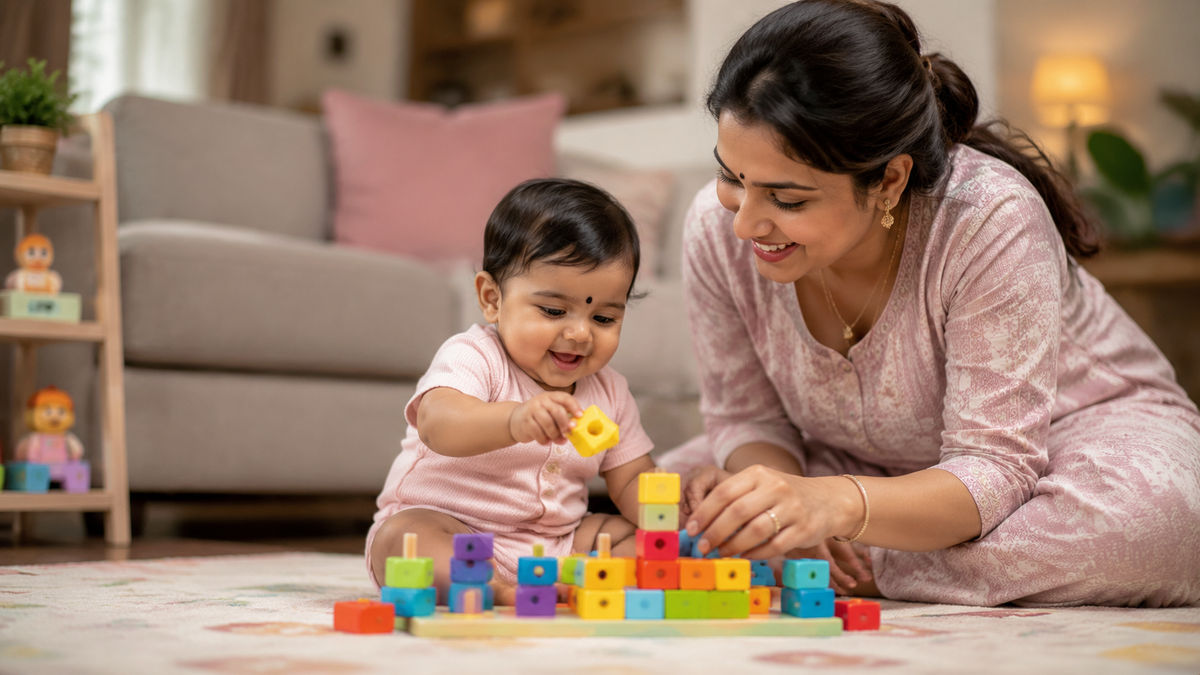
At 14 months, babies learning to walk need toys that build balance and coordination: push toys (Fisher-Price Corn Popper around Rs 800), ride-ons (Babyhug Rs 1200), soft foam blocks (Rs 350), and balls for spatial awareness. Prioritise rounded edges, stable bases, and items tested in small spaces like a 900 sq ft flat hallway.
⚡ In a hurry? Our quick picks
Your 14-month-old is wobbly, curious, and ready to move. This is the stage where a toy isn't just entertainment—it's a tool for building the muscle memory that turns those toddle-steps into real walking. But not every toy marketed to this age actually helps. Some will clutter your home without teaching anything; others pose genuine stumble hazards. This guide cuts through the noise and shows you which toys genuinely support motor development in the space you actually have.
🏆 Quick comparison: our top picks
| Product | Award | Price | |
|---|---|---|---|
 Fisher-Price Corn Popper Classic Push Toy |
👑 Premium Pick | ₹6,033 | See alternatives → |
 Playskool Pull-Along Duck Toy |
🪙 Budget Pick | ₹433 | Check price → |
 Babyhug Ride-on Toy with Push Handle |
₹899 | Check price → | |
 Infantso Soft Foam Building Blocks (24 pieces) |
₹2,892 | See alternatives → | |
 Colourful Plastic Ball Pit Balls (100 pack) |
See on Amazon | Check price → |
🛒 Our Top Picks

The highest-priced option in this guide.
Fisher-Price Corn Popper Classic Push Toy
- ✓ Push-along toy with popping kernel sounds
- ✓ Wheels roll smoothly on flat surfaces
- ✓ Rounded edges, no sharp corners
* We earn a small commission — at no extra cost to you.
The lowest-priced option in this guide.
Playskool Pull-Along Duck Toy
- ✓ Pull-along toy with 24-inch cord
- ✓ Bright colours, waddles when pulled
- ✓ Wooden frame, plastic wheels
* We earn a small commission — at no extra cost to you.
Babyhug Ride-on Toy with Push Handle
- ✓ Sit-on ride toy with foot pegs
- ✓ Stable base, low center of gravity
- ✓ Push handle for parent assistance
* We earn a small commission — at no extra cost to you.
Infantso Soft Foam Building Blocks (24 pieces)
- ✓ 24 soft foam blocks in bright colours
- ✓ Machine washable fabric cover
- ✓ Safe for teething and tumbles
* We earn a small commission — at no extra cost to you.
Colourful Plastic Ball Pit Balls (100 pack)
- ✓ 100 soft plastic balls, 4 cm diameter
- ✓ Choking-hazard safe size
- ✓ Non-toxic, BPA-free plastic
* We earn a small commission — at no extra cost to you.
Daily baby tips, exclusive Amazon deals & real parent advice — free forever.
What Your 14-Month-Old's Walking Brain Needs
At 14 months, your baby's brain is wiring three key skills: balance (staying upright while moving), coordination (moving limbs together with purpose), and spatial awareness (understanding where their body is in the room). According to IAP guidelines, toddlers at this stage benefit most from toys that let them repeat the same movement pattern safely—pushing, pulling, and gripping strengthen the ankles, knees, and core they're using to walk.
The best toys for this age do one thing very well. Fisher-Price Corn Popper, for example, teaches rhythm and forward momentum. Babyhug ride-on toys anchor balance while allowing movement. Soft blocks let them experiment with spatial relationships without injury risk. Ball pit balls introduce cause-and-effect play (kick = ball moves) while building leg strength.
The 5 Toy Types That Actually Work at 14 Months
1. Push Toys (Balance anchor)
A push toy like Fisher-Price Corn Popper gives your baby a handle to grip and wheels that roll as they walk. The popping sound reinforces the cause-and-effect loop their brain is building. Cost: around Rs 800–1000 on Amazon.in. Why it matters: Push toys teach forward momentum and leg rhythm without requiring balance on their own. The handle gives them confidence to attempt longer walks.
2. Ride-On Toys (Core strength)
Babyhug ride-on toys sit babies upright on a base with wheels and foot-pegs or a push handle. Cost: Rs 1200–1600. Why it matters: These build core strength and teach weight distribution—how to lean, shift, and stay centered. Unlike walkers (which can delay independent walking), ride-ons encourage active leg use because the baby must push with their feet to move.
3. Soft Foam Blocks (Spatial play)
Lightweight foam blocks in bright colours (Rs 350–500 for a set). Why it matters: Blocks teach stacking, knocking down, and spatial relationships. They're soft enough that a tumble won't cause injury—crucial when your 14-month-old is still unsteady. They also work in hallways and small flats where larger toys won't fit.
4. Ball Pit Balls (Leg strength + cause-and-effect)
Soft plastic balls in a small play area or basket (Rs 400–600 for 50–100 balls). Why it matters: Kicking, throwing, and chasing balls naturally build leg strength. Balls also teach spatial tracking—following a moving object—which supports balance development. The low-impact play prevents injuries on hard floors.
5. Pull-Along Toys (Independence)
A simple pull-along duck or character on wheels (Rs 300–500). Why it matters: Pull toys encourage backward awareness and turning. Unlike push toys, they require your baby to look back while walking—a more advanced balance challenge. This toy supports the transition from furniture-cruising to independent walking.
Safety Non-Negotiables for Walking Toys
Rounded edges, no sharp corners. A 14-month-old falls forward often. Any toy with an edge at head height is a concussion risk. Check the frame and wheels.
Stable base—won't tip easily. A ride-on or push toy that's top-heavy will make your baby lose confidence and tumble backward. Weight should be in the lower half. Test by gently pushing the toy sideways; it should resist tipping.
Non-toxic, BPA-free plastic. At this age, everything still goes in the mouth. Confirm on the Amazon.in product page that the toy meets BIS (Bureau of Indian Standards) safety marks for toys—this is a non-negotiable regulatory requirement in India.
No detachable small parts. Wheels should be fixed; handles should not come loose. Balls should be at least 4 cm diameter to prevent choking risk.
Washable surfaces. Toys get dirty fast. Soft blocks and balls should be wipeable or machine-washable fabric.
What NOT to Buy at 14 Months
Baby walkers with wheels. Research by IAP and WHO suggests wheeled walkers may delay independent walking by 2–4 weeks because babies lean on them instead of building balance. Skip them entirely.
Toys with wheels that roll freely on hard floors. A ball on tile will roll under the sofa in 2 seconds and cause frustration, not learning. Soft balls or toys with slightly stiffer wheels work better in flats.
Toys taller than your baby. A 14-month-old is roughly 75 cm tall. A toy taller than that becomes a climb-and-fall hazard in a small space.
Toys with strings or cords longer than 20 cm. Strangulation risk. Keep cords short.
Electronic toys that beep or light up in response to random button presses. They teach button-mashing, not motor skill. A toy that makes sound when *the baby moves* (like Corn Popper's popping when pushed) teaches cause-and-effect connected to their own body—much more valuable.
Layout & Space: How These Toys Work in a 900 Sq Ft Flat
A typical 900 sq ft Indian flat has a hallway roughly 15 ft × 3–4 ft—perfect for testing walking toys. Push toys and pull-along ducks work best here; they teach straight-line walking without taking up a full room. Soft blocks and balls fit in a basket in one corner. A ride-on toy needs a 6 ft × 4 ft clear space, so you'd rotate it with the push toy rather than keep both out. Keep toys off the path between bedroom and kitchen—a falling 14-month-old crawling toward parents is safer than one tripping over a toy while chasing them.
What IAP and WHO Guidance Says
Balance development: IAP notes that toddlers aged 12–18 months benefit from toys that anchor but don't restrict movement. Push and pull toys are explicitly recommended for this age.
Fall safety: WHO suggests padded flooring or mats under high-fall-risk toys. For flats, a yoga mat under a ride-on is a simple, affordable safeguard.
When to See a Doctor
If your 14-month-old is not walking or cruising (holding onto furniture while moving) at all, or if a fall results in limping, swelling, or refusal to weight-bear on a leg, contact your paediatrician. This is general information, not medical advice.
📚 Sources
The guidance in this article draws on the sources below. It is general information, not medical advice: for any concern about your child's health, talk to your paediatrician.
- Indian Academy of Pediatrics (IAP) Guidelines on Child Development — Supports walking milestones, balance development, and toy-related safety recommendations for 12–18 month olds
- WHO Guidelines on Early Childhood Development — Supports motor development stages and fall prevention for toddlers
- Bureau of Indian Standards (BIS) Safety Mark for Toys — Regulatory requirement for toys sold in India; confirms BPA-free, non-toxic, and choking-hazard standards
Last updated 06 Nov 2026
Frequently Asked Questions
Is a baby walker safe for a 14-month-old?
What's the difference between a push toy and a ride-on toy?
Can a 14-month-old play safely in a ball pit?
How much space do these toys need in a small flat?
What age can a baby use a ride-on toy safely?
Are soft blocks better than plastic blocks for a 14-month-old?
Daily baby tips, exclusive Amazon deals & real parent advice — free forever.