
Pregnancy Pillow in India 2026: C-Shape vs U-Shape, Types by Trimester & What to Check
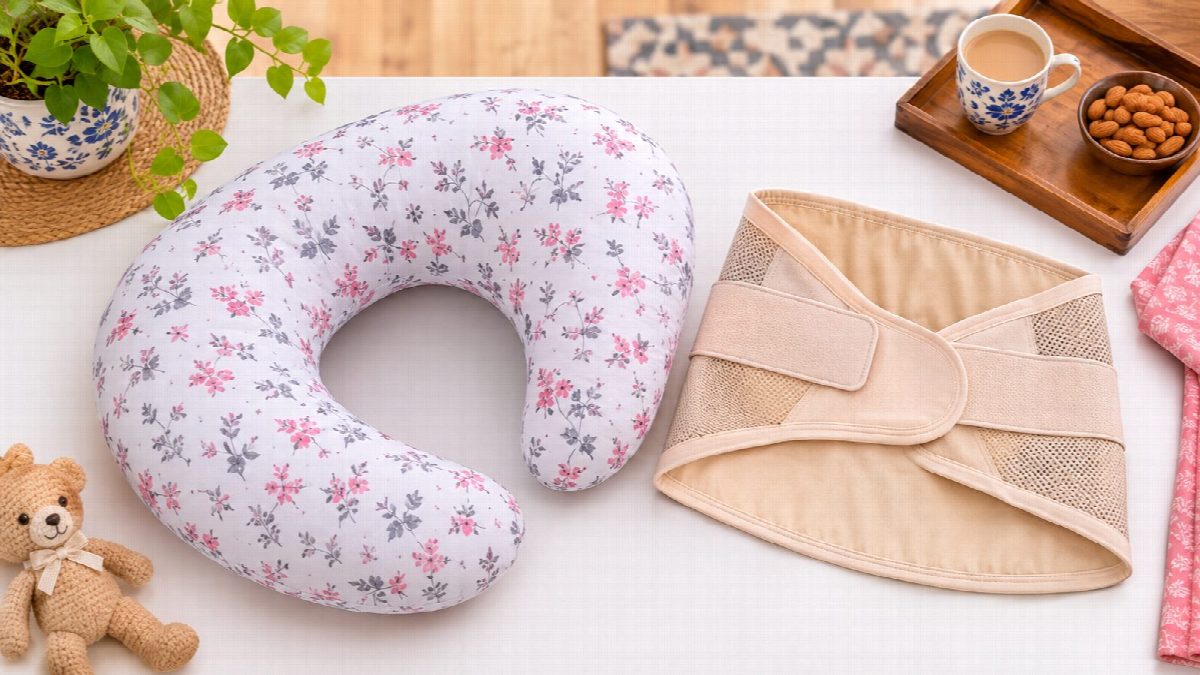
A pregnancy pillow is a shaped support cushion designed to cradle a mother's growing belly, back, and hips during sleep. C-shaped pillows fit single beds; U-shaped pillows suit double beds; wedges target specific pain; full-body pillows offer maximum support. Choose by trimester, bed size, and whether you plan to use it for feeding after birth.
Pregnancy brings sleepless nights—not because the baby has arrived yet, but because your body feels like it no longer belongs to you. By the third trimester, nearly every expecting mother in India struggles to find a comfortable sleeping position. Your belly pulls your spine forward, your hips ache from the extra weight, and your back feels like it's folding in half every time you roll over. A good pregnancy pillow can change this.
But here's the thing: not all pregnancy pillows are created equal, and what works brilliantly on a double bed in a Delhi flat might feel suffocating in a Pune bedroom during summer. This guide breaks down the four main types of pregnancy pillows by shape, trimester, pain points, bed fit, and fabric choices—so you can pick one that actually solves your sleep problem instead of adding another uncomfortable lump to your bed.
How We Picked These Pregnancy Pillows
We compared pillows based on three core criteria: whether the shape actually supports the areas expecting mothers report the most pain (back, hips, and neck), how the pillow fits into standard Indian bedroom setups (single and double beds), and practical features like removable, washable covers and breathable fabric for warm climates. We also checked which pillows work double duty as feeding supports after birth—a money-saver many mothers appreciate.
Understanding Pregnancy Pillow Shapes: Which One Fits Your Bed and Trimester?
C-shaped pillows curve from head to knees and are designed for single beds or when space is tight. They support your neck, back, and the gap between your knees in one continuous shape. This design works well from the second trimester onward, when your belly and hip pain peak.
U-shaped pillows wrap almost completely around your body, with support on both sides. These need a full double bed and are ideal if your partner also needs sleep space. The wrap-around design prevents you from rolling onto your back during the night, which many doctors recommend avoiding in late pregnancy.
Wedge pillows are triangular, targeted pieces. You place them under your belly, behind your back, or between your knees—whichever area hurts most. Wedges take up minimal space and are perfect if you don't want a full body pillow cluttering your bed.
Full-body pillows are long, straight supports running the length of your body. They're the most versatile for non-pregnant use and double as nursing pillows, but they don't offer the tailored support a C or U shape does. Many mothers use them alongside a smaller wedge.
1. Coolwala C-Shaped Pregnancy Pillow
The Coolwala C-shape is a no-fuss option built for Indian summers and tight bedroom spaces. Microfibre cover, machine washable, fits single and compact double beds. The curved design cups your neck, cradles your belly, and fills the gap between your knees—the exact spots where pregnancy pain concentrates. Many mothers report this pillow also works as a feeding support after birth, extending its use beyond those nine months. The cover peels off easily, crucial if you're washing it weekly during humid months.
2. Dr. Ortho Orthopaedic Pregnancy Pillow
Dr. Ortho positions this as an orthopaedic option, emphasizing spinal alignment during side-sleeping—the position obstetricians recommend throughout pregnancy. Memory foam fill, ergonomic contours, removable cotton cover. If your pregnancy pain is centered in your lower back or sacroiliac joint, the memory foam's contouring may provide relief that standard pillows don't. The cotton cover suits mothers who want breathability; however, memory foam pillows can retain heat in summer, so this works best if you use an AC or have good air circulation in your bedroom.
3. Nestwell U-Shaped Full Body Pregnancy Pillow
Nestwell's U-shape is built for double beds and partners who also need sleep space. Polyester microfibre cover, U-shaped wrap-around design, washable fill. The wrap-around cradles both sides of your body, preventing you from accidentally rolling onto your back—a position many doctors advise against in the third trimester. This pillow is bulkier and needs floor space to store, but mothers with longer pregnancies or severe night-time restlessness find the security of the wrap-around worth the trade-off.
4. Nirvana Wedge Pregnancy Pillow (Set of 2)
Nirvana's wedge set gives you flexibility: one wedge for your belly, one for your back or knees—use them however your pain shifts day to day. Foam wedges, compact, lightweight, works on any bed size. Wedges are the budget-friendly entry point and the least disruptive to your existing sleep setup. If you're not sure you'll use a pregnancy pillow full-time or want to test before committing to a large C or U shape, wedges let you try the concept without the commitment.
Pregnancy Pillow Features to Check Before Buying
Fabric and Breathability for Indian Summers
Microfibre and cotton covers are the most common. Microfibre is cheaper and machine-washable, but it traps heat—not ideal if you live in Chennai, Hyderabad, or Pune without AC. Cotton breathes better and suits warm months, but it wrinkles easily and may require more frequent washing in humid climates. Check whether the cover unzips; removable covers are a game-changer for weekly washes. If the cover doesn't unzip, you'll be wrestling with the entire pillow in your washing machine.
Fill Material: Memory Foam vs. Microfibre vs. Polyester
Memory foam conforms to your body shape, offering targeted support. It's heavier, holds heat, and costs more. Best for mothers with significant back or hip pain and access to cooling solutions.
Microfibre and polyester fills are lighter, cooler, and cheaper. They don't mold as precisely to your body but offer consistent support. Washable fills (some pillows let you remove and wash the stuffing separately) are a bonus in Indian homes where dust and humidity are real concerns.
Bed Size Fit: Single vs. Double Bed Realities
Measure your bed before ordering. A U-shaped pillow on a 4.5-by-6-foot double bed still leaves room for your partner; on a smaller double bed, it crowds the space. C-shaped pillows fit neatly on single beds (3-by-6 feet). If you're in a Mumbai or Delhi apartment with a compact bedroom, wedges or a C-shape are safer bets than a U-shape.
Washability and Durability
Pregnancy pillows accumulate sweat, dust, and product buildup over nine months of nightly use. A removable, machine-washable cover isn't optional—it's essential. Check the label for cold-water wash recommendations; many pregnancy pillow covers shrink in hot water. If the fill isn't washable, ask whether you can spot-clean it or if dry-cleaning is necessary (which gets expensive quickly).
Post-Pregnancy Use
Once your baby arrives, can the pillow work as a nursing support or tummy-time cushion? C-shaped and full-body pillows often do; wedges less so. This isn't a dealbreaker, but it's a money-saver if you're budget-conscious. Some mothers also use their pregnancy pillows as back support while sitting and feeding or as a prop for reading in bed during the newborn phase.
What IAP and WHO Guidance Says
• Side-sleeping is recommended throughout pregnancy. The Indian Academy of Pediatrics and WHO align with international guidelines that left-side or right-side sleeping improves blood flow to the placenta and reduces risk of stillbirth in the third trimester. A good pregnancy pillow prevents you from rolling onto your back during sleep.
• Back and hip pain are common from the second trimester onward. As the baby grows, the center of gravity shifts forward, straining the lower spine and sacroiliac joints. Targeted pillow support—whether a C-shape cradle or wedges under key pressure points—is a non-medicine way to ease this discomfort.
Quick Trial Checklist: Does Your Pregnancy Pillow Actually Work?
Give any new pregnancy pillow two weeks of nightly use. Here's what to assess:
- Neck support: Do you wake without neck pain or stiffness? The pillow should cradle your head without tilting your chin down.
- Belly comfort: Can you rest your belly on the pillow without it pushing back too hard? It should feel like a gentle cup, not a barrier.
- Hip alignment: When you lie on your side, is there support between your knees and under your hip? Gaps here cause lower-back strain.
- Temperature: Do you overheat during the night, or does the pillow feel cool to the touch? If you're sweating into it nightly, the fill or cover isn't breathable enough for your climate.
- Partner impact: Does your partner have adequate space? A U-shape on a small double bed is a partnership problem, not just a comfort issue.
- Washability: Does the cover come off easily? Try removing and washing it once in the first week to confirm it won't be a chore later.
When to See a Doctor
Pregnancy pillow support is not a substitute for medical care. If your back or hip pain worsens despite pillow use, or if you experience sharp pain, numbness, or tingling down your legs, contact your obstetrician or physiotherapist. These can signal nerve compression or other issues needing professional attention. This is general information, not medical advice.
🏆 Quick comparison: our top picks
| Product | Award | Price | |
|---|---|---|---|
 Dr. Ortho Orthopaedic Pregnancy Pillow |
👑 Premium Pick | ₹2,499 | Check price → |
 Nirvana Wedge Pregnancy Pillow (Set of 2) |
🪙 Budget Pick | ₹890 | Check price → |
 Coolwala C-Shaped Pregnancy Pillow |
₹1,549 | Check price → | |
 Nestwell U-Shaped Full Body Pregnancy Pillow |
₹1,719 | Check price → |
🛒 Our Top Picks

The highest-priced option in this guide.
Dr. Ortho Orthopaedic Pregnancy Pillow
- ✓ Memory foam fill for spinal alignment
- ✓ Ergonomic contours for back and hip support
- ✓ Removable cotton cover
* We earn a small commission — at no extra cost to you.
The lowest-priced option in this guide.
Nirvana Wedge Pregnancy Pillow (Set of 2)
- ✓ Two foam wedges for flexible placement
- ✓ Fits any bed size, minimal space required
- ✓ Lightweight and portable
* We earn a small commission — at no extra cost to you.
Coolwala C-Shaped Pregnancy Pillow
- ✓ C-shaped curve for neck, back, and knee support
- ✓ Microfibre cover, machine washable
- ✓ Fits single and compact double beds
* We earn a small commission — at no extra cost to you.
Nestwell U-Shaped Full Body Pregnancy Pillow
- ✓ U-shaped wrap-around design for double beds
- ✓ Polyester microfibre cover, removable and washable
- ✓ Prevents back-sleeping position
* We earn a small commission — at no extra cost to you.
Daily baby tips, exclusive Amazon deals & real parent advice — free forever.
📚 Sources
The guidance in this article draws on the sources below. It is general information, not medical advice: for any concern about your child's health, talk to your paediatrician.
- Indian Academy of Pediatrics - Pregnancy and Sleep Positioning Guidance — Supports side-sleeping recommendation and third-trimester positioning guidelines mentioned in the article.
- WHO Recommendations on Pregnancy and Fetal Health — Supports placental blood flow and stillbirth risk reduction guidance related to sleep position.
Last updated 29 Nov 2026
Frequently Asked Questions
When should I start using a pregnancy pillow?
Can I use a pregnancy pillow if I have a small or single bed?
Is a memory foam pregnancy pillow better than microfibre for Indian summers?
Can I use a pregnancy pillow after delivery?
How often should I wash my pregnancy pillow cover?
Do pregnancy pillows prevent back pain or just ease it?
Daily baby tips, exclusive Amazon deals & real parent advice — free forever.