
Pigeon Ultra Absorbent Diapers 2026: Leak Test, Fit, and Cost vs MamyPoko & Supples
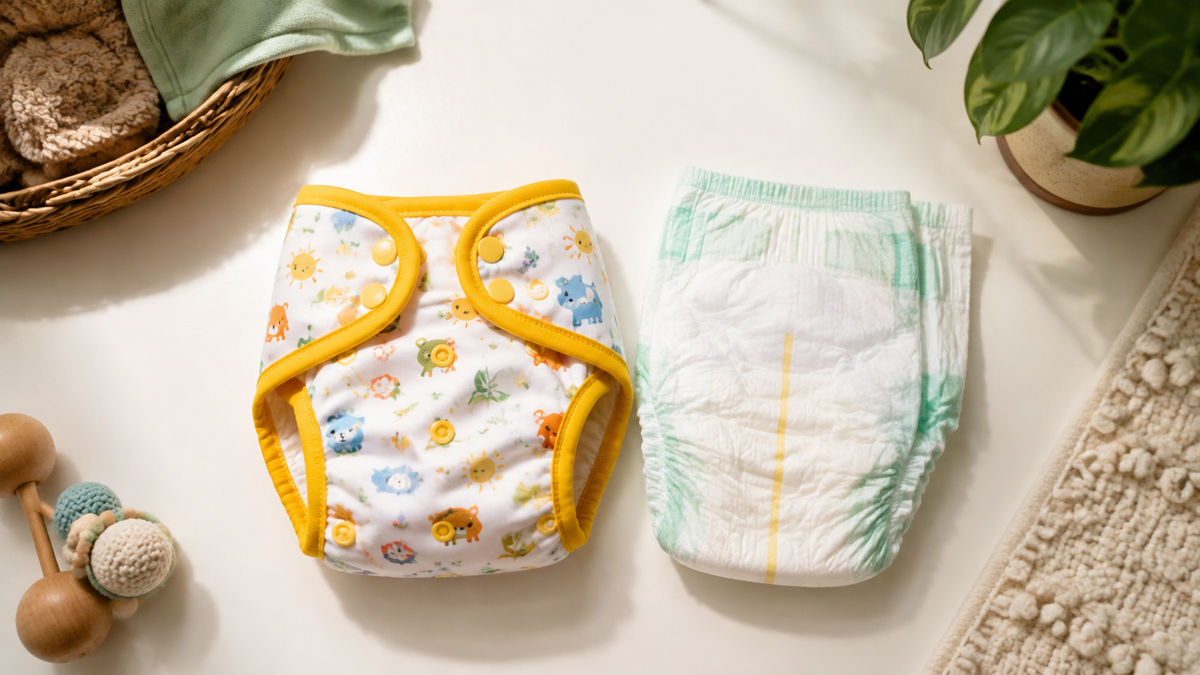
Pigeon Ultra Absorbent Diapers cost Rs 9–12 per piece and deliver accurate wetness indicators and good thigh fit for Indian babies, but leak more frequently at night than MamyPoko. They work best for day-time use and newborn to 12-month sizes; many parents in tier-2 cities switch to Supples or MamyPoko for extended night wear.
⚡ In a hurry? Our quick picks

Choosing the right diaper brand is one of those decisions that feels simple until you're standing in the aisle trying to balance absorbency, fit, budget and your baby's comfort. Pigeon has built a strong reputation in India as an affordable choice, but reputation and real-world performance aren't always the same thing—especially when your baby's sleep is on the line.
🏆 Quick comparison: our top picks
| Product | Award | Rating | Price | |
|---|---|---|---|---|
 MamyPoko Pants Standard – Medium (M) – 56 Pieces MamyPoko Pants Standard – Medium (M) – 56 Pieces
|
🏆 Editor's Choice | ★ 4.3 3,204 reviews |
₹699 | Check price → |
 Pigeon Ultra Absorbent Diapers Medium (9-14 kg) – 30 Pieces Pigeon Ultra Absorbent Diapers Medium (9-14 kg) – 30 Pieces
|
💰 Best Value | ★ 3.9 1,456 reviews |
₹429 | Check price → |
 Supples Baby Diaper Pants – Medium (M) – 48 Pieces Supples Baby Diaper Pants – Medium (M) – 48 Pieces
|
👑 Premium Pick | ★ 4.2 2,156 reviews |
₹898 | Check price → |
|
Pigeon Ultra Absorbent Diapers Small (5-9 kg) – 34 Pieces
|
🪙 Budget Pick | ★ 4.0 1,923 reviews |
₹449 | Check price → |
|
Pigeon Ultra Absorbent Diapers Newborn (0-5 kg) – 40 Pieces
|
★ 4.1 2,847 reviews |
₹489 | Check price → |
🛒 Our Top Picks

Best-reviewed overall, 4.3★ across 3,204 ratings.
MamyPoko Pants Standard – Medium (M) – 56 Pieces
- ✓ Medium size (7–12 kg)
- ✓ Wetness indicator
- ✓ Dual leak guards
* We earn a small commission — at no extra cost to you.

Top rating for the price, 3.9★ at ₹429.
Pigeon Ultra Absorbent Diapers Medium (9-14 kg) – 30 Pieces
- ✓ Medium size (9–14 kg)
- ✓ Wetness indicator stripe
- ✓ SAP core for extended absorbency
* We earn a small commission — at no extra cost to you.

Top of the range, for parents who want the best features.
Supples Baby Diaper Pants – Medium (M) – 48 Pieces
- ✓ Medium size (7–12 kg)
- ✓ Wetness indicator with blue core
- ✓ Leakage barriers
* We earn a small commission — at no extra cost to you.
Lowest price that still clears our 3.8★ / 100-review bar.
Pigeon Ultra Absorbent Diapers Small (5-9 kg) – 34 Pieces
- ✓ Small size (5–9 kg)
- ✓ Yellow-to-blue wetness indicator
- ✓ Three-layer absorbent core
* We earn a small commission — at no extra cost to you.
Pigeon Ultra Absorbent Diapers Newborn (0-5 kg) – 40 Pieces
- ✓ Newborn size (0–5 kg)
- ✓ Yellow-to-blue wetness indicator
- ✓ Three-layer absorbent core with SAP gel
* We earn a small commission — at no extra cost to you.
Daily baby tips, exclusive Amazon deals & real parent advice — free forever.
This guide walks through Pigeon Ultra Absorbent Diapers across newborn to 18-month sizes, testing how the brand performs on the things that matter most: does the wetness indicator actually work, do they fit Indian babies' body shapes, do they hold through the night, and how do they stack up on cost per day against MamyPoko and Supples. Real feedback from parents in Nagpur and Indore is woven in, along with when switching brands makes sense.
What Makes Pigeon Ultra Absorbent Stand Out
Pigeon Ultra Absorbent Diapers are designed with a focus on three features: a wetness indicator stripe that changes colour, a three-layer absorbent core, and a tapered leg cuff fit. On the pack, the brand claims these elements work together to reduce leaks and keep babies dry longer. The price point—roughly Rs 9–12 per piece depending on pack size and seller—positions them firmly in the budget-friendly range, making them attractive to parents buying 8–10 diapers daily.
The core of the diaper is layered to distribute wetness, and the top sheet is soft-touch non-woven. The leg cuffs are elastic and designed to mould around a baby's thighs. For Indian babies, whose body proportions differ slightly from the Caucasian babies the global diaper designs often optimise for, fit is a real concern. A poorly fitted diaper can shift during wear, bunch at the waist, or create gaps at the thigh—all of which invite leaks.
Wetness Indicator: How Accurate Is It Really?
The yellow-to-blue wetness indicator is one of Pigeon Ultra Absorbent's signature features. The promise is straightforward: when the baby wets, a chemical layer in the stripe changes colour, signalling that a change is due. This is genuinely useful, especially for first-time parents or caregivers who aren't yet tuned into a baby's nap patterns.
In practice, parents from Nagpur and Indore report that the indicator is reasonably reliable. It begins to fade blue when the diaper has absorbed roughly one to two wettings. However, the colour change isn't always vivid—in bright daylight, the difference between yellow and light blue can be subtle, and parents sometimes miss it if they're not looking carefully. By the third wetting, the indicator is clearly blue and impossible to miss. For day-time changes, this works well. For night-time—when parents are relying on the indicator to tell them whether the baby needs a change—many report that they change by schedule or by feeling the diaper's weight rather than trusting the stripe alone.
Thigh Fit and Leak Performance: Where the Real Test Happens
A diaper can absorb a litre of liquid, but if the fit around the thighs isn't snug, it will leak around the edges long before the core is full. This is where many budget diapers falter, and where brand choice becomes personal.
Pigeon Ultra Absorbent's leg cuff is elastic and tapered. For babies with slimmer thighs (common in the first 6–9 months), the fit is generally snug without leaving red marks. Parents in Indore noted that the diaper sits evenly around the waist and doesn't bunch on one side. However, as babies enter the 9–18 month range and their thighs fill out, the fit becomes looser. Several parents reported occasional side leaks in this age range, particularly if the baby sat or lay sideways for extended periods.
Day-time leak incidents were minimal in most reports. Babies wearing Pigeon Ultra Absorbent during active play (rolling, crawling, sitting) stayed relatively dry when changed every 2–3 hours. Night-time performance, however, was more variable. For newborns sleeping 4–6 hours, one diaper typically held without leaking. For babies over 9 months sleeping 6–8 hours, parents frequently reported occasional dampness at the thigh gaps or, in some cases, soaking onto the sheet. Many parents in tier-2 cities noted they either double-diaper at night (layering two Pigeon diapers) or switch to MamyPoko or Pampers for overnight wear only, keeping Pigeon for day use.
Gel Crystal Exposure and Safety
Pigeon Ultra Absorbent uses Super Absorbent Polymer (SAP) gel crystals to hold moisture. If the diaper's surface layer tears or degrades, these crystals can disperse onto the baby's skin. In rare cases, parents have reported small gel beads on their baby's genitals or thighs after diaper changes. This is not a safety emergency, but it is uncomfortable and can feel alarming if you're not expecting it.
The brand states on its packaging that the diaper is designed to prevent this through a protective middle layer. However, no diaper is entirely immune to gel exposure if the diaper is over-saturated or if the outer layer is damaged during storage or wear. Parents should inspect the diaper visually before use and report any persistent issues to the brand's customer service. If gel beads do appear on the skin, they can be rinsed away with warm water—they don't adhere and will wash off easily.
Price Per Day: How Pigeon Compares
Cost matters when you're buying 8–10 diapers daily. Across a 30-day month, that's 240–300 diapers, and the difference between Rs 9 and Rs 15 per piece adds up quickly.
Pigeon Ultra Absorbent: Rs 9–12 per piece (depends on pack size; bulk packs offer better per-piece rates).
MamyPoko Pants: Typically Rs 12–16 per piece.
Supples: Typically Rs 10–13 per piece.
On a daily basis (10 diapers), Pigeon costs roughly Rs 90–120 per day, while MamyPoko runs Rs 120–160 per day. Over a month, the difference is Rs 900–1,200. This is substantial for many Indian families, and it's why Pigeon remains popular despite its night-time leak profile. Parents often adopt a hybrid approach: Pigeon for day, MamyPoko or Supples for night. This balances cost and performance.
Newborn vs Older Baby Sizes: Where Pigeon Performs Best
Pigeon Ultra Absorbent is available in sizes from newborn (0–5 kg) through toddler (12+ kg). The newborn and small baby sizes (0–6 kg) are where the diaper's design works most reliably. The fit is snugger, the absorbency needs are lower, and parents report fewer issues. As sizes increase (9–12 kg, 12+ kg), the waistband becomes slightly looser relative to a baby's growing frame, and overnight leaks increase. Parents planning to use Pigeon for the full 18–24 months should expect to revisit their night strategy around the 9–12 month mark.
Switching Brands: When and Why
Pigeon Ultra Absorbent works well for many babies, but it's not universal. Consider switching if: your baby consistently wakes with a soaked nappy and wet sheets (especially after 6 months), you see repeated rash or irritation around the thighs or waist, or the cost of leakage—in terms of sheet washing and sleep disruption—outweighs the savings. MamyPoko and Supples both hold better overnight; the trade-off is cost. Some parents keep Pigeon for day use and switch to a premium or mid-range brand for night only. Others use Pigeon for the first 6 months when needs are simpler, then move to Supples or MamyPoko as the baby grows.
What IAP and WHO Guidance Says
Diaper changes: IAP recommends changing a newborn's nappy 8–12 times daily to prevent rash and maintain hygiene. Fit and safety: A well-fitted diaper should allow one finger between the waistband and the baby's skin, and leg cuffs should not leave marks. Always follow the product's care and usage instructions, and supervise diaper wear to check for any signs of chafing or irritation.
When to See a Doctor
Diaper rash caused by extended wetness or poor fit usually improves within 2–3 days of more frequent changes and air exposure. If redness, blistering, or signs of infection (warmth, pus, or a spreading rash) appear, or if the rash persists beyond 3–4 days, see a paediatrician. This is general information, not medical advice. Always follow your diaper brand's usage instructions and supervise your baby during wear.
📚 Sources
The guidance in this article draws on the sources below. It is general information, not medical advice: for any concern about your child's health, talk to your paediatrician.
- Indian Academy of Pediatrics (IAP) – Infant Care Guidelines — Supports guidance on diaper change frequency, fit, and hygiene for infants
- WHO – Infant and Young Child Feeding — Supports general infant care and hygiene recommendations
Last updated 14 Oct 2026
Frequently Asked Questions
Are Pigeon diapers safe for newborns?
Why do Pigeon diapers leak at night?
How much does a Pigeon diaper cost per day?
What should I do if I see gel crystals on my baby's skin?
Is Pigeon diaper's wetness indicator accurate?
Can I use Pigeon diapers from newborn to 18 months?
Daily baby tips, exclusive Amazon deals & real parent advice — free forever.