
Memory Card Games for Toddlers in India: Start Small at 18-24 Months
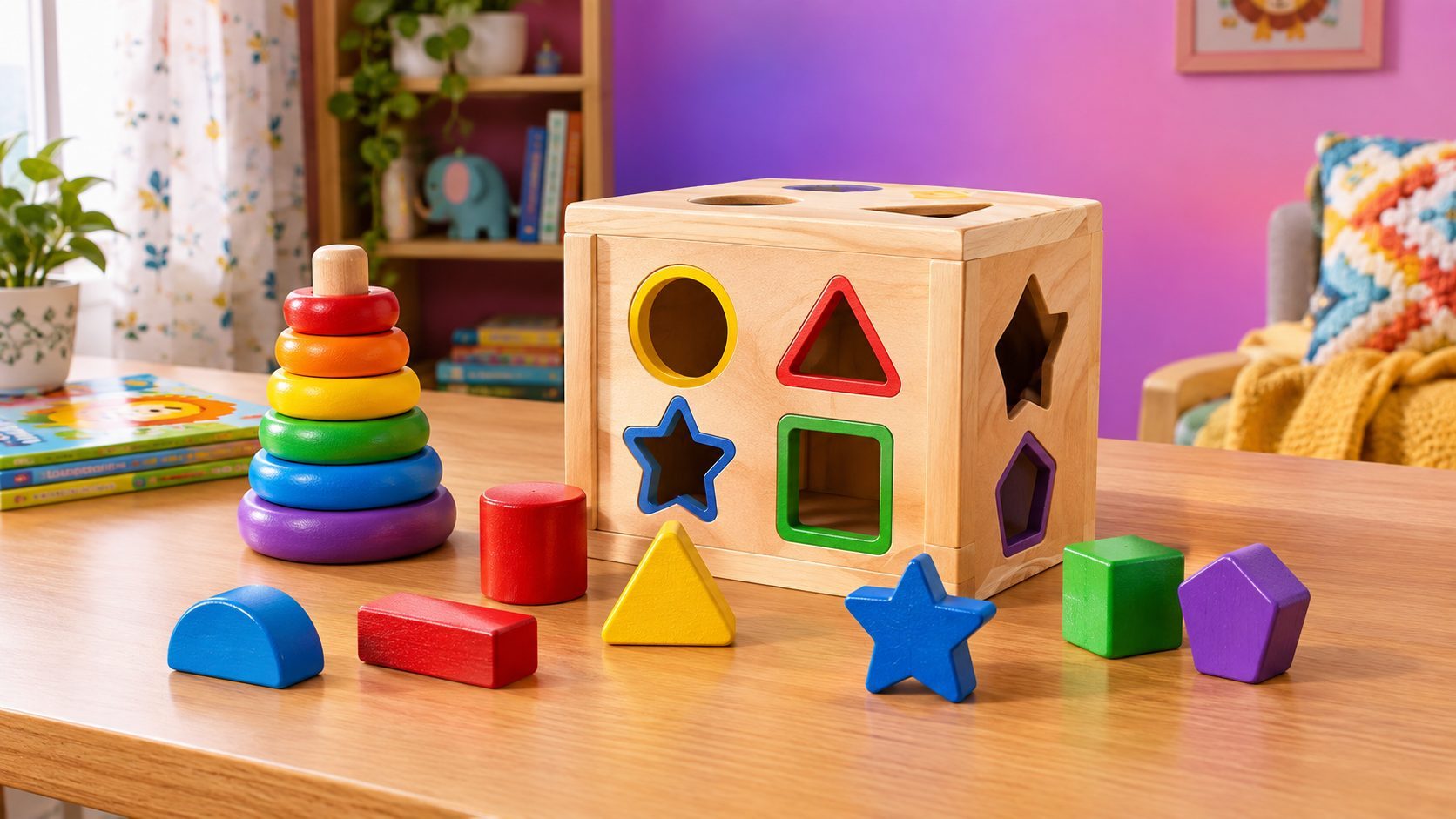
At 18–24 months, start with memory card games using just 4 pairs (8 cards total), not 12. Toddlers at this age can focus for 5–10 minutes and match 2–3 pairs before losing interest. Choose durable, waterproof sets from brands like Skillmatics or Funskool that survive juice spills and rough handling. Expect rules to be flexible—this is recognition play, not strict rule-following.
⚡ In a hurry? Our quick picks

Memory card games are one of the gentler ways to help an 18–24 month toddler practise matching and focus—but only if you meet them where they actually are, not where the box says the game starts. Most parents buy a full 24-card set, lay out all 12 pairs, and wonder why their child loses interest in 90 seconds. The answer isn't the child; it's the scale. This guide walks you through how memory card games actually work at this age, why simplification matters, what attention span looks like, and which four Indian brands offer sets tough enough for real toddler life.
🏆 Quick comparison: our top picks
| Product | Award | Rating | Price | |
|---|---|---|---|---|
|
Skillmatics Match and Pair - Educational Card Game for Kids 2 Years+
|
🏆 Editor's Choice | ★ 4.2 892 reviews |
₹299 | Check price → |
 Gopal Toys Match It Out - Memory Card Game for 18+ Months Gopal Toys Match It Out - Memory Card Game for 18+ Months
|
💰 Best Value | ★ 3.9 421 reviews |
₹189 | Check price → |
 Toiing Memory Matters - Wooden Memory Card Game for Toddlers Toiing Memory Matters - Wooden Memory Card Game for Toddlers
|
👑 Premium Pick | ★ 4.4 634 reviews |
₹365 | Check price → |
|
Funskool Jumbo Memory Cards - Toddler Matching Game
|
🪙 Budget Pick | ★ 4.0 1,156 reviews |
₹199 | Check price → |
🛒 Our Top Picks
Best-reviewed overall, 4.2★ across 892 ratings.
Skillmatics Match and Pair - Educational Card Game for Kids 2 Years+
- ✓ 4–6 matching pairs per set
- ✓ Laminated cards with rounded corners
- ✓ Non-toxic, BIS certified
* We earn a small commission — at no extra cost to you.

Top rating for the price, 3.9★ at ₹189.
Gopal Toys Match It Out - Memory Card Game for 18+ Months
- ✓ 6 pairs bright animal/object images
- ✓ Glossy, wipeable cardboard
- ✓ Thick durable cards
* We earn a small commission — at no extra cost to you.
Top of the range, for parents who want the best features.
Toiing Memory Matters - Wooden Memory Card Game for Toddlers
- ✓ 4 pairs modular wooden cards
- ✓ Textured surfaces for sensory play
- ✓ No splinters, smooth finish
* We earn a small commission — at no extra cost to you.
Lowest price that still clears our 3.8★ / 100-review bar.
Funskool Jumbo Memory Cards - Toddler Matching Game
- ✓ 6 pairs (12 large cards)
- ✓ Plastic-coated thick cardboard
- ✓ Large grip-friendly size
* We earn a small commission — at no extra cost to you.
Daily baby tips, exclusive Amazon deals & real parent advice — free forever.
Why 4 Pairs First, Not the Full Set
Toddlers aged 18–24 months have a working memory that's still forming. According to IAP (Indian Academy of Pediatrics) guidance on cognitive development, this age group is learning object permanence and beginning to recognise familiar images—but only in small groups. A 12-pair spread is overwhelming; 4 pairs is manageable.
Here's the practical reason: with 4 pairs (8 cards), your child has a real chance of remembering where the second matching card is when they flip the first one. They see the cat, flip it back, then spot the cat again within a glance or two. Success happens quickly, which keeps them engaged. With 12 pairs, they flip a card, you flip a non-match, and suddenly the first card is forgotten. Frustration follows.
What Attention Span Really Looks Like at This Age
Realistic expectation: your 18–24 month toddler will play for 5–10 minutes, complete 2–3 matching pairs, then want to eat the cards, build a tower with them, or walk away. This is normal, not a sign they're not ready.
The game isn't about winning. It's about the act of flipping, looking, and recognising the same picture twice. Some toddlers at the younger end (18 months) may need you to name the image aloud each time ("cat, cat, cat") to help the connection stick. By 24 months, most will start remembering without your prompting. Neither pace is wrong.
Durability Matters More Than You Think
Toddlers spill juice, drop cards into water glasses, and bend corners. Choose sets with cards that are:
- Laminated or plastic-coated—they survive a quick rinse and won't fall apart if damp.
- Thick cardboard or rigid plastic—cards should not bend easily when a child grabs them.
- Non-toxic ink—in case your child chews a corner (they will).
- Rounded corners—safer for small hands and mouths.
A flimsy card set falls apart after three messy toddler weeks and ends up in the bin. Durability is not a luxury; it's the difference between a one-month toy and a one-year toy.
Rules Simplification for 18–24 Months
The standard memory game rule—take turns, flip two cards, keep a match or pass—assumes turn-taking and patience a toddler this age doesn't yet have. Simplify:
- No turn-taking: you and your child flip cards together, or your child flips all the cards while you name them.
- Face-up play first: lay all 4 pairs face-up, mix them around, then ask your child to find the second cat, second dog, etc. This teaches matching before memory.
- Flip-and-match: once they understand matching, flip two cards and celebrate if they match. If not, flip them back, but don't insist they remember. The joy is in the match, not the memory strategy.
- Stop before boredom: after 3 successful matches or 5 minutes, end on a win and save the rest for tomorrow.
Four Durable Memory Card Sets Under ₹500
These sets are widely available on Amazon.in and designed to survive typical toddler wear:
| Brand | Pairs in Starter Pack | Price Range | Durability Highlight |
|---|---|---|---|
| Skillmatics Match and Pair | 4–6 pairs | ₹250–350 | Laminated, rounded corners, non-toxic |
| Funskool Jumbo Memory Cards | 6 pairs | ₹180–280 | Plastic-coated, large cards (easier grip) |
| Toiing Memory Matters | 4 pairs (modular) | ₹300–450 | Wooden cards, textured surfaces, no splinters reported |
| Gopal Toys Match It Out | 6 pairs | ₹200–320 | Thick cardboard, glossy finish, wipeable |
All four are available on Amazon.in with real reviews from Indian parents. Check current pricing before purchasing, as rates shift seasonally.
When to See a Doctor
Memory card games are play, not diagnosis. If your toddler shows no interest in any matching activity by 24 months, or if they struggle with very simple image recognition (like finding a picture of a ball among three others), mention it at your next developmental check-up. This is general information, not medical advice.
What IAP and WHO Guidance Says
IAP emphasises play-based learning from 18–24 months, including games that build recognition and short-term memory. WHO guidelines on early child development note that interactive play with a caregiver (you) is more valuable than solo play at this age—so sitting down with your child and the memory cards is better than leaving them to play alone.
📚 Sources
The guidance in this article draws on the sources below. It is general information, not medical advice: for any concern about your child's health, talk to your paediatrician.
- Indian Academy of Pediatrics (IAP) - Child Development Milestones — Supports cognitive development and object permanence at 18–24 months, and role of play-based learning
- WHO Early Childhood Development Guidelines — References importance of interactive, caregiver-led play in toddler development
Last updated 17 Oct 2026
Frequently Asked Questions
What are some good memory card games for children at 18–24 months?
What are some simple card games for toddlers?
What is a good memory match card game for kids at 18–24 months?
How long should a toddler play memory games?
Are memory card games safe for toddlers who mouth objects?
When should my toddler start playing memory games?
Daily baby tips, exclusive Amazon deals & real parent advice — free forever.