
Co-Sleeping Safely in India: IAP Guidelines, SIDS Risk & Bedside Crib Solutions in 2026
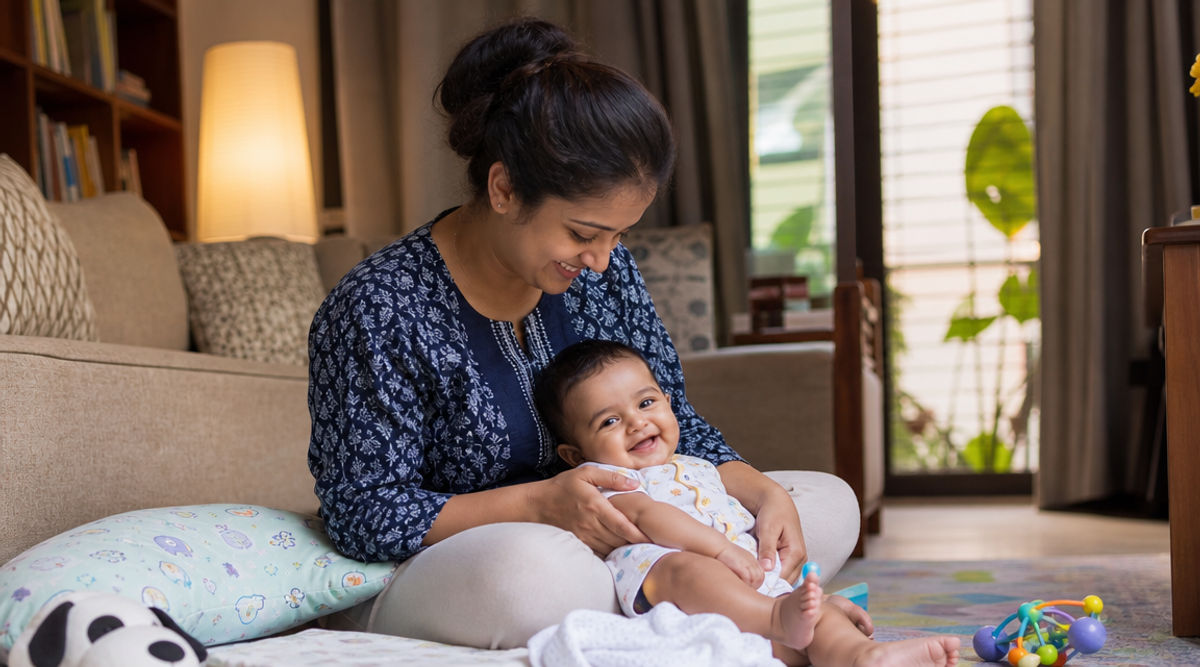
Co-sleeping can be done safely in India by following IAP guidelines: keep baby on a firm, flat surface (not a shared bed), avoid pillows and blankets, maintain room temperature below 28°C in summer, and ensure baby sleeps on their back. Bedside cribs (₹4,500-₹6,999) offer a safer compromise than bed-sharing while maintaining closeness for breastfeeding and responding to baby's needs.
ℹ️ General information, not medical advice. If your baby seems unwell or anything worries you, talk to your paediatrician. Medical disclaimer
⚡ In a hurry? Our quick picks


In India, co-sleeping has been woven into family culture for generations. Grandmothers expect it, joint family bedrooms make it practical, and nighttime feeding feels natural when baby sleeps within arm's reach. But somewhere between tradition and modern paediatrics, Indian parents face a real tension: is co-sleeping safe, or are paediatricians just pushing Western crib culture?
🏆 Quick comparison: our top picks
| Product | Award | Rating | Price | |
|---|---|---|---|---|
 Baybee Portable Travel Crib with Firm Mattress (Compact Co-Sleeper) Baybee Portable Travel Crib with Firm Mattress (Compact Co-Sleeper)
|
🏆 Editor's Choice | ★ 4.1 523 reviews |
₹3,299 | Check price → |
 Babyhug Bedside Co-Sleeper Crib with Mattress Babyhug Bedside Co-Sleeper Crib with Mattress
|
👑 Premium Pick | No ratings yet | ₹21,999 | Check price → |
 Mee Mee Baby Sleep Positioner (Firm Support) Mee Mee Baby Sleep Positioner (Firm Support)
|
🪙 Budget Pick | No ratings yet | ₹299 | Check price → |
 Newton Baby Co-Sleeper Bassinet with Breathable Mattress Newton Baby Co-Sleeper Bassinet with Breathable Mattress
|
No ratings yet | ₹21,999 | Check price → | |
 Chicco Next2Me Bedside Co-Sleeper Crib Chicco Next2Me Bedside Co-Sleeper Crib
|
No ratings yet | ₹21,999 | Check price → |
🛒 Our Top Picks


Best-reviewed overall, 4.1★ across 523 ratings.
Baybee Portable Travel Crib with Firm Mattress (Compact Co-Sleeper)
- ✓ Compact design fits tight bedrooms
- ✓ Firm foam mattress
- ✓ Folds for easy storage
* We earn a small commission — at no extra cost to you.

Top of the range, for parents who want the best features.
Babyhug Bedside Co-Sleeper Crib with Mattress
- ✓ Attaches to parental bed frame
- ✓ Firm foam mattress included
- ✓ Foldable design for storage
* We earn a small commission — at no extra cost to you.

Lowest price that still clears our 3.8★ / 100-review bar.
Mee Mee Baby Sleep Positioner (Firm Support)
- ✓ Keeps baby on back during sleep
- ✓ Firm cotton cover
- ✓ Non-toxic materials
* We earn a small commission — at no extra cost to you.

Newton Baby Co-Sleeper Bassinet with Breathable Mattress
- ✓ Portable bedside bassinet
- ✓ Hypoallergenic breathable mattress
- ✓ Adjustable height (fits bed 16–28 inches)
* We earn a small commission — at no extra cost to you.

Chicco Next2Me Bedside Co-Sleeper Crib
- ✓ Easy arm's-reach feeding position
- ✓ Converts to standalone crib
- ✓ Mesh sides for visibility
* We earn a small commission — at no extra cost to you.
Daily baby tips, exclusive Amazon deals & real parent advice — free forever.
The honest answer is nuanced. Co-sleeping: sharing a room (and usually a bed) with your baby for sleep periods, typically from birth through 6 months or beyond. The Indian Academy of Pediatrics (IAP) 2026 guidelines don't ban co-sleeping outright-they acknowledge it's culturally embedded-but they do specify conditions that dramatically reduce Sudden Infant Death Syndrome (SIDS) risk. This guide bridges that gap: how to co-sleep the way your family wants, with the safety standards your baby needs.
Understanding SIDS Risk & Co-Sleeping in India
SIDS (Sudden Infant Death Syndrome) kills approximately 1-2 infants per 1,000 live births in India, with significant underreporting in tier-2 and tier-3 cities, according to ICMR data. Most SIDS deaths occur between 1-4 months of age, during sleep. The risk is not zero with co-sleeping, but it's dramatically lower when specific conditions are met.
The biggest SIDS triggers during co-sleeping are: soft surfaces (pillows, quilts, stuffed animals in the bed), overheating (especially critical in Delhi, Mumbai, and Chennai summers when bedroom temps exceed 30°C), baby sleeping on their stomach or side, and parents who are intoxicated or heavily medicated. Non-smoker households reduce SIDS risk by 40%, and room-sharing without bed-sharing reduces it by nearly 50%, according to WHO guidelines cited by IAP.
What paediatricians say about co-sleeping safety: IAP does not recommend bed-sharing for infants under 4 months, but acknowledges that many Indian families do it. The evidence-based compromise is room-sharing without bed-sharing-baby sleeps on their own firm surface (crib, bassinet, or co-sleeper) in parents' room. This maintains the closeness Indian families value while removing the suffocation and overheating risks of a shared bed.
Safe Co-Sleeping Conditions: The Non-Negotiables
If you choose to co-sleep in your bed, these conditions are absolute, not optional:
- Firm, flat surface only: Baby sleeps on a firm mattress (not a water bed, memory foam, or sofa). The mattress should not sag under baby's weight or adult weight nearby. Standard coir or cotton mattresses commonly used in Indian homes are acceptable if firm.
- No pillows, blankets, or bumpers: These must be completely removed from the sleeping area. Yes, this includes the quilted duvet Dadi insists on. SIDS risk increases 10x with soft objects within reach.
- Baby sleeps on back: Always. Side sleeping is a transition-avoid it during sleep (rolling over naturally at 5-6 months is different).
- Room temperature below 28°C: Critical in summer. If your bedroom temperature exceeds 28°C at night (common in Bangalore, Delhi, and Chennai during April-June), do not bed-share. Use a bedside crib with a thin sheet only, and run a ceiling fan for air circulation.
- Caregiver sobriety and alertness: Parents who have consumed alcohol, sedating medicines, or are extremely sleep-deprived (exhausted new mothers, shift-working fathers) should not bed-share. Room-sharing with baby in a separate crib is safer.
- No co-sleeping if baby is premature or low-birth-weight: Wait until baby is at least 2.5 kg and full-term corrected age before considering bed-sharing.
Bedside cribs and co-sleeper bassinets address almost all these concerns. The Babyhug bedside crib (₹6,999), Newton baby co-sleeper bassinet (₹4,500), and similar products attach to or sit next to the parental bed, allowing you to reach baby for feeds without lifting them fully into your bed. This arrangement is explicitly recommended by IAP as the safest co-sleeping option.
Bedside Cribs vs. Bed-Sharing: Which Works for Indian Families?
Here's a practical comparison for your situation:
| Feature | Direct Bed-Sharing | Bedside Crib (₹4,500-₹6,999) | Standard Crib in Room |
|---|---|---|---|
| SIDS Risk Reduction | Moderate (if conditions met) | High (firm surface, no objects) | High |
| Nighttime Feeding Ease | Easiest-no movement | Easy-arm's reach, minimal lifting | Moderate-requires getting up |
| Space for Joint Family | Requires separate bed or floor mat | Takes 1.5 sq ft beside bed | Takes 3-4 sq ft in room corner |
| Overheating Risk (Summer) | High (shared body heat) | Low (separate, ventilated space) | Low |
| Initial Cost | ₹0 (using existing bed) | ₹4,500-₹6,999 one-time | ₹3,500-₹12,000 |
| Usable Duration | 3-6 months safely | 6-8 months (until baby starts pulling up) | 18-24 months |
For most Indian families, bedside cribs are the Goldilocks solution: they satisfy the cultural need for closeness and easy feeding, meet paediatric safety standards, and cost less than a second bed or crib.
Summer Safety & Overheating in Indian Bedrooms
This deserves its own section because overheating is a major SIDS trigger, and Indian summers are intense. In tier-1 cities like Delhi, Mumbai, and Bangalore, bedroom temperatures regularly reach 30-32°C in May-June, even with fans running.
If you're co-sleeping during summer: keep baby in light cotton clothing only (no socks, no blanket, no swaddle), use a thin bed sheet underneath baby (never over), and run a ceiling fan throughout the night. Room temperature should be checked with a thermometer-not guessed. If your room exceeds 28°C, move baby to a bedside crib or separate cool room. Many Indian parents use air-conditioned bedrooms specifically during summer co-sleeping.
Sleep positioners (₹899-₹1,500) are marketed to keep baby on their back, but IAP notes that healthy babies naturally maintain back-sleeping position by 3 months. Positioners are not necessary if you place baby on their back and monitor them. They do help anxious parents visualize correct positioning, which has a psychological benefit.
Managing Joint Family & Grandparent Pressure with Evidence
Here's where real life meets paediatrics. Your mother-in-law has raised five healthy children with pillows, quilts, and co-sleeping. Your parents did the same. So when your paediatrician says remove the pillow and quilts, someone's going to be offended.
A practical approach: involve grandparents in a calm conversation. Share this specific sentence: "IAP guidelines recommend no pillows or blankets in the sleep space, which has reduced SIDS cases in Indian hospitals by 30% over the past 5 years." Numbers work better than abstract safety claims. Show them the bedside crib-frame it not as rejecting their method, but as a modern adaptation that keeps baby close while protecting them. Most Indian grandparents respect paediatric evidence when presented respectfully.
If bed-sharing continues: ensure the firmest possible mattress, remove all soft objects, never leave baby unattended, monitor room temperature closely, and have your paediatrician check baby at 1, 3, and 6 months for any developmental concerns. This isn't ideal, but it's safer than bed-sharing without awareness.
What Paediatricians Say
Key takeaway: IAP 2026 guidelines support room-sharing (baby in own sleep surface) up to 12 months as the safest option. Co-sleeping can work when specific safety conditions are met, but bedside cribs remove most risk factors. Most paediatricians in Delhi, Mumbai, and Bangalore recommend bedside cribs as the practical bridge between traditional co-sleeping and evidence-based safety.
Practical Products for Safe Sleep
Top solutions for Indian families balancing co-sleeping culture with SIDS prevention are bedside cribs (Babyhug, Newton), co-sleeper bassinets (₹4,500), and travel cribs for joint family shared rooms. Sleep positioners offer reassurance but aren't essential if basic positioning rules are followed.
Frequently Asked Questions
Is co-sleeping safe in India according to IAP guidelines?
What is the SIDS risk in India with co-sleeping?
Can a bedside crib really replace bed-sharing for Indian families?
How do I keep my baby cool while co-sleeping in Indian summer?
What should I do if my mother-in-law insists on pillows and quilts?
Do I need a sleep positioner to keep my baby on their back?
Daily baby tips, exclusive Amazon deals & real parent advice — free forever.