
Cloth Diapers for Working Moms in a 1BHK: Is It Realistic? The Real Math for Mumbai & Pune
⚡ In a hurry? Our quick picks



Cloth diapers work for working moms in small flats only if you have consistent drying space (balcony or dedicated rod), can run 2–3 washing cycles weekly, and accept a Rs 4,000–6,000 upfront cost. Without these three things, disposables are the honest choice.
Let's skip the Instagram narrative. Cloth diapers are not inherently better than disposables—they're a logistics puzzle that only fits certain homes. If you're a working parent in a Pune 1BHK or Mumbai apartment balcony with a helper two days a week, this framework will help you decide whether cloth works for you, not whether it should work.
🏆 Quick comparison: our top picks
| Product | Award | Rating | Price | |
|---|---|---|---|---|
 Just Bumm Organic Cotton Cloth Diaper Inserts (Pack of 18) Just Bumm Organic Cotton Cloth Diaper Inserts (Pack of 18)
|
🏆 Editor's Choice | ★ 4.4 1,156 reviews |
₹499 | Check price → |
 Maa & Me Cloth Diaper Covers Pack of 6 with Wetbag Maa & Me Cloth Diaper Covers Pack of 6 with Wetbag
|
💰 Best Value | ★ 4.2 892 reviews |
₹3,299 | Check price → |
 Cloth Diaper Starter Kit: 6 Covers + 18 Inserts + Accessories Cloth Diaper Starter Kit: 6 Covers + 18 Inserts + Accessories
|
👑 Premium Pick | ★ 4.1 634 reviews |
₹5,499 | Check price → |
🛒 Our Top Picks


Best-reviewed overall, 4.4★ across 1,156 ratings.
Just Bumm Organic Cotton Cloth Diaper Inserts (Pack of 18)
- ✓ 18 absorbent inserts
- ✓ 100% organic cotton
- ✓ Machine washable
* We earn a small commission — at no extra cost to you.
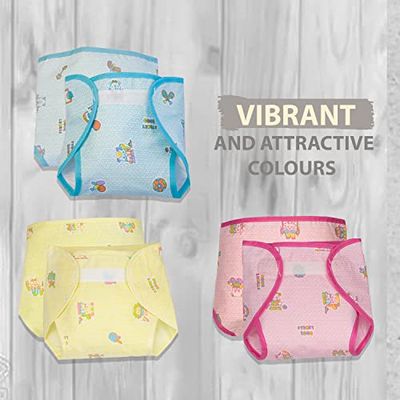
Top rating for the price, 4.2★ at ₹3,299.
Maa & Me Cloth Diaper Covers Pack of 6 with Wetbag
- ✓ 6 waterproof covers
- ✓ One wet storage bag included
- ✓ Soft cotton lining
* We earn a small commission — at no extra cost to you.

Top of the range, for parents who want the best features.
Cloth Diaper Starter Kit: 6 Covers + 18 Inserts + Accessories
- ✓ Complete beginner bundle
- ✓ Includes wet bag and odor spray
- ✓ Mixed insert types: cotton + microfibre
* We earn a small commission — at no extra cost to you.
Daily baby tips, exclusive Amazon deals & real parent advice — free forever.
The Three Non-Negotiable Questions
- Do you have guaranteed drying space for 18–24 inserts every day?
This is the dealbreaker. Cloth inserts need 8–12 hours of dry-time in good air circulation. A bathroom rod in a Mumbai monsoon or a Delhi winter won't cut it. You need a south-facing or east-facing balcony, a dedicated clothes rod, or consistent access to a terrace. If your only option is a dark bathroom corner, cloth won't work. - Can you realistically run 2–3 washing machine cycles per week?
Eighteen cloth diaper inserts + 6 waterproof covers = one full machine load every 3 days, minimum. If you work full-time and have no domestic help, or your helper only comes twice weekly, this creates a Tuesday-Thursday-Saturday load schedule that feels manual. Calculate your actual helper availability before deciding. - Will your daycare accept cloth diapers, or are you home-based / have backup care?
Most organised daycares don't accept cloth diapers because they require separate storage, handling, and washing protocols. If your child is in daycare 8+ hours daily, cloth becomes impractical (you'd need 24+ inserts to bridge gaps). Home-based childminders are more flexible; ask first.
The Space & Drying Reality
A typical Pune 1BHK balcony is 120–180 sq ft. A typical Mumbai apartment balcony is 80–120 sq ft. Once you add a laundry rack for cloth inserts and covers, you're occupying 40–50% of that space daily. During monsoon (June–September), drying time stretches from 8 hours to 18–24 hours. In a small flat, this creates visible clutter and, honestly, spousal friction.
What paediatricians say: The Indian Academy of Pediatrics (IAP) has no official stance favouring cloth over disposables—both are safe when changed every 4–6 hours and the baby's skin is kept dry. The choice is logistical and environmental, not medical.
If you're sharing a balcony with another flat, check your lease. Many societies restrict drying schedules or forbid laundry visible from the street. Get permission in writing before investing Rs 5,000 in cloth inserts.
The Weekly Time Commitment
A cloth diaper wash routine typically looks like this:
- Rinse: Immediately after use, rinse soiled inserts in the toilet, store in a wet bag (5 mins per change).
- Weekly wash: Cold rinse cycle, then hot wash with mild detergent (45 mins machine time).
- Dry: Air-dry on the balcony or rack (8–24 hours, depending on season and humidity).
- Fold & store: 10–15 mins to fold and restock the diaper caddy.
Over a week, if you change cloth diapers 8 times daily, that's 56 diapers washed, rinsed, dried, and restocked. For a working parent with childcare, household chores, and a job, this is non-trivial. A household with a full-time domestic helper has flexibility; a household without one often finds disposables more sustainable in reality (even if less eco-friendly in principle).
The Upfront Cost vs Two-Year Breakdown
A basic cloth diaper setup costs Rs 4,000–6,000 and includes:
| Item | Quantity | Est. Price | Total |
|---|---|---|---|
| Waterproof covers | 6 | Rs 400–600 each | Rs 2,400–3,600 |
| Cloth inserts (18 microfibre or cotton) | 18 | Rs 150–250 each | Rs 2,700–4,500 |
| Wet bag, bucket, detergent | 1 | Rs 1,000–1,500 | Rs 1,000–1,500 |
| Total | Rs 6,100–9,600 |
Disposables, by contrast, cost approximately Rs 15–25 per diaper depending on brand and bulk discount. For one child in diapers from birth to 2.5 years (roughly 900 days), the running cost is Rs 13,500–22,500. If you add a second child 18 months later, disposable costs overlap and spike to Rs 35,000+.
Cloth breaks even around month 14 if you use the same set for a second child. If you're stopping after one child or your flat setup makes cloth impractical by month 3, disposables are cheaper in real rupees.
Daycare Compatibility & Backup Disposables
Most full-service daycares in Bangalore, Mumbai, and Pune require parents to supply disposable diapers. They cite hygiene protocols, cross-contamination risk, and the labour cost of managing soiled cloth for multiple children. A few progressive daycares (usually Montessori or home-based setups) accept cloth if you provide a separate wet bag and commit to pick up daily.
Even if you've chosen cloth for home days, daycare means you'll still buy disposables for 8–10 hours daily during the workweek. This reduces your cloth savings to weekends and public holidays only—often not enough to justify the drying infrastructure in a small flat.
Real scenario: A working parent in Pune running cloth at home but using disposables at daycare from 8am–6pm spends roughly Rs 12,000 annually on disposables (40 diapers/week × 50 weeks). Adding the cloth setup cost and helper time, the two-year savings shrink to Rs 2,000–4,000—less than Rs 100/month. For many families, that margin is too thin to offset the complexity.
Helper Availability & Outsourcing
If you have a domestic helper 5+ days a week, cloth becomes realistic. The helper handles the rinse-wash cycle, manages the balcony drying schedule, and folds inserts—freeing you from the day-to-day friction. The cost: Rs 200–500/month extra (some helpers charge a surcharge for cloth diaper wash).
Without help, or with help only 2 days weekly, cloth adds 3–5 hours/week to your workload. For a parent already juggling a full-time job, this is the hidden cost that most blogs skip.
Water, Detergent & Hidden Expenses
Washing cloth diapers 2–3 times weekly uses approximately 400–600 litres of water/month extra—roughly 15–20% more than baseline household use. In Mumbai or Delhi, this adds Rs 150–300/month to your water bill. In water-scarce Bangalore or Pune, it's an ethical trade-off worth considering before you commit.
Cloth-safe detergents (low-residue, fragrance-free) cost Rs 300–600/month vs standard detergent at Rs 150–200/month. Specialist cloth diaper detergents marketed as "residue-free"—designed to clean cloth without leaving soap buildup that reduces water absorption—add Rs 50–100/month in premium.
The Honest Decision Tree
Choose cloth if: You have a balcony or terrace drying space, a helper or flexible schedule to manage 2–3 weekly wash cycles, and your child is home-cared (not daycare) for at least half the week. You're also comfortable with the visible laundry impact on your balcony and have buy-in from everyone in your household.
Choose disposables if: Your apartment lacks drying space, you use full-time daycare, you have no household help, or your water/sewage costs are already high. Disposables aren't a failure—they're a rational choice for your logistics.
Hybrid approach (realistic for most working parents): Use cloth at home on weekends and evenings; use disposables for daycare and work-from-home days when laundry space is needed for other household tasks. This reduces your disposable spend by 30–40% without requiring the infrastructure commitment of full-time cloth.
Frequently Asked Questions
How many cloth diapers do I need to start?
Can I use cloth diapers at daycare?
How much does a cloth diaper setup cost, and when does it pay for itself?
What if my flat doesn't have a balcony or sunny drying space?
Is it unhygienic to store soiled cloth diapers in a wet bag until wash day?
Will cloth diapers affect my water bill significantly?
Daily baby tips, exclusive Amazon deals & real parent advice — free forever.