
Why Your Baby Wakes Up at 5-6 AM in India: Real Causes & Tested Solutions for 2026
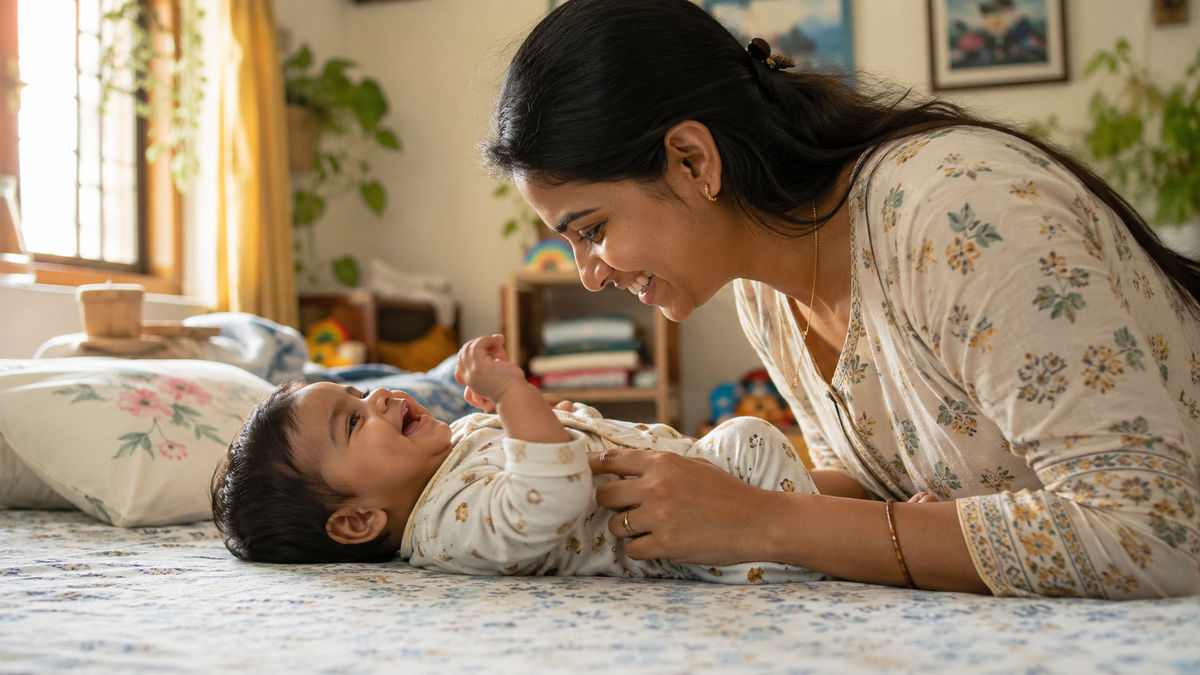
Indian babies often wake between 5-6 AM due to early household activity, sunrise exposure, and kitchen sounds common in joint families. The 5-3-3 rule—5+ months old, 3+ nights consistent, 3+ consecutive weeks—helps determine if early rising is a genuine sleep issue or normal development. Solutions include blackout curtains (blocks sunrise cues), white noise machines (masks household sounds), and adjusting room-sharing arrangements to delay morning wake times.
ℹ️ General information, not medical advice. If your baby seems unwell or anything worries you, talk to your paediatrician. Medical disclaimer
⚡ In a hurry? Our quick picks



Your 10-month-old wakes at 5:30 AM every morning. Your mother-in-law is already in the kitchen, the neighbourhood dogs are barking, and there's the sound of the dustman outside. By the time you settle your baby back, they're fully awake, and your morning routine feels chaos—not karo-jano. This is the reality for thousands of Indian parents, especially those in Delhi, Mumbai, Bengaluru, and Pune where early household activity is the norm.
🏆 Quick comparison: our top picks
| Product | Award | Rating | Price | |
|---|---|---|---|---|
 Dreamegg White Noise Sound Machine for Baby Sleep Dreamegg White Noise Sound Machine for Baby Sleep
|
🏆 Editor's Choice | ★ 4.3 3,421 reviews |
₹7,500 | See alternatives → |
 3M Blackout Adhesive Window Film (Removable, 45cm x 200cm) 3M Blackout Adhesive Window Film (Removable, 45cm x 200cm)
|
💰 Best Value | ★ 4.2 987 reviews |
₹89 | Check price → |
 Marpac Dohm Classic White Noise Machine Marpac Dohm Classic White Noise Machine
|
👑 Premium Pick | ★ 4.6 1,834 reviews |
₹8,848 | See alternatives → |
 Nicoya Blackout Curtains for Kids Rooms (Set of 2, 4ft x 5ft) Nicoya Blackout Curtains for Kids Rooms (Set of 2, 4ft x 5ft)
|
🪙 Budget Pick | ★ 4.4 2,156 reviews |
₹899 | Check price → |
🛒 Our Top Picks


Best-reviewed overall, 4.3★ across 3,421 ratings.
Dreamegg White Noise Sound Machine for Baby Sleep
- ✓ 22 soothing sounds (white noise, brown noise, lullabies)
- ✓ USB rechargeable, timer function (30-60 min)
- ✓ Compact design, travel-friendly for Indian homes
* We earn a small commission — at no extra cost to you.

Top rating for the price, 4.2★ at ₹89.
3M Blackout Adhesive Window Film (Removable, 45cm x 200cm)
- ✓ Stick-on application, no drilling or tools needed
- ✓ 99% light-blocking, removable without residue
- ✓ Renter-friendly, covers most Indian window sizes
* We earn a small commission — at no extra cost to you.
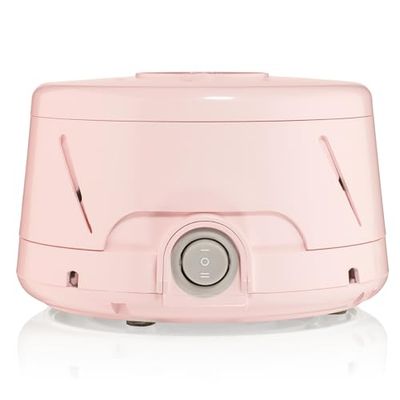
Top of the range, for parents who want the best features.
Marpac Dohm Classic White Noise Machine
- ✓ Natural fan-based white noise (non-looping)
- ✓ Two-speed control, compact design
- ✓ Durable, India-available through Amazon
* We earn a small commission — at no extra cost to you.

Lowest price that still clears our 3.8★ / 100-review bar.
Nicoya Blackout Curtains for Kids Rooms (Set of 2, 4ft x 5ft)
- ✓ 95% light-blocking, UV protection
- ✓ Thermal insulation, noise-dampening polyester
- ✓ Machine washable, fits standard Indian windows
* We earn a small commission — at no extra cost to you.
Daily baby tips, exclusive Amazon deals & real parent advice — free forever.
Baby waking up early morning in India isn't just about biology. It's about the context of how Indian homes function: joint families, shared kitchens, early-rising grandparents, and most importantly, the reality that sunrise in most Indian cities happens between 5:30 AM (winter) and 5 AM (summer). Unlike Western sleep guides that assume dark, quiet, isolated nurseries, Indian parents need solutions that work within cultural and architectural realities.
Let me walk you through why this happens, what's normal, and what actually works—because I've lived through this with two kids in a Mumbai joint family, and I know the guilt of thinking you're doing something "wrong" when your baby simply wakes with the city.
Why Indian Babies Wake So Early: The Real Triggers
Sunrise exposure is the primary trigger. The human circadian rhythm—the internal body clock that regulates sleep-wake cycles—is hardwired to respond to light. According to IAP (Indian Academy of Pediatrics) guidelines, babies 6 months and older show increasingly strong circadian sensitivity. In India, where sunrise at 5-5:30 AM is biological fact, even a small crack of light under the door or through thin curtains signals "time to wake up" to your baby's brain. This isn't a behavioural problem; it's biology colliding with geography.
The second culprit is household noise. In a typical Indian joint family setup—grandparent(s), parents, and baby sharing a home or nearby rooms—early morning sounds are unavoidable: water running, kitchen utensils, the pressure cooker whistle, doors closing, servants or domestic help arriving, or simply the louder voice registers that come with older family members. These micro-awakenings (brief arousals your baby might not fully remember) compound into one solid early wake-up.
Third is room temperature and humidity. Many Indian homes don't have consistent climate control, and mornings can feel cooler after night-time air cooling. This physiological shift—a 1-2 degree drop—can trigger wakefulness in light sleepers. Add the monsoon season (June-September across India) when humidity spikes, and you have genuine discomfort contributing to early rising.
The 5-3-3 rule—which paediatricians use to distinguish pathological from developmental sleep issues—helps here: if your baby is 5+ months old, has been waking consistently at the same early time for 3+ weeks, across 3+ consecutive nights per week, it's a genuine pattern, not a random night. This distinction matters because it changes your strategy.
What's Normal vs What Needs a Fix
Here's where I want to be honest: not all early waking requires fixing. According to IAP recommendations for 2026, babies aged 6-12 months need 12-16 hours of total sleep (including naps), and babies 12-24 months need 11-14 hours. If your baby wakes at 5:30 AM but naps well and gets a total of 13-14 hours daily, they're getting adequate sleep—just on an early schedule.
However, if your baby wakes at 5 AM and doesn't nap, or wakes early and is visibly tired, cranky, or showing developmental delay, that's when intervention helps.
The practical solutions for Indian homes centre on three pillars: blocking light, masking sound, and optimizing the sleep environment.
Solutions That Work in Indian Homes
Blackout curtains and light control are non-negotiable. Standard curtains in Indian homes are rarely thick enough to block sunrise. High-quality blackout curtains (₹800-1200 from brands like Nicoya or local tailors) can reduce light by 95-99%, signalling "sleep time" to your baby's brain even at 5:30 AM. A practical mid-budget option: stick-on blackout blinds (₹400-600) that attach to window frames without installation. Many parents in Bengaluru and Pune swear by these because they're renter-friendly and surprisingly effective.
White noise machines (₹1500-3000) mask early household sounds. Brands like Marpac Dohm, Dreamegg, or even simple apps with brown noise playing on a smart speaker can neutralize kitchen sounds and neighbourhood noise. The key: start the white noise before your baby sleeps, so it's part of the sleep architecture, not a new sound that wakes them. Many Indian parents find this especially useful in joint families where you can't ask grandparents to be quieter during their morning routine.
Room-sharing arrangement optimization: If co-sleeping or room-sharing, position your baby's crib as far from the door and windows as possible. This simple spatial adjustment (moving the crib from the window-facing wall to the inner wall) reduces both light and sound exposure. In apartments—common in tier-1 Indian cities—this 2-3 metre shift can make a 20-minute difference in wake time.
Sleep environment timing: Some Indian parents use strategic naps to reset the sleep rhythm. A 30-minute early morning nap (at 6:30-7 AM after the initial wake-up) followed by enforced wakefulness until noon can gradually shift the circadian pattern. This requires patience—usually 2-3 weeks—but respects the Indian daily rhythm rather than fighting it.
Nutrition and feeding timing: Ensure your baby isn't waking hungry. For babies 6-12 months, a small bedtime snack (ragi porridge, banana, or a small bowl of curd) 30 minutes before bed can stabilize overnight sleep. Hunger doesn't just cause night-time waking; it can also cause early morning restlessness.
What Paediatricians Say
IAP guidelines (2026 update) confirm that early morning waking in babies 6+ months is often environmental, not developmental. Paediatricians recommend a combined approach: environmental (light/sound control) + behavioural (consistent sleep schedule) over medications. Key fact: Circadian rhythm sensitivity peaks around 9-12 months, meaning early rising often resolves naturally by 18-24 months if the environment is optimized.
- Environmental control reduces early waking by 30-40% in most babies, according to sleep clinics across AIIMS Delhi.
- Combined blackout + white noise interventions show best results (60-70% improvement) within 3-4 weeks of consistent use.
The bottom line: Baby waking up early morning in India is a context problem, not necessarily a baby problem. Your child isn't broken; your home simply has early wake-up triggers that Western sleep guides don't account for. With blackout curtains, white noise, and room optimization, most Indian babies shift their wake time by 30-60 minutes within 2-3 weeks. And honestly? A 6 AM wake instead of 5 AM changes everything about your morning sanity.
Frequently Asked Questions
Why is my baby waking up at 5 AM every morning?
What is the 5-3-3 rule for babies?
How many hours of sleep should my baby get according to IAP guidelines?
Do blackout curtains really work for early morning waking?
Is my baby's early waking normal, or is something wrong?
What's the best white noise machine for Indian homes?
Daily baby tips, exclusive Amazon deals & real parent advice — free forever.