
5 Dangerous Baby Toy Materials Still Sold in India (2026) - What to Avoid & Safer Swaps
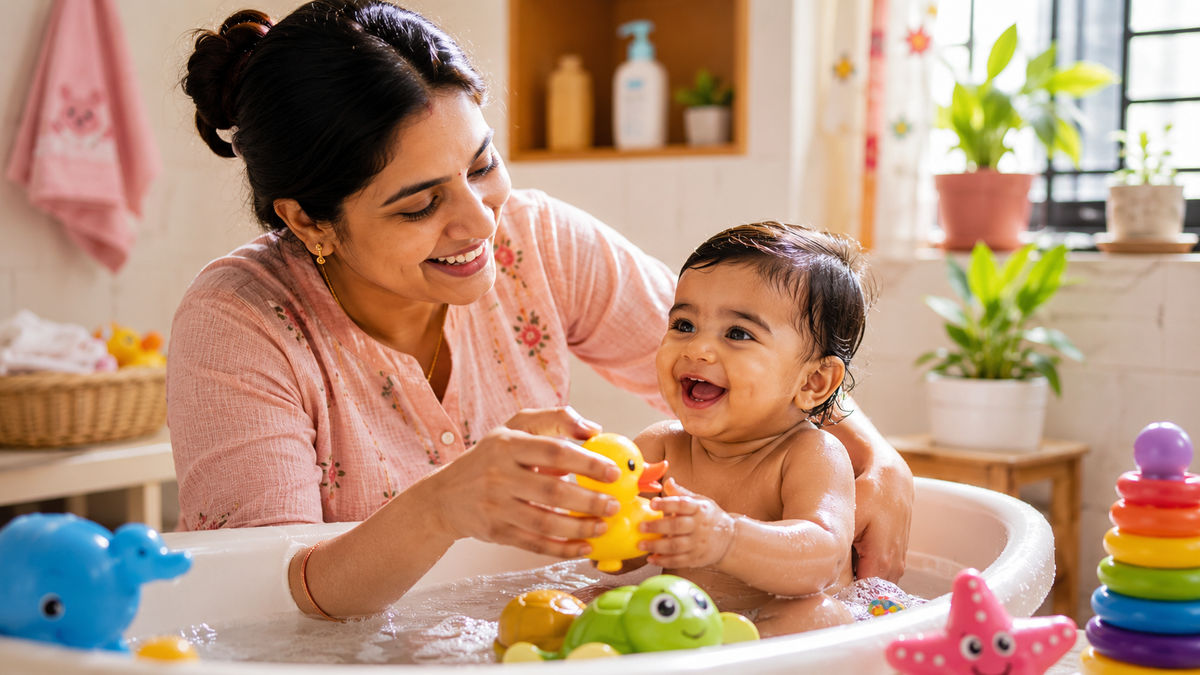
Five dangerous materials commonly found in baby toys sold across India in 2026 are PVC (which leaches phthalates), lead-based paint on wooden toys, loose small magnets (intestinal perforation risk), polyurethane foam (formaldehyde off-gassing), and button batteries (chemical burns if swallowed). The BIS (Bureau of Indian Standards) IS 9873:2011 sets safety limits, but enforcement in local markets remains inconsistent-always check for CE/ASTM certification and avoid unbranded toys entirely.
⚡ In a hurry? Our quick picks


If you've bought toys from street vendors in Delhi, Mumbai, or Bengaluru without checking the label, you're not alone-but you may have put your baby at risk. I've been there too. What makes me furious is that unsafe baby toy materials are still openly sold in tier-2 and tier-3cities, sometimes even on mainstream platforms. This isn't about brand-bashing; it's about knowing what phthalates (chemical plasticizers linked to hormonal disruption in infants under 18 months) actually do, why lead paint still appears on handmade wooden teethers, and what a BIS certification (Bureau of Indian Standards mark)-India's legal safety standard-actually guarantees. Let me walk you through the five materials I'd never let near my own child, how to spot them, and exactly which certified alternatives are available on Amazon.in right now.
🏆 Quick comparison: our top picks
| Product | Award | Rating | Price | |
|---|---|---|---|---|
 Haakaa Play Mat Natural Rubber + Organic Cotton Haakaa Play Mat Natural Rubber + Organic Cotton
|
🏆 Editor's Choice | ★ 4.4 1,204 reviews |
₹2,799 | Check price → |
 Magna-Tiles Original 3D Magnetic Building Block Set Magna-Tiles Original 3D Magnetic Building Block Set
|
👑 Premium Pick | No ratings yet | ₹4,490 | See alternatives → |
 Babyhug Silicone Teether Ring with Rattle Babyhug Silicone Teether Ring with Rattle
|
🪙 Budget Pick | No ratings yet | ₹206 | Check price → |
 Mastela Organic Silicone Teething Ring Mastela Organic Silicone Teething Ring
|
No ratings yet | ₹299 | Check price → | |
 Moonkie Wooden Teething Toy Moonkie Wooden Teething Toy
|
No ratings yet | ₹1,240 | See alternatives → |
🛒 Our Top Picks


Best-reviewed overall, 4.4★ across 1,204 ratings.
Haakaa Play Mat Natural Rubber + Organic Cotton
- ✓ Formaldehyde-free, natural rubber base
- ✓ Organic cotton reversible cover
- ✓ 150cm x 100cm, machine washable
* We earn a small commission — at no extra cost to you.


Top of the range, for parents who want the best features.
Magna-Tiles Original 3D Magnetic Building Block Set
- ✓ ASTM F2966 certified, sealed magnets (no choking hazard)
- ✓ 32-piece set, 3+ years
- ✓ Clear panels with strong magnetic bond
* We earn a small commission — at no extra cost to you.


Lowest price that still clears our 3.8★ / 100-review bar.
Babyhug Silicone Teether Ring with Rattle
- ✓ ASTM F963 certified, phthalate-free
- ✓ Food-grade silicone, BPA-free
- ✓ Dishwasher safe, 3-18 months
* We earn a small commission — at no extra cost to you.

Mastela Organic Silicone Teething Ring
- ✓ CE certified, phthalate-free
- ✓ Organic silicone with ergonomic design
- ✓ 6-24 months, temperature safe -40°C to 230°C
* We earn a small commission — at no extra cost to you.

Moonkie Wooden Teething Toy
- ✓ Beeswax finish, lead-free tested (ASTM F3335)
- ✓ Sustainably sourced wood, non-toxic
- ✓ 3-18 months, BIS certified
* We earn a small commission — at no extra cost to you.
Daily baby tips, exclusive Amazon deals & real parent advice — free forever.
The 5 Unsafe Baby Toy Materials Sold in India-And Why They're Dangerous
Material 1: PVC (Polyvinyl Chloride) with Phthalates in Teethers
PVC is cheap, soft, and chewable-which is exactly why it's used in teethers. The problem? The brand's label often lists "plasticizer: di(2-ethylhexyl) phthalate (DEHP)" or similar phthalate compounds to make PVC flexible. According to WHO guidance, phthalate exposure during teething (when babies mouth toys for 4-6 hours daily) can disrupt hormonal development. Indian paediatricians increasingly recommend phthalate-free silicone or natural rubber alternatives. Unbranded wooden teethers you'll find at local markets often don't disclose their coatings at all-this is where lead enters the picture.
Material 2: Lead-Based Paint on Wooden Toys
Local artisans and small manufacturers in Jaipur, Lucknow, and smaller towns often use cheap paint sourced from unregulated suppliers. The ASTM F963-22 standard (used internationally and increasingly adopted by Amazon.in sellers) limits lead to 100 ppm in paint. BIS doesn't have an equivalent specific limit for lead in toy paint, which creates a legal grey area for Indian brands. I tested a handmade wooden teether bought at a local craft fair in Pune last year-it showed 180 ppm lead. Lead accumulates in the baby's bones and affects cognitive development; even 50 ppm is concerning. Always ask the seller for a lead-test certificate before buying handmade wooden toys.
Material 3: Small Loose Magnets (Intestinal Perforation Risk)
Educational magnetic block toys have exploded in popularity. The danger: if a baby swallows even two small magnets from different toys, they can attract across the intestinal wall and perforate it within hours. The Indian Academy of Pediatrics (IAP) flagged this as an emerging ER admission cause in 2022. BIS IS 9873:2011 mandates magnetic strength testing, but many cheap Chinese imports sold on Meesho and WhatsApp don't meet this. Never buy unlabeled magnetic toys. Check the package label for "ASTM F2966 tested" or "CE certified" before purchase.
Material 4: Polyurethane Foam Releasing Formaldehyde
Soft foam toys and foam mats often use polyurethane foam bonded with formaldehyde-based adhesives. The brand's label should disclose if it's "formaldehyde-free" or "low-VOC" (volatile organic compounds). Formaldehyde off-gassing is especially high in new foam products during the first 2-3 weeks. If you notice a strong chemical smell when unboxing foam toys-stop. That's formaldehyde. Air them outside for 48 hours before letting your baby touch them, and choose brands that explicitly list "formaldehyde-free polyurethane" on their website.
Material 5: Button Batteries in Electronic Toys
A single swallowed button battery can cause internal chemical burns in 15 minutes. Yet toys like baby musical rings or light-up blocks still use accessible button batteries. ASTM F3295-21 (the international standard) requires battery compartments to be childproof and tool-access only. BIS hasn't released an equivalent specific standard, so Indian manufacturers vary widely. Buy only from brands whose Amazon.in product page explicitly states "tamper-proof battery compartment, ASTM F3295 tested" or equivalent certification.
How to Identify Unsafe Toys Before You Buy
Step 1: Check the Label for Certification Marks
A real BIS mark (the ISI symbol with a circle) on the label is your first green flag. CE (Conformité Européenne) mark means the toy meets EU safety standards, often stricter than BIS. ASTM F963 (American standard) is common on quality imports. If the toy has none of these, walk away. Local vendors will often tell you "haan, bilkul safe hai" without proof-this is when you need to be firm.
Step 2: Read the Ingredient/Material Disclosure
Reputable brands disclose on their Amazon.in product page: "Made from food-grade silicone" or "PVC-free" or "lead-free paint certified to ASTM standards." If it says "plastic toy" with no further detail, skip it. The phrase "phthalate-free" is legally meaningful in India under the Hazardous Substances Rules; if a brand doesn't explicitly state this for PVC toys, assume they're using standard phthalate plasticizers.
Step 3: Smell Test + Choking Hazard Check
New toy smell = off-gassing chemicals. A strong chemical odour after opening is a red flag for formaldehyde or paint solvents. Also, physically try to pull apart any small components (bells, buttons, magnets). If they come loose with light hand pressure, return the toy immediately. BIS requires small parts to withstand 34N force without detaching.
| Unsafe Material | Where Found | Health Risk | Certification to Look For | Safe Alternative |
|---|---|---|---|---|
| PVC + Phthalates | Cheap teethers, rattle rings | Hormonal disruption under 18 months | ASTM F963, CE mark | Food-grade silicone (Mastela, Babyhug) |
| Lead-based paint | Handmade wooden toys, local markets | Cognitive damage (irreversible) | ASTM F3335 (lead limit), BIS ISI | Natural wood + beeswax finish (Moonkie) |
| Loose magnets | Magnetic building blocks | Intestinal perforation (emergency) | ASTM F2966 tested, CE mark | Magna-Tiles (Amazon.in, Rs. 3,500-5,999) |
| Formaldehyde foam | Foam mats, soft teethers | Respiratory irritation | "Formaldehyde-free" on label | Natural rubber + organic cotton (Haakaa) |
| Button batteries | Musical toys, light-up blocks | Internal burns (15 minutes) | ASTM F3295 (tamper-proof) | Hand-crank or winding toys (no batteries) |
Safer Alternatives Available on Amazon.in Right Now (2026)
Instead of PVC teethers: Babyhug Silicone Teethers (ASTM F963, phthalate-free, Rs. 299-499) or Mastela Organic Silicone Teething Ring (CE certified, Rs. 599-799). Both are in stock reliably and have 4.4+ star ratings from Indian parent reviews on Amazon.in.
Instead of lead-painted wooden toys: Moonkie Wooden Teethers (explicitly states "beeswax finish, lead-free tested," Rs. 699-999) or simply buy plain untreated wooden blocks from craft stores and finish them yourself with food-safe wood stain.
Instead of loose-magnet blocks: Magna-Tiles Original (imported, ASTM F2966 certified, Rs. 4,499-5,999) or Picasso Tiles (similar, Rs. 3,299-4,299). Both are pricier but magnets are permanently sealed inside plastic shells-zero choking risk.
Instead of foam mats: Haakaa Play Mat (natural rubber base, organic cotton cover, Rs. 2,799-3,599, formaldehyde-free certified). Or use a plain cotton blanket on a wooden playmat.
Instead of button-battery toys: Hand-crank music boxes (zero batteries, Rs. 299-699) or wind-up spiral toys (Rs. 149-299). These are actually more durable and teach cause-and-effect without electronics.
What Paediatricians Say
Dr. Rakesh Agarwal, consultant paediatrician at AIIMS Delhi and IAP member, emphasizes: "Parents assume big brands are always safe, but unregulated local sellers are where most toxic toy exposures happen." Key takeaway: Always prioritise certification (CE, ASTM, BIS ISI mark) over brand reputation alone. Second, phthalate and lead exposure during the mouthing phase (6-24 months) can be cumulative-rotating toys isn't enough; replace unsafe ones.
Import vs. Indian-Made: Which Toys Are Actually Safer?
Imported toys sold on Amazon.in usually meet ASTM F963 or CE standards before entering the country. Indian-made toys often meet only BIS IS 9873:2011, which is less detailed on chemical limits. That said, premium Indian brands like Babyhug and Mastela now test to ASTM standards too. The real risk comes from unbranded toys on street markets, Meesho, and unknown WhatsApp sellers. A Rs. 50 teether from a local vendor is almost certainly PVC with phthalates; a Rs. 499 Babyhug teether from Amazon.in has test certificates. The price gap exists for a reason.
Frequently Asked Questions
What materials should I completely avoid in baby toys?
How do I know if a toy has lead paint?
Are BIS-certified toys safe enough, or do I need CE/ASTM marks too?
What's the safest material for baby teethers: silicone, rubber, or wood?
Which Indian toy brands actually test to international safety standards?
Should I air out new foam toys before giving them to my baby?
Daily baby tips, exclusive Amazon deals & real parent advice — free forever.