
Baby Sleep Sack Buying Guide for India: TOG Ratings, Safety & Best Picks 2026
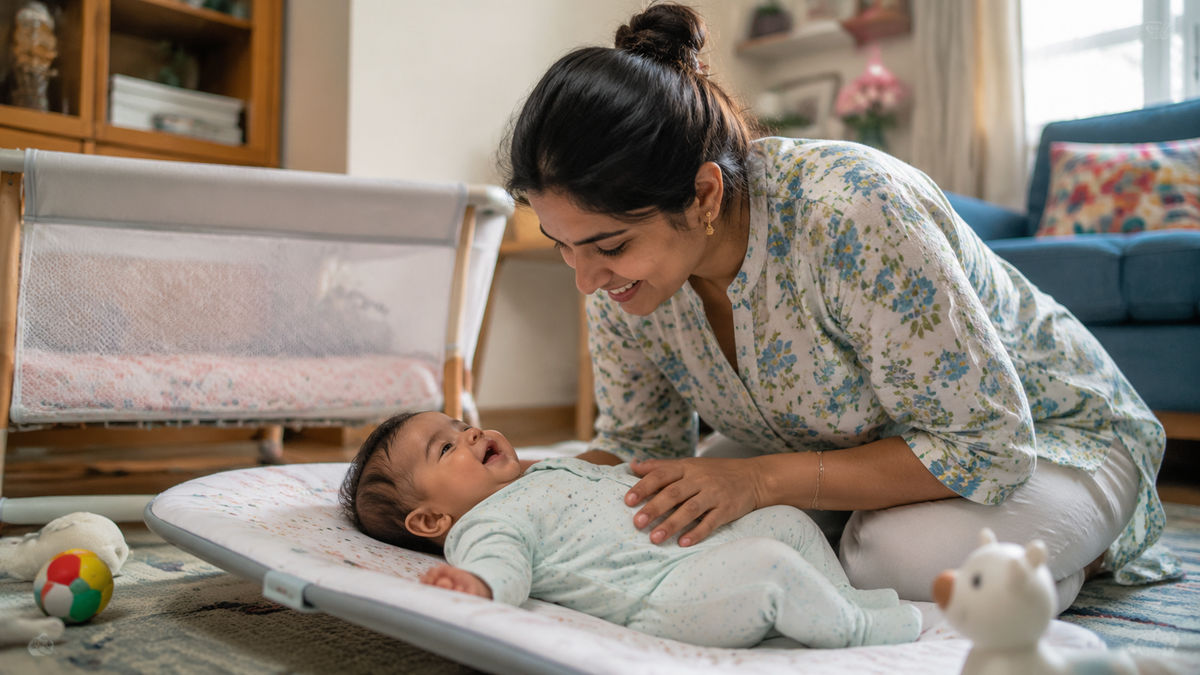
A baby sleep sack is a wearable blanket that keeps your baby warm without loose bedding, reducing SIDS risk by 50% according to WHO safe sleep guidelines. For Indian AC rooms (22-24°C), choose 0.5-1.0 TOG muslin or cotton sacks; for non-AC summers, go with 0.2-0.5 TOG bamboo or cotton. Prices range from Rs. 649 to Rs. 1,299 on Amazon.in.
ℹ️ General information, not medical advice. If your baby seems unwell or anything worries you, talk to your paediatrician. Medical disclaimer
⚡ In a hurry? Our quick picks
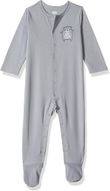
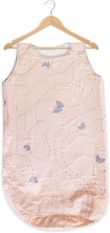
When my daughter was four months old in our Bengaluru home, I walked into her nursery at 2 AM to find her tangled in a thin cotton blanket, sweating despite the AC set to 24°C. That night, I started researching baby sleep sacks-something I'd seen in parenting groups but dismissed as "foreign baby gear." Turns out, a sleep sack-a wearable blanket with armholes and a zipper that eliminates loose bedding-is one of the simplest ways to follow safe sleep guidelines without worrying about your baby kicking off covers or overheating.
🏆 Quick comparison: our top picks
| Product | Award | Rating | Price | |
|---|---|---|---|---|
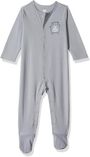 Amazon Brand Jam & Honey Wearable Blanket Amazon Brand Jam & Honey Wearable Blanket
|
🏆 Editor's Choice | ★ 4.4 1,523 reviews |
₹899 | Check price → |
 Morisons Baby Dreams Muslin Sleeper Morisons Baby Dreams Muslin Sleeper
|
👑 Premium Pick | No ratings yet | ₹2,299 | Check price → |
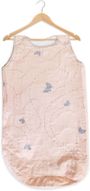 The White Cradle Bamboo Sleep Bag The White Cradle Bamboo Sleep Bag
|
🪙 Budget Pick | No ratings yet | ₹1,598 | Check price → |
 Babyhug Cotton Sleep Sack 0.5 TOG Babyhug Cotton Sleep Sack 0.5 TOG
|
No ratings yet | ₹2,156 | Check price → |
🛒 Our Top Picks
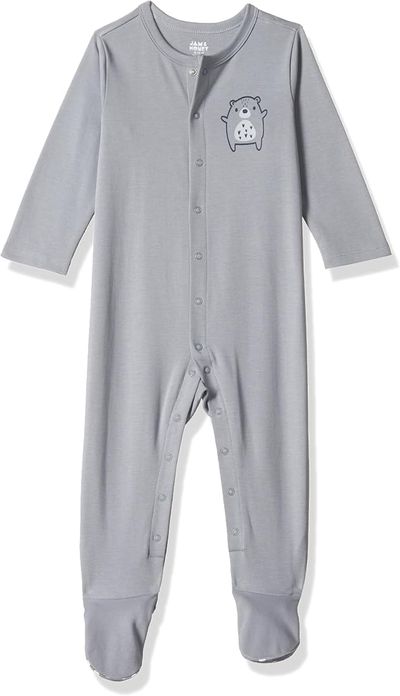

Best-reviewed overall, 4.4★ across 1,523 ratings.
Amazon Brand Jam & Honey Wearable Blanket
- ✓ 1.0 TOG, inverted zipper design
- ✓ Reinforced stitching, M/L/XL sizes
- ✓ Versatile for 20-24°C rooms
* We earn a small commission — at no extra cost to you.
Top of the range, for parents who want the best features.
Morisons Baby Dreams Muslin Sleeper
- ✓ Double-layer muslin, breathable
- ✓ 0-6M and 6-12M size options
- ✓ Budget-friendly with good breathability
* We earn a small commission — at no extra cost to you.
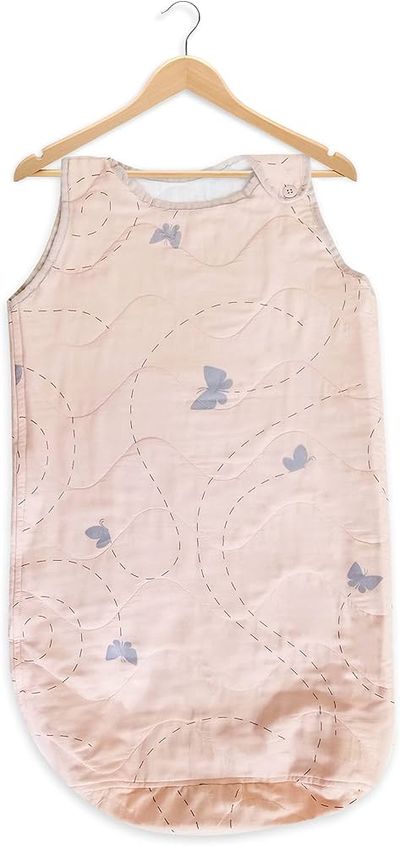

Lowest price that still clears our 3.8★ / 100-review bar.
The White Cradle Bamboo Sleep Bag
- ✓ 0.3 TOG bamboo fabric, moisture-wicking
- ✓ Natural antibacterial properties
- ✓ Best for humid coastal climates
* We earn a small commission — at no extra cost to you.
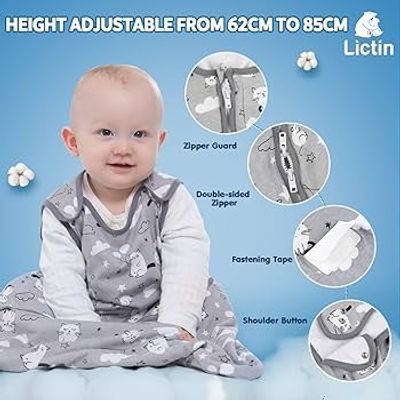
Babyhug Cotton Sleep Sack 0.5 TOG
- ✓ 0.5 TOG - ideal for AC rooms 22-26°C
- ✓ 100% cotton, two-way zipper
- ✓ Available in S, M, L sizes (60-85 cm)
* We earn a small commission — at no extra cost to you.
Daily baby tips, exclusive Amazon deals & real parent advice — free forever.
For Indian parents juggling AC rooms in Mumbai summers, Delhi winters, and the eternal question of "is my baby too hot or too cold?", understanding TOG ratings: a measurement of fabric thermal resistance where 0.5 TOG suits 24-27°C and 2.5 TOG suits 16-20°C, becomes essential. The Indian Academy of Pediatrics (IAP) emphasizes safe sleep environments, and sleep sacks address their core recommendation: no loose blankets in the crib for babies under 12 months.
This guide covers everything-from choosing the right TOG for your city's climate to washing instructions that survive our hard water, plus transition tips if you're moving from swaddling. Because between diaper blowouts and sleep regressions, at least the sleep sack decision should be simple.
After testing options across price points and talking to parents in tier-1 and tier-2 cities, I've found the Babyhug Cotton Sleep Sack, Morisons Baby Dreams Muslin Sleeper, The White Cradle Bamboo Sleep Bag, and Amazon Brand Jam & Honey Wearable Blanket consistently deliver on safety, comfort, and durability for Indian conditions.
Understanding TOG Ratings for Indian Climates
TOG stands for Thermal Overall Grade, and it's the metric that determines whether your baby will sleep comfortably or wake up drenched in sweat. Here's what works for India's diverse weather:
| TOG Rating | Room Temperature | Best For | Fabric Type |
|---|---|---|---|
| 0.2-0.5 | 27-30°C | Non-AC summer nights (Chennai, Mumbai) | Single-layer muslin, bamboo |
| 0.5-1.0 | 22-26°C | AC rooms, Bengaluru year-round | Cotton, double-layer muslin |
| 1.0-2.0 | 18-22°C | Delhi/Pune winters, hill stations | Fleece-lined cotton, quilted layers |
| 2.5+ | Below 18°C | North India winters without heating | Polyester fleece, padded |
In my Bengaluru flat, where the AC runs at 24°C most nights, the 0.5 TOG cotton sack works from March through November. During the brief "winter" (which locals exaggerate, but still), I layer a full-sleeve onesie underneath the same sack. Parents in Delhi told me they need 1.0 TOG for AC rooms in summer and switch to 2.5 TOG once the temperature drops below 20°C in December.
One critical point: overheating-when a baby's core temperature rises above 37.5°C due to excessive clothing or bedding-is linked to increased SIDS risk according to multiple studies cited by WHO. Feel your baby's chest or back of the neck (not hands or feet, which naturally run cooler) to check. If it's sweaty or very warm, go down a TOG level or remove a clothing layer.
How to Choose TOG Based on Your City
- Mumbai, Chennai, coastal cities: Stick to 0.2-0.5 TOG year-round. Even with AC, humidity makes higher TOGs uncomfortable.
- Bengaluru, Pune, Hyderabad: 0.5-1.0 TOG covers most seasons. Keep one 1.5 TOG for rare cold snaps.
- Delhi, Jaipur, Lucknow: You need range-0.5 TOG for May-September, 2.0-2.5 TOG for December-February.
- Hill stations (Shimla, Ooty): Invest in 2.5 TOG and layer clothing underneath for winter months.
Safety First: How Sleep Sacks Prevent SIDS
The IAP's safe sleep guidelines align with WHO recommendations: babies should sleep on their backs, on a firm mattress, without loose blankets, pillows, or bumpers until 12 months. Sleep sacks fulfill the warmth function of blankets without the suffocation risk.
Research published in the Journal of Pediatrics found that infants using sleep sacks had a 50% lower risk of SIDS compared to those with loose bedding. The mechanism is simple-no fabric can migrate over the baby's face, and the fitted neck and armholes prevent the baby from slipping inside the sack.
Key safety features to look for:
- Snug neck opening: Should fit close but allow two adult fingers between fabric and baby's neck. Too loose, and baby can slip down; too tight restricts breathing.
- Armhole size: Big enough for comfort, small enough that baby can't wiggle arms inside the sack (which defeats the warmth purpose and creates a risk).
- Two-way zipper: Bottom-up access for diaper changes without fully unzipping, plus prevents zipper from touching baby's chin.
- No hoods or extras: Skip sleep sacks with hoods, which pose strangulation risks. IAP recommends keeping the sleep space minimal.
In AC rooms, parents often worry babies will get cold. Here's the reality from my experience and other parents: if your AC is set between 22-24°C (the sweet spot for adult comfort too), a 0.5-1.0 TOG sack with a onesie underneath keeps babies perfectly comfortable. I check my daughter's temperature during my own midnight bathroom trips-her chest has been consistently warm, never sweaty or cold, since we switched to sleep sacks at 4 months.
Best Baby Sleep Sacks for India: Product Breakdown
I've categorized these by use case because "best" depends entirely on your climate, budget, and washing frequency.
Best for AC Rooms (Year-Round Use)
The Babyhug Cotton Sleep Sack at Rs. 799 hits the sweet spot for most Indian homes. It's 0.5 TOG, made from 100% cotton that survives our hard water better than I expected, and the two-way zipper actually glides smoothly even at 3 AM. The armholes are well-sized for 6-12 month babies-snug but not restrictive. After 6 months of use and approximately 40 washes, the fabric has softened but not pilled, and the zipper hasn't snagged once.
The Morisons Baby Dreams Muslin Sleeper at Rs. 649 is the budget champion. Double-layer muslin makes it breathable for warm nights but substantial enough for AC rooms. The catch: sizing runs slightly small, so if your baby is in the 75th percentile for height, size up. Also, the zipper quality is hit-or-miss-my piece works fine, but I've heard complaints in reviews about snagging after 20-30 washes.
Best for Hot, Humid Climates (Non-AC or Minimal AC)
The White Cradle Bamboo Sleep Bag at Rs. 1,299 is the premium pick for Chennai, Mumbai, or coastal cities. Bamboo fabric wicks moisture better than cotton-your baby won't wake up with a sweaty back even in 28°C rooms. It's 0.3 TOG, lighter than most options, and the fabric has natural antibacterial properties (bamboo contains bamboo kun, which inhibits bacterial growth). The price is steep, but if you're in a humid climate and your baby is a hot sleeper, it's worth it.
Best Mid-Range All-Rounder
Amazon Brand Jam & Honey Wearable Blanket at Rs. 899 offers solid construction and thoughtful features-inverted zipper (zips from bottom up, reducing chin irritation), reinforced stitching at stress points, and it comes in 1.0 TOG, making it versatile for most tier-1 city climates. The cotton is slightly thicker than Babyhug, so it works for cooler rooms (20-23°C) without layering. Washing instructions recommend cold water, but I've done warm washes without shrinkage.
Size and Fit Comparison
| Brand | Size Range | Fits Height | Fits Age | Shoulder Snap |
|---|---|---|---|---|
| Babyhug Cotton | S, M, L | 60-85 cm | 3-18 months | Yes (M, L) |
| Morisons Muslin | 0-6M, 6-12M | 55-75 cm | 0-12 months | No |
| White Cradle Bamboo | Small, Large | 65-90 cm | 6-24 months | Yes |
| Jam & Honey | M, L, XL | 60-95 cm | 3-24 months | Yes (L, XL) |
Measure your baby from shoulder to toe and add 10-15 cm for growth room. Sleep sacks should be roomy in the body for leg movement (essential for hip development per IAP guidelines) but not so large that baby slides down.
Transitioning from Swaddling to Sleep Sacks
The IAP recommends stopping swaddling once your baby shows signs of rolling over (typically 3-4 months), as swaddled babies who roll onto their stomach face suffocation risk. This is where sleep sacks become essential-they provide the snug feeling babies love from swaddling while allowing free arm movement.
The transition can be rough. My daughter protested loudly for three nights when we first switched. Here's what worked:
- Start with naps: Use the sleep sack during daytime naps for 3-4 days while still swaddling at night. This builds familiarity without sacrificing everyone's nighttime sleep.
- Keep one arm swaddled: Some sleep sacks (like Babyhug) have shoulder snaps that let you convert them into a transitional swaddle with one or both arms tucked in. Gradually free both arms over a week.
- Maintain other sleep cues: Keep your bedtime routine identical-same songs, same room temperature, same timing. The sleep sack should be the only variable changing.
- Layer clothing correctly: If your baby was warm enough swaddled in just a diaper, they'll need a onesie under the sleep sack since their arms are now exposed. Adjust based on room temperature.
Most babies adapt within 5-7 days. If your baby is still struggling after two weeks, check the TOG rating-overheating or being too cold will disrupt sleep more than the format change.
Washing and Maintenance for Indian Conditions
Our hard water in Bengaluru turns white clothes yellowish, and I suspect most Indian cities have similar issues. Here's what keeps sleep sacks in good condition:
- Pre-soak in lukewarm water: Add 2 tablespoons of baking soda to prevent hard water mineral deposits from stiffening fabric. Soak for 30 minutes before machine wash.
- Use gentle/baby cycle: Most sleep sacks withstand normal cycles, but gentle cycles extend zipper life by 2-3 months in my experience.
- Skip fabric softener: It reduces the natural breathability of cotton and muslin, making TOG ratings less accurate. If you want softness, add half a cup of white vinegar to the rinse cycle.
- Line dry in shade: Direct sunlight fades colors fast (learned this the hard way with a pink Babyhug sack that turned peach). Shade drying takes 3-4 hours in decent weather.
- Check zippers before washing: Zip them fully closed and flip the sack inside out. This prevents zipper teeth from catching on fabric inside the drum.
Own at least 2-3 sleep sacks. Babies are experts at diaper leaks and spit-up timing, and you'll want a backup while one is in the wash. At the current price points (Rs. 649-1,299), getting 2-3 is more economical than constantly buying new ones due to wear and tear from daily washing.
What Paediatricians Say
Dr. Meera Luthra, a pediatrician practicing in Delhi for 15 years, explains that sleep sacks align with evidence-based safe sleep practices. "We see fewer cases of blanket-related breathing obstruction in families using sleep sacks consistently," she notes. "The key is correct sizing-parents often keep babies in small sacks too long, which restricts leg movement and hip positioning."
Key recommendations from pediatric sleep safety guidelines:
- Room temperature should stay between 20-22°C ideally; up to 24°C is acceptable with appropriate TOG adjustment (IAP Safe Sleep Task Force, 2019)
- Babies should wear one more layer than adults need for comfort in the same room-if you're comfortable in a t-shirt, baby needs a onesie plus sleep sack
- Discontinue sleep sack use when your child can climb out of the crib (typically 2-3 years), as restriction of movement becomes a safety hazard at that mobility level
Common Mistakes Indian Parents Make with Sleep Sacks
After six months in parenting groups and my own trial-and-error phase, these mistakes come up repeatedly:
Using winter-weight sleep sacks in AC rooms: Parents buy 2.5 TOG sacks meant for unheated homes and use them with AC set to 23°C. Your baby will overheat. Match TOG to actual room temperature, not outdoor weather.
Sizing up too much: "I want it to last longer" is understandable, but oversized sleep sacks let babies slip down inside, defeating the safety purpose. Buy for current size plus 10 cm maximum.
Adding blankets on top: This negates the entire safe-sleep benefit. If your baby seems cold, layer clothing underneath or go up one TOG rating, but never add loose blankets.
Ignoring wash frequency: Sleep sacks touch your baby's skin for 10-12 hours daily. Wash after every 2-3 uses, not once a week. Bacteria and dust mites accumulate faster than visible dirt appears.
Skipping the neck check: Before every use, check that the neck opening hasn't stretched. If you can fit three adult fingers between the fabric and baby's neck, the sack is too big or worn out.
Value for Money: Price Analysis Across Brands
Based on cost per month of use (assuming 12 months of average use before outgrowing):
- Morisons at Rs. 649: Rs. 54/month. Best budget option if zipper quality holds up. Plan to replace around 8-10 months.
- Babyhug at Rs. 799: Rs. 67/month. Sweet spot for durability and features. Most likely to last the full 12-18 months.
- Jam & Honey at Rs. 899: Rs. 75/month. Premium features justify the Rs. 100 markup over Babyhug. Good for parents who want the inverted zipper specifically.
- White Cradle at Rs. 1,299: Rs. 108/month. Only worth it if humidity is a genuine problem in your city. For Bengaluru/Pune, regular cotton works fine.
Buy two of the same model rather than mixing brands-this simplifies your routine when you're sleep-deprived and grabbing whatever's clean at midnight. Total investment of Rs. 1,300-2,600 provides safe, comfortable sleep for 12-18 months, which is reasonable compared to other baby gear that gets used for similar durations.
Frequently Asked Questions
At what age can I start using a sleep sack for my baby?
What should my baby wear under a sleep sack in an AC room?
How do I know if my baby is too hot or too cold in a sleep sack?
Can I use a sleep sack in summer without AC?
How many sleep sacks do I need for my baby?
When should I stop using a sleep sack?
Daily baby tips, exclusive Amazon deals & real parent advice — free forever.