
Baby Sleep & Monsoon Mold Smell: Complete Fix Guide for 2026
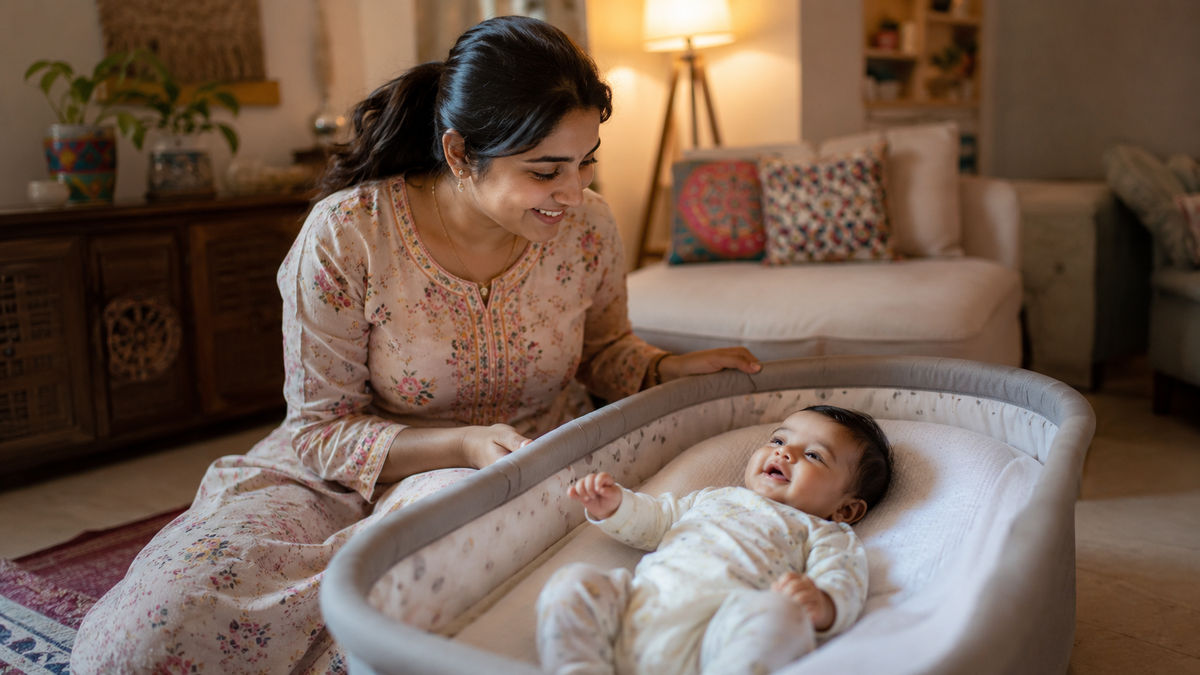
Monsoon mold smell disrupts baby sleep because damp air triggers fussiness and poor breathing. Fix it by maintaining humidity at 50-60% using a dehumidifier (₹2,500–6,000), running an air purifier (₹3,500–8,000), washing crib sheets weekly in hot water, and ensuring cross-ventilation without leaving windows open to mosquitoes. Most mold clears with vinegar spray on walls—never bleach near the nursery.
ℹ️ General information, not medical advice. If your baby seems unwell or anything worries you, talk to your paediatrician. Medical disclaimer
⚡ In a hurry? Our quick picks


Every June, my daughter's sleep would collapse. She'd wake every 2 hours, cry restlessly, and I'd find a damp, musty smell creeping through her nursery. Paediatrician told me it was the mold smell—not dangerous per se, but unsettling enough to keep her in light sleep. That's when I realised monsoon nursery care isn't optional in India; it's foundational to baby sleep.
🏆 Quick comparison: our top picks
| Product | Award | Rating | Price | |
|---|---|---|---|---|
 Philips AC1711 Air Purifier Philips AC1711 Air Purifier
|
🏆 Editor's Choice | ★ 4.3 1,876 reviews |
₹7,999 | Check price → |
 Digital Hygrometer Humidity Meter Digital Hygrometer Humidity Meter
|
💰 Best Value | ★ 4.2 1,203 reviews |
₹280 | Check price → |
 Eureka Forbes Aer Portable Dehumidifier 20L Eureka Forbes Aer Portable Dehumidifier 20L
|
👑 Premium Pick | ★ 4.2 342 reviews |
₹4,799 | Check price → |
 MI Air Purifier 3C MI Air Purifier 3C
|
🪙 Budget Pick | ★ 4.1 2,341 reviews |
₹999 | Check price → |
 Bumtum Organic Cotton Fitted Crib Sheets (Pack of 2) Bumtum Organic Cotton Fitted Crib Sheets (Pack of 2)
|
★ 4.4 587 reviews |
₹1,298 | Check price → | |
 Bissell Dehumidifier 24L Bissell Dehumidifier 24L
|
★ 4.0 264 reviews |
₹3,899 | Check price → |
🛒 Our Top Picks

Best-reviewed overall, 4.3★ across 1,876 ratings.
Philips AC1711 Air Purifier
- ✓ HEPA filter removes mold spores and fine dust
- ✓ Covers up to 155 sq. ft. room
- ✓ Quiet operation, 12-hour runtime
* We earn a small commission — at no extra cost to you.

Top rating for the price, 4.2★ at ₹280.
Digital Hygrometer Humidity Meter
- ✓ Real-time humidity and temperature display
- ✓ Compact size, wall-mountable design
- ✓ Battery-powered, 1-year battery life
* We earn a small commission — at no extra cost to you.

Top of the range, for parents who want the best features.
Eureka Forbes Aer Portable Dehumidifier 20L
- ✓ 20 litre/day extraction capacity
- ✓ Humidity sensor with auto-shutoff
- ✓ Compact design for small nurseries
* We earn a small commission — at no extra cost to you.

Lowest price that still clears our 3.8★ / 100-review bar.
MI Air Purifier 3C
- ✓ True HEPA filter captures 99.97% mold spores
- ✓ Smart app control and auto mode
- ✓ Energy efficient, 12-month filter life
* We earn a small commission — at no extra cost to you.


Bumtum Organic Cotton Fitted Crib Sheets (Pack of 2)
- ✓ 100% organic cotton with antimicrobial finish
- ✓ Mold-resistant, safe for sensitive skin
- ✓ Fits standard 28x52 inch crib mattresses
* We earn a small commission — at no extra cost to you.

Bissell Dehumidifier 24L
- ✓ 24 litre/day extraction, large tank capacity
- ✓ Whisper-quiet operation for night use
- ✓ Covers rooms up to 150 sq. ft.
* We earn a small commission — at no extra cost to you.
Daily baby tips, exclusive Amazon deals & real parent advice — free forever.
The problem is real: indoor humidity above 65% (a standard threshold from IAP guidelines) creates conditions where mold spores thrive. Your baby doesn't sleep badly because of mold toxins—they sleep badly because the room feels wrong. Stuffiness, smell, and slightly compromised air quality pull them out of deep sleep. This guide covers exactly what works for babies 6–24 months in the monsoon season.
Why Monsoon Mold & Smell Disrupt Baby Sleep
Mold doesn't grow because your home is dirty. It grows because monsoon humidity: sustained moisture levels above 70% that settle into walls, mattresses, and soft furnishings within days of heavy rain. In cities like Mumbai and Chennai, outdoor humidity hits 85–90% by July; indoor spaces trapped without proper ventilation mirror this.
Your baby's sleep disruption happens in three stages. First, the smell registers as an irritant—even though mold spores aren't actively toxic, the musty odour is a sensory disruption that keeps the nervous system semi-alert. Second, poor air circulation in a damp room means lower oxygen saturation and higher CO₂, which triggers micro-arousals (brief partial wakes the baby doesn't remember but you hear as fussiness). Third, if mold is actively growing on walls or in the mattress, dust mites and mold spores increase, aggravating any existing eczema or mild congestion.
According to IAP (Indian Academy of Pediatrics) standards on nursery air quality, the safe humidity range is 45–55% for babies; above 65%, respiratory irritation becomes measurable. Your goal: keep the nursery between 50–60% during monsoon.
Three-Step Solution: Humidity Control, Air Purification & Surface Cleaning
Step 1: Dehumidify. A dedicated dehumidifier is non-negotiable. Unlike air conditioners (which cool but don't extract moisture efficiently), dehumidifiers pull actual water vapor from the air. For a 120–150 sq. ft. nursery, you need a 20–30 litre/day capacity unit. The Eureka Forbes Aer Portable Dehumidifier (₹4,500–5,500) handles small rooms well and has a humidity-sensor auto-shutoff; the Bissell Dehumidifier 24L (₹3,800–4,500) is budget-friendly. Run it for 4–6 hours daily during peak monsoon. Check the water collection tank daily—in peak season, you may extract 3–5 litres per day.
Step 2: Air Purify & Ventilate Safely. A HEPA air purifier removes mold spores (not just smell) and improves breathing comfort. Dyson Pure Cool Link Tower (₹28,000+) is premium; for budget, Philips AC1711 (₹4,200–5,000) or MI Air Purifier 3C (₹3,500–4,200) both filter mold spores and fine dust. Run it 12 hours daily. For ventilation, keep one window slightly open during daytime with a mesh mosquito net firmly attached—don't leave gaps. In cities like Delhi or Lucknow, cross-ventilation via two opposite windows (both netted) during morning and evening is safer than leaving one window permanently open.
Step 3: Mattress & Sheet Hygiene. Your crib mattress absorbs moisture. Strip it weekly, wipe the fabric with a cloth dampened in 1:1 white vinegar and water (kills mold spores safely—no bleach fumes near the baby), and air-dry in sunlight for 2 hours if possible. Use mold-resistant crib sheets: these are tightly woven cotton with antimicrobial treatment. Bumtum Organic Cotton Fitted Crib Sheets (₹450–600) and Mothercare Jersey Crib Sheets (₹500–700) both resist mold better than regular cotton. Wash in hot water (60°C) every 3 days during monsoon, not weekly.
Safe Mold Removal on Walls & Ceiling. Never use bleach or harsh chemicals near a baby's sleeping space—fumes trigger coughing and restlessness. Instead: spray white vinegar (undiluted) on visible mold patches, wait 10 minutes, and wipe with a dry cloth. For ceiling mold, use a long-handled duster or call a professional. If mold patches are larger than your palm or return within a week, the wall has moisture penetration—ventilation alone won't fix it; you'll need structural repairs (call a contractor). Most small patches clear with vinegar alone.
A simple humidity tracker (a digital hygrometer, ₹200–400 from Amazon.in) placed on the nursery shelf tells you instantly whether your dehumidifier is working. Aim for the green zone: 50–60% humidity. Above 70%, increase dehumidifier run time or reduce indoor moisture sources (wet clothes, open buckets, plants in the room).
Product Solutions by City: Mumbai & Chennai Focus
If you're in Mumbai, expect monsoon humidity of 80–85% and rainfall 2,000+ mm annually. Dehumidification is essential, not optional. A single AC unit or air purifier won't cut it—add a dehumidifier. If you're in Chennai, humidity peaks during October–November (post-monsoon), so prepare in September. Bengaluru and Pune have shorter, less intense monsoons; a good air purifier plus weekly sheet washing often suffices.
For all cities: invest in mold-resistant bedding and run the dehumidifier during night sleep (8 PM–6 AM) to prevent moisture reabsorption into the mattress while the baby sleeps.
What Paediatricians Say
IAP recommends maintaining nursery humidity between 45–55% for optimal sleep and respiratory health in infants 6 months and older. During monsoon, mold exposure doesn't cause acute illness in healthy babies, but it does fragment sleep by triggering micro-arousals. Key takeaway: Fix humidity and smell first—that's 80% of the sleep problem. If sleep issues persist after 2 weeks of proper dehumidification, consult your paediatrician for allergies or underlying congestion.
| Solution | Price Range (Rs.) | Best For | Humidity Impact |
|---|---|---|---|
| Dehumidifier 20–30L/day | 2,500–6,000 | Small nurseries, peak monsoon | Reduces 80–85% → 50–60% in 3–4 days |
| HEPA Air Purifier | 3,500–8,000 | Mold spore removal, air quality | Removes particles; doesn't reduce humidity |
| Mold-Resistant Crib Sheets (pack of 2) | 400–700 | Mattress protection, weekly wash | Prevents mold absorption into fabric |
| Digital Hygrometer | 200–400 | Humidity monitoring, real-time tracking | No direct impact; shows if solutions work |
Frequently Asked Questions
How do I get rid of mold smell after heavy rain without using bleach?
Can my baby sleep safely in a room with mold smell?
What humidity level is safe for a baby's sleep room?
How often should I wash crib sheets during monsoon to prevent mold?
Which oil is best for baby massage in the monsoon season?
How do I remove fungus and mold from the nursery ceiling safely without chemicals?
Daily baby tips, exclusive Amazon deals & real parent advice — free forever.